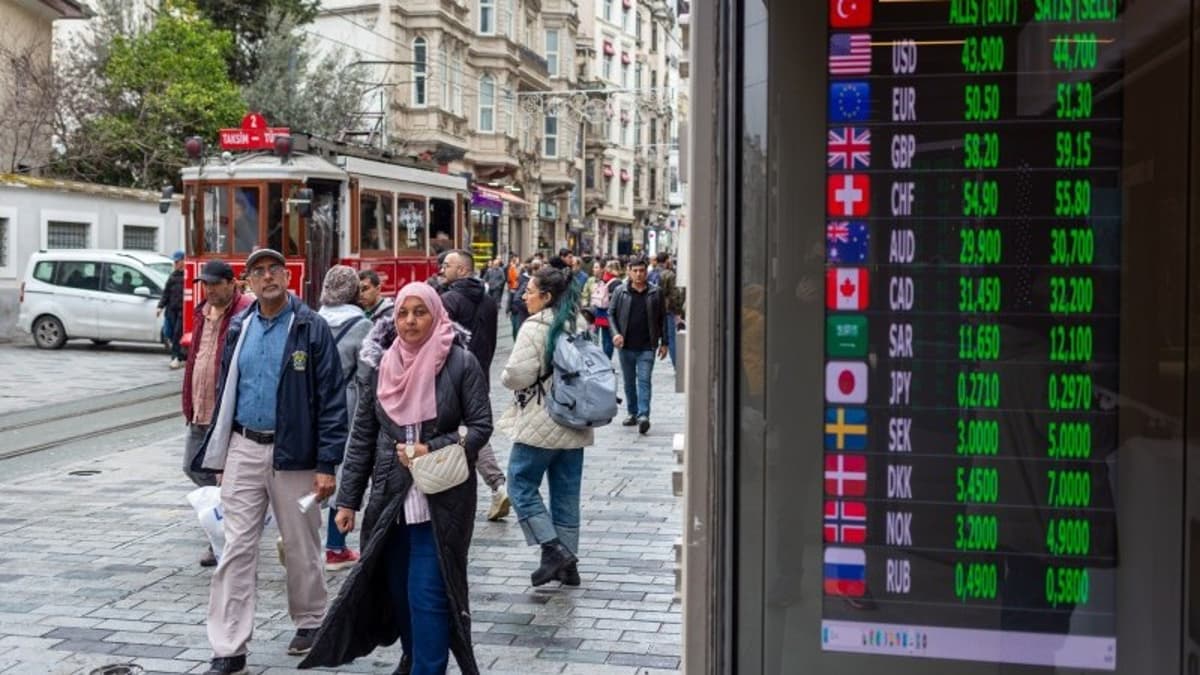
Monitoring Turkey: Geopolitics Compounds Macro Challenges
Why It Matters
Higher inflation and a tighter fiscal stance raise borrowing costs and risk capital outflows, affecting investors and emerging‑market risk assessments. The policy‑rate hold underscores the central bank’s balancing act between price stability and growth in a volatile geopolitical environment.
Key Takeaways
- •Inflation forecast raised to 27.5% amid energy price shocks
- •12‑month budget deficit narrowed to 2.2% of GDP (~$75 bn)
- •Current‑account deficit widened to $7.5 bn in February
- •Central Bank kept policy rate at 37% as geopolitical risks linger
- •Outflows of $9.6 bn from bonds and equities since February
Pulse Analysis
Turkey’s inflation trajectory has taken an upward turn, with ING now projecting a 27.5% year‑end rate. The surge reflects a blend of external shocks—most notably volatile oil prices—and domestic policy moves such as higher electricity and natural‑gas tariffs. While the government has managed to tighten the fiscal gap to 2.2% of GDP, roughly $75 bn, the underlying price pressures remain entrenched, limiting the scope for a rapid disinflationary swing and keeping consumer purchasing power under strain.
On the external front, the country’s balance of payments is increasingly fragile. A $7.5 bn current‑account deficit in February, compounded by a widening trade gap and rising gold imports, highlights Turkey’s sensitivity to global energy markets. Capital flows have turned negative, with $9.6 bn exiting bond and equity markets since February and foreign‑exchange reserves plunging from $78.6 bn to $18.3 bn. These dynamics have forced the central bank to rely on FX swaps to shore up liquidity, but the reserve drawdown underscores the vulnerability of the external position.
Monetary policy remains on hold as the Central Bank of Turkey left its one‑week repo rate at 37% and kept the corridor unchanged. The decision reflects a “wait‑and‑see” approach, balancing the need to curb inflation against the risk of stifling growth amid tightening financial conditions. Market participants now price the policy rate near 35.5% for year‑end, while growth forecasts have been trimmed to 3.0% for 2026. Continued geopolitical tension, especially in the US‑Iran arena, could further pressure both inflation and the external sector, making policy flexibility a key factor for investors watching emerging‑market debt and currency exposure.
Monitoring Turkey: Geopolitics compounds macro challenges
Comments
Want to join the conversation?
Loading comments...