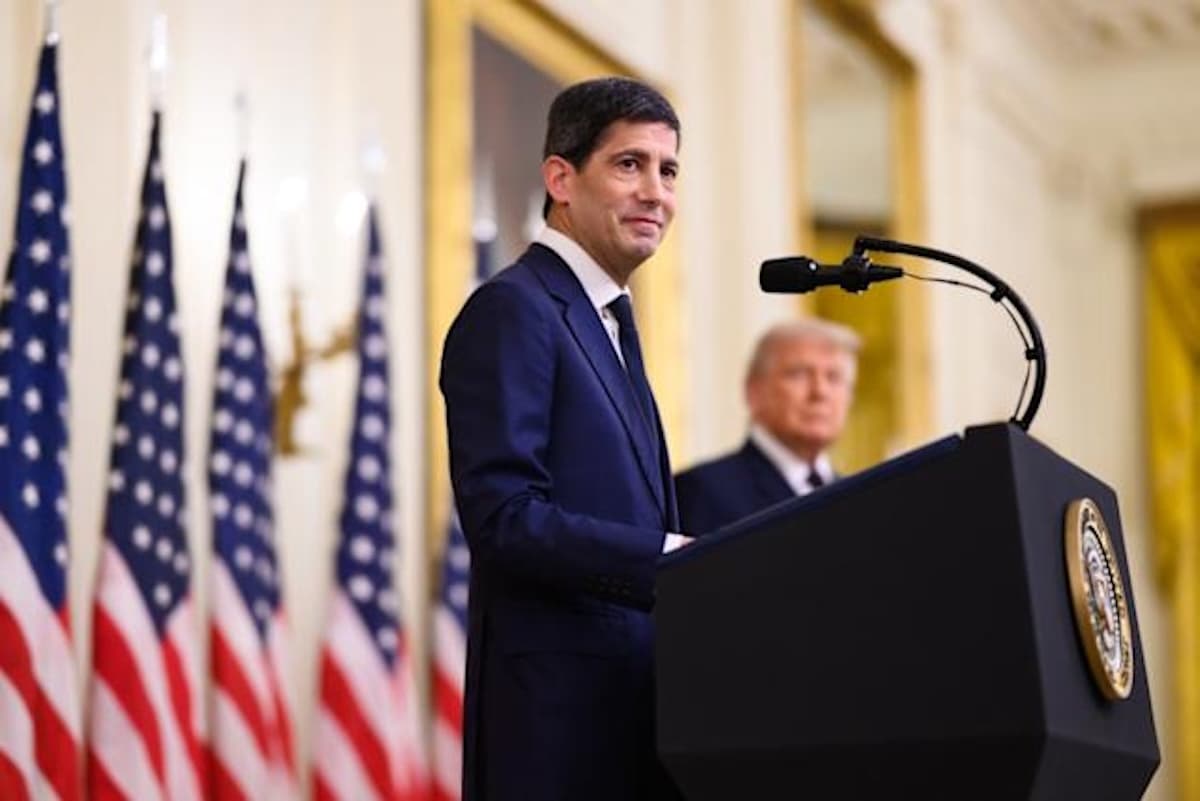
New Fed Chairman Kevin Warsh Won’t Immediately Get What He Wants
Why It Matters
Warsh’s policy preferences clash with persistent inflation, meaning immediate rate cuts are unlikely and could reshape monetary‑policy communication, affecting borrowing costs and market stability.
Key Takeaways
- •Warsh favors lower rates despite inflation above 2% target
- •Fed's trimmed inflation gauge shows 2.3% rise, below core PCE
- •Committee likely to raise rates as CPI hits 4.2% in May
- •Warsh proposes ending forward guidance and the dot plot
- •A quieter Fed could increase market volatility due to less guidance
Pulse Analysis
The appointment of Kevin Warsh marks a politically charged shift at the Federal Reserve, bringing a former Wall Street banker and 2008‑era Fed official into the chair’s seat. While Warsh’s background suggests a pro‑growth stance, the broader macro environment tells a different story. Inflation has surged past the Fed’s 2% target for five straight years, with the CPI climbing to 4.2% in May and core PCE still above 3%. These figures have steered the FOMC toward a more hawkish posture, making immediate rate cuts improbable despite Warsh’s public advocacy for cheaper credit.
Warsh’s push for “trimmed” inflation metrics adds another layer to the policy debate. The Dallas Fed’s trimmed PCE, which excludes the most volatile price movements, shows a 2.3% year‑over‑year increase—closer to the Fed’s target than the headline 3.8% figure. While many economists dismiss trimmed measures as politically convenient, they could influence the committee’s narrative if adopted. A shift away from the traditional core PCE or CPI could open a window for more dovish arguments, but convincing the other 11 voting members will require a sustained decline in underlying price pressures, not just a statistical re‑framing.
Warsh’s call for a quieter Fed—eliminating forward guidance and the dot plot—could reshape market dynamics. Less communication typically heightens uncertainty, prompting traders to rely more on real‑time data and potentially amplifying volatility. For borrowers, the lack of clear guidance may translate into higher risk premiums, while investors could see sharper swings in bond yields and equity valuations. As the administration bets on falling energy prices to tame inflation, the timeline remains uncertain. In the near term, Warsh is likely to focus on communication reforms while the rate‑setting agenda stays firmly in the hands of a committee wary of premature easing.
New Fed Chairman Kevin Warsh won’t immediately get what he wants
Comments
Want to join the conversation?
Loading comments...