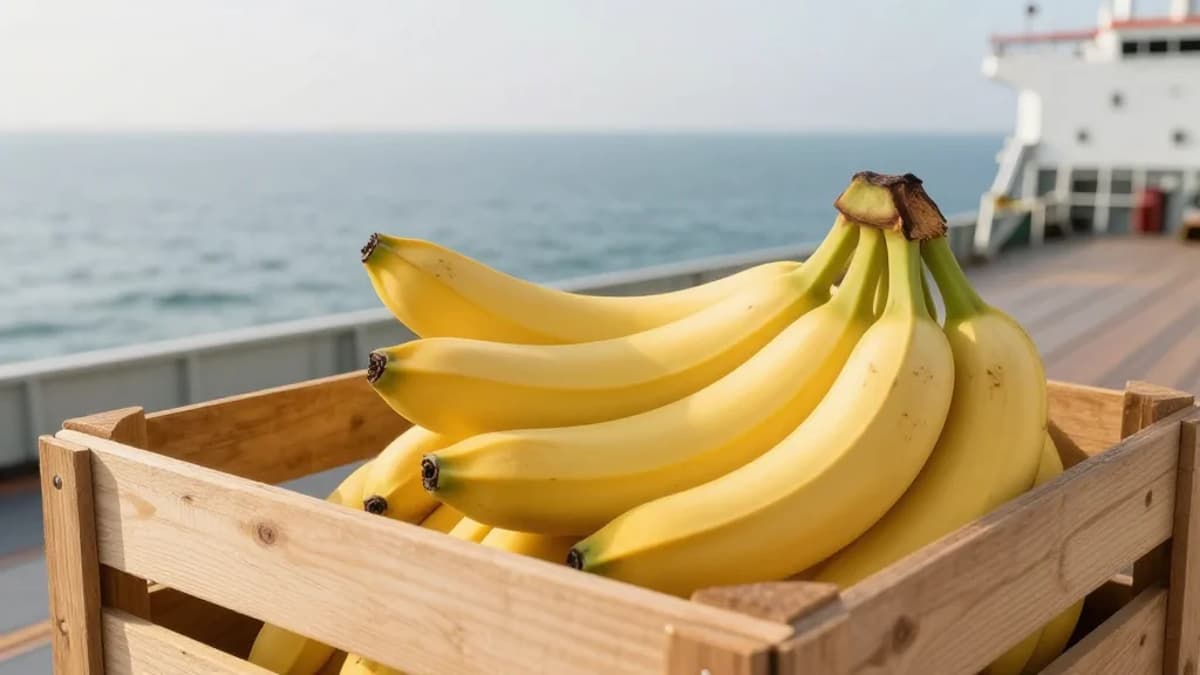
Not Going, Bananas: Ramzan Ripe Time for Most-Exported Fruit but Iran War a Spoiler
•March 5, 2026
0
Why It Matters
The bottleneck threatens India’s leading fruit export revenue and could reshape supply‑chain strategies for perishable goods in the Gulf market. Persistent delays may force exporters to seek new trade routes, impacting pricing and market share.
Key Takeaways
- •Hormuz closure strands 1,500–2,000 banana containers.
- •West Asia consumes up to 90% of Indian bananas.
- •Domestic prices fell 30% due to supply backlog.
- •Maharashtra supplies over 80% of India's banana exports.
- •Exporters divert cargo to Sri Lanka and Oman.
Pulse Analysis
India’s banana sector, the country’s top fruit export by volume, has long relied on the Gulf Cooperation Council’s seasonal demand, especially during Ramzan. Maharashtra, accounting for more than 80% of outbound shipments, typically channels the bulk of its harvest through the Strait of Hormuz, a chokepoint that links the Arabian Sea to global trade lanes. The timing of the conflict coincides with peak export windows, amplifying the stakes for growers, logistics firms, and downstream retailers who depend on timely deliveries to sustain market premiums.
The abrupt closure of the Hormuz corridor has created a cascade of logistical challenges. Vessels carrying an estimated ₹175–200 crore worth of bananas are either idling outside the strait or forced to reverse course, leaving cargo in cold storage or on dockside awaiting clearance. This bottleneck has injected surplus supply into India’s domestic market, driving banana prices down roughly 30% and eroding profit margins for farmers and exporters alike. Moreover, the inability to reach traditional buyers in Iraq, Iran and other Gulf states disrupts long‑standing trade contracts, prompting urgent renegotiations and heightened freight costs for alternative routes.
In response, exporters are diversifying transit points, offloading cargo in Sri Lanka and Oman, and exploring new buyer bases beyond the war‑affected region. Policy makers may need to facilitate faster customs clearances at alternate ports and consider strategic stockpiles to buffer future disruptions. The episode underscores the vulnerability of perishable‑goods supply chains to geopolitical shocks and highlights the importance of flexible routing, digital tracking, and collaborative risk‑management frameworks for maintaining India’s competitive edge in the global fruit market.
Not going, bananas: Ramzan ripe time for most-exported fruit but Iran war a spoiler
0
Comments
Want to join the conversation?
Loading comments...