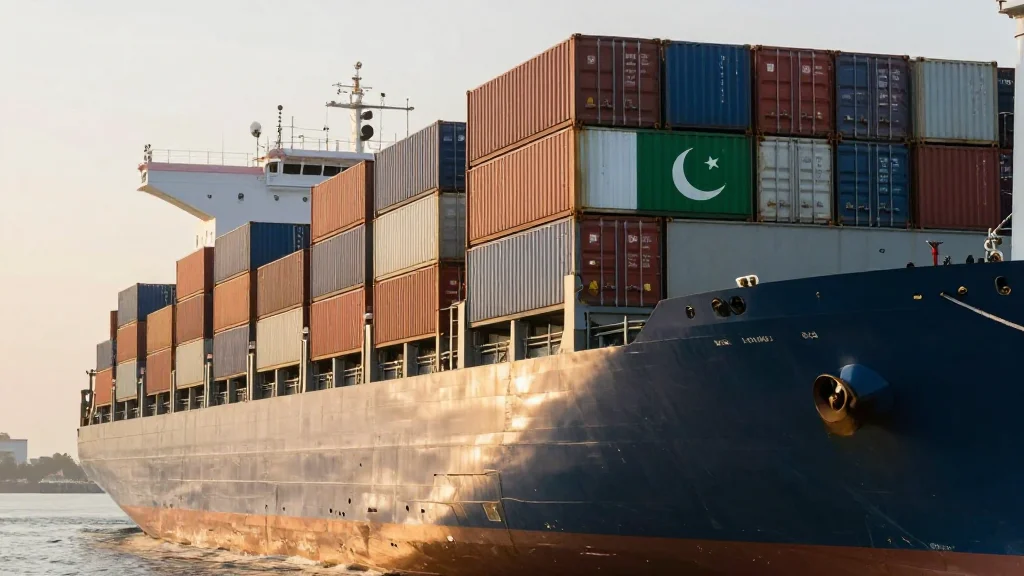
Pakistan's Trade Deficit Swells 36% as IMF Approves $1.32 Billion Bailout

Companies Mentioned
Why It Matters
Pakistan’s widening trade deficit and reliance on IMF financing illustrate the broader vulnerability of emerging markets to external shocks, commodity price swings and geopolitical risk. The episode tests the IMF’s capacity to mobilise resources quickly and highlights the importance of structural reforms for long‑term balance‑of‑payments stability. For the global economy, Pakistan’s situation serves as a bellwether for other low‑middle‑income economies that face similar trade imbalances and debt sustainability challenges. The effectiveness of the IMF’s standby programme will influence investor confidence in the region and could shape future multilateral lending policies.
Key Takeaways
- •Trade deficit expanded 36% in H1 FY26 as imports rose 12.4% and exports fell 5%
- •IMF approved a $1.32 billion standby programme for Pakistan on May 9
- •Remittances reached $19.7 billion, helping contain the current‑account gap
- •Foreign‑exchange reserves grew to $16.1 billion by Dec 2025
- •FY26 export target of $35.3 billion appears out of reach; projections $29.5‑$30.5 billion
Pulse Analysis
The IMF’s quick approval of a $1.32 billion facility underscores the fund’s continued role as a safety net for economies teetering on the edge of a balance‑of‑payments crisis. While the amount is modest compared with larger programmes in the past, it reflects the IMF’s calibrated approach: providing enough liquidity to bridge immediate financing gaps while demanding structural adjustments that can restore macro‑economic stability.
Pakistan’s trade dynamics reveal a classic mismatch between a recovering domestic demand base and a fragile export sector. Tariff cuts have spurred imports of capital goods, a positive sign for industrial capacity, but without a corresponding export surge the trade gap widens. The country’s reliance on remittances—now $19.7 billion—highlights the importance of diaspora flows as a de‑facto stabiliser for many emerging markets. However, remittances are volatile and cannot substitute for a competitive export base.
Looking ahead, the success of the IMF programme will depend on Pakistan’s ability to implement fiscal consolidation, improve tax collection and diversify its export basket. Failure to do so could force the fund to tap supplementary borrowing arrangements, raising the cost of future assistance. For investors, the key takeaway is that while short‑term liquidity is being secured, medium‑term risks remain high until structural reforms take hold, making Pakistan a watch‑list economy for sovereign‑risk assessments.
Pakistan's Trade Deficit Swells 36% as IMF Approves $1.32 Billion Bailout
Comments
Want to join the conversation?
Loading comments...