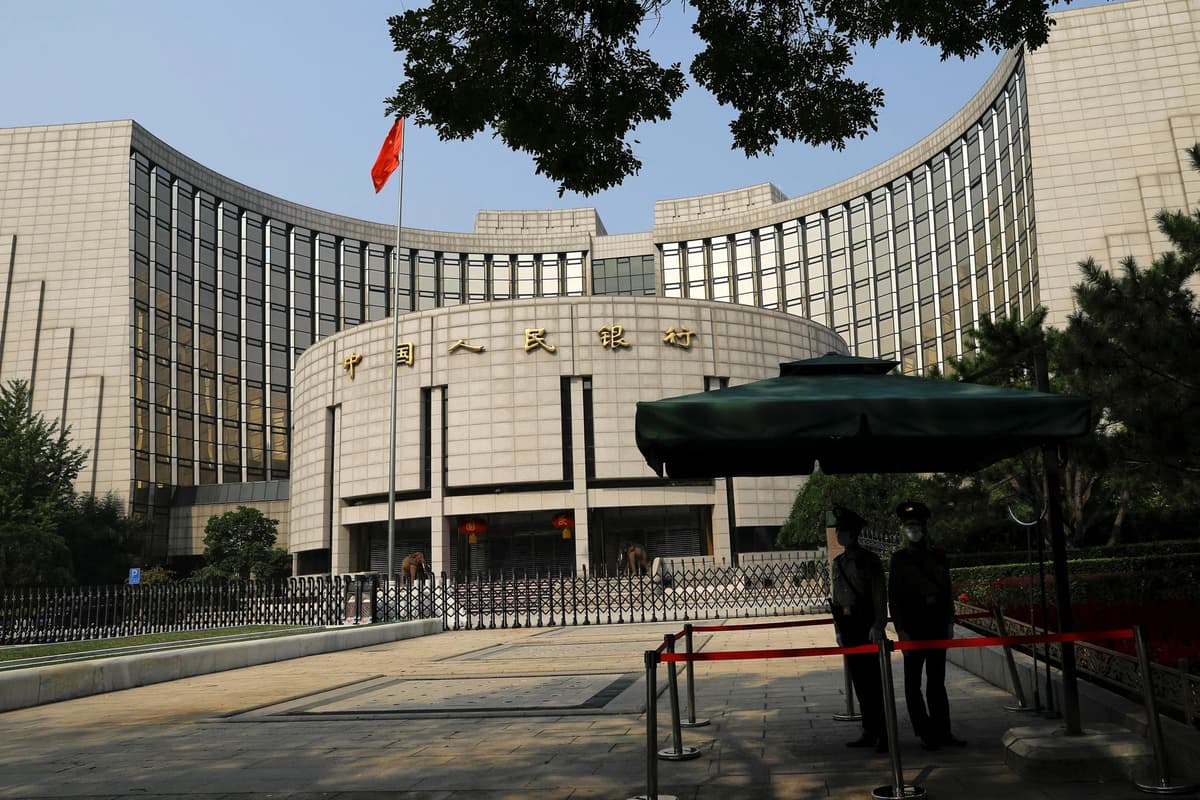
PBOC Employs Volatile Renminbi Fixing to Manage Iran War Fallout
•March 11, 2026
0
Companies Mentioned
The People's Bank of China

Bloomberg
Why It Matters
By embracing broader RMB flexibility, the PBOC aims to shield the currency from external shocks and sustain trade stability during heightened geopolitical risk. This stance also underpins confidence ahead of critical diplomatic engagements between the United States and China.
Key Takeaways
- •PBOC volatility band hit highest since Dec 2024.
- •Daily fixing set at 6.89 yuan per dollar.
- •Policy signals two‑way RMB fluctuations, not devaluation.
- •RMB outperforms regional currencies amid Middle East conflict.
- •Stability aims to support upcoming US‑China diplomatic talks.
Pulse Analysis
The People’s Bank of China’s decision to let the renminbi’s reference rate swing more freely reflects a strategic shift from rigid band management toward market‑driven pricing. By allowing the 30‑day volatility of the daily fixing to climb, the central bank signals confidence that domestic fundamentals—robust export flows and policy support—can absorb external turbulence, notably the fallout from the Iran conflict. This approach reduces the risk of abrupt, policy‑driven corrections that could destabilize the broader foreign‑exchange market.
Investors have taken note of the RMB’s relative resilience compared with other Asian currencies, which have suffered sharper declines as the U.S. dollar strengthens. The 6.89 yuan per dollar fixing, the firm’s strongest level since 2023, provides a clear benchmark for traders while the two‑way fluctuation policy discourages speculative bets that could otherwise amplify price swings. Analysts such as those at Maybank and Credit Agricole highlight that this measured flexibility helps contain speculative pressure, preserving the currency’s appeal as a safe‑haven asset amid geopolitical uncertainty.
Looking ahead, the policy stance dovetails with Beijing’s diplomatic agenda, particularly the anticipated visit of President Donald Trump and the concluding sessions of the National People’s Congress. Maintaining a stable renminbi backdrop is likely to smooth trade talks and signal economic steadiness to foreign partners. Should the PBOC sustain this calibrated volatility tolerance, the RMB could further cement its role as a regional anchor, offering both investors and policymakers a more predictable environment amid an increasingly volatile global landscape.
PBOC employs volatile renminbi fixing to manage Iran war fallout
0
Comments
Want to join the conversation?
Loading comments...