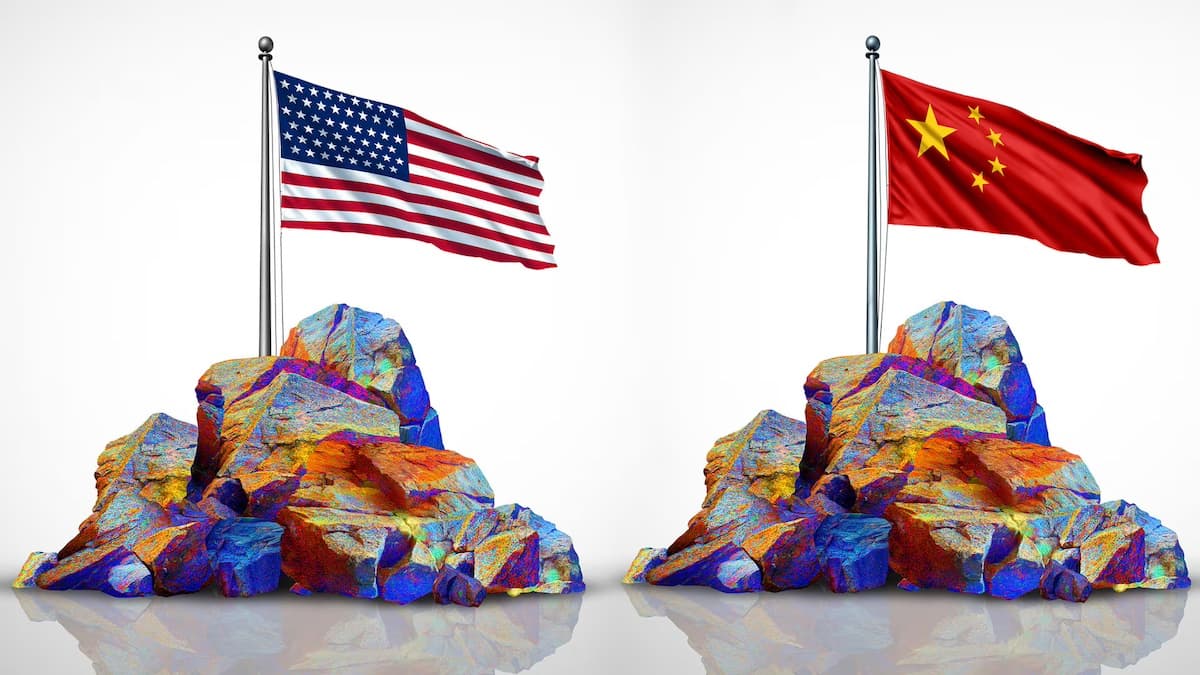
Resource Dominance Reshaping Trump’s Rivalry with China
Why It Matters
Resource control is becoming the primary strategic battleground between the United States and China, reshaping trade, security, and industrial policy. The shift forces companies and governments to rethink supply‑chain dependencies and invest in domestic production capabilities.
Key Takeaways
- •China commits $17 billion yearly U.S. farm purchases through 2028.
- •U.S. pushes critical‑mineral securitization, expanding domestic mining and stockpiles.
- •Deep‑sea nodules targeted to cut Chinese rare‑earth processing advantage.
- •Oil talks aim to reduce China’s vulnerability to Hormuz disruptions.
- •Resource diplomacy now central to U.S.–China strategic competition.
Pulse Analysis
The Trump‑Xi summit underscored a new era where commodities serve as geopolitical tools rather than mere trade items. By locking in a $17 billion annual commitment for U.S. agricultural exports, Washington leverages food security to reinforce political support at home while binding China to a predictable supply stream. This agricultural pact, coupled with discussions on increased U.S. oil sales, illustrates how energy and food are being weaponized to influence diplomatic leverage and mitigate risks tied to volatile chokepoints such as the Strait of Hormuz.
Simultaneously, the United States is accelerating a sweeping critical‑mineral strategy aimed at eroding China’s processing advantage. Executive actions fast‑track domestic mining, fund new refining capacity, and create strategic stockpiles of rare‑earth elements, cobalt, and other battery‑grade minerals. By pursuing deep‑sea nodules on the ocean floor, the administration seeks to diversify supply sources beyond traditional land‑based mines, directly challenging China’s control over the global rare‑earth value chain. This policy shift mirrors Cold‑War‑style industrial mobilization, positioning resource independence as a national security imperative.
The broader implication for businesses is a recalibration of risk models and investment priorities. Companies reliant on Chinese‑processed minerals must explore alternative sourcing or invest in U.S. processing partnerships to stay competitive. Energy firms may find new opportunities in supplying oil to China under a framework that also serves U.S. strategic interests. Ultimately, the convergence of agriculture, energy, and critical minerals at the summit signals that future U.S.–China relations will be negotiated on the battlefield of resource dominance, compelling firms to adapt to a landscape where supply‑chain resilience is synonymous with geopolitical stability.
Resource dominance reshaping Trump’s rivalry with China
Comments
Want to join the conversation?
Loading comments...