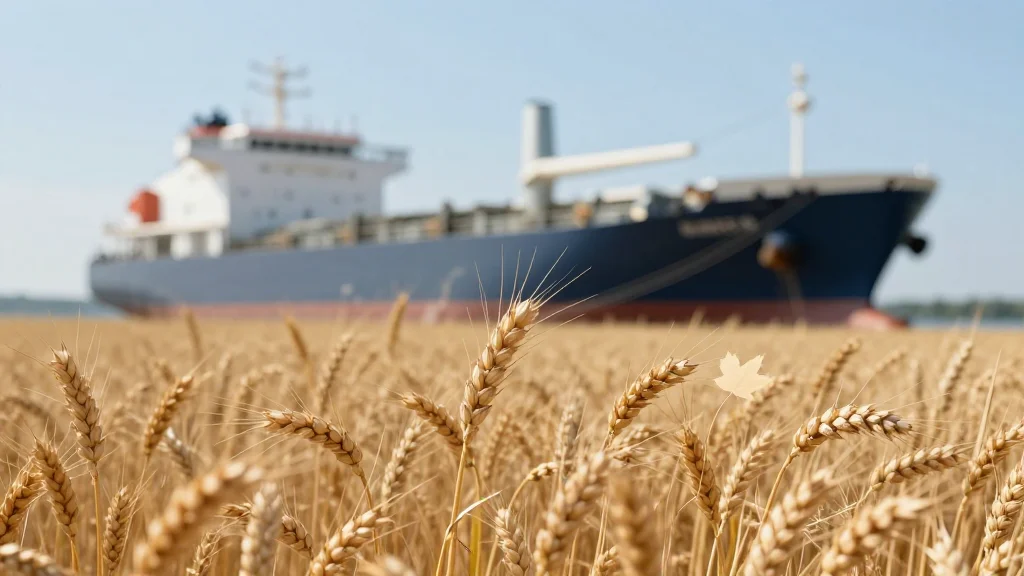
Rising Geoplitical Tensions Show Why Canada’s Agri-Food Trade Strategy Needs to Change
Companies Mentioned
Why It Matters
Trade friction threatens the profitability and stability of Canada’s export‑driven agri‑food businesses, making diversification and diplomatic outreach critical for long‑term growth.
Key Takeaways
- •Canada’s agri‑food exports contributed $149.2 B to GDP in 2024
- •U.S. accounts for roughly 62% of Canadian agri‑food shipments
- •China’s 100% canola surtax was lifted after diplomatic talks
- •Economic diplomacy proved decisive in restoring market access
Pulse Analysis
Canada’s agricultural economy is a global heavyweight, yet its success hinges on open markets. With more than half of agri‑food exports destined for the United States, any policy shift in Washington—such as past tariff threats—can ripple through farms and processors across the Prairies. Simultaneously, disputes with China, India and Saudi Arabia have highlighted how geopolitical friction inflates logistics costs and destabilises supply chains, prompting firms to reassess their export playbooks.
The canola saga epitomises these risks. After a 100% Chinese surtax in 2025, Canadian producers saw shipments plunge from six million to two million metric tonnes. A high‑level visit by Prime Minister Mark Carney to Beijing and a reciprocal reduction of Canada’s EV tariff sparked a partial tariff rollback, restoring access to a market that once handled 60% of canola seed exports. This episode demonstrates that formal trade agreements alone cannot shield exporters; targeted diplomatic engagement remains a vital tool for resolving non‑tariff barriers and preserving market share.
Looking ahead, Canada must broaden its export footprint beyond the U.S. and China. Investment in digital agriculture, infrastructure upgrades and R&D can lower production costs and boost product quality, making Canadian goods competitive in emerging markets across Europe, Africa and Latin America. A coordinated strategy that blends economic diplomacy with domestic productivity enhancements will reduce over‑reliance on any single partner, fortify trade resilience, and sustain the sector’s contribution to national prosperity.
Rising geoplitical tensions show why Canada’s agri-food trade strategy needs to change
Comments
Want to join the conversation?
Loading comments...