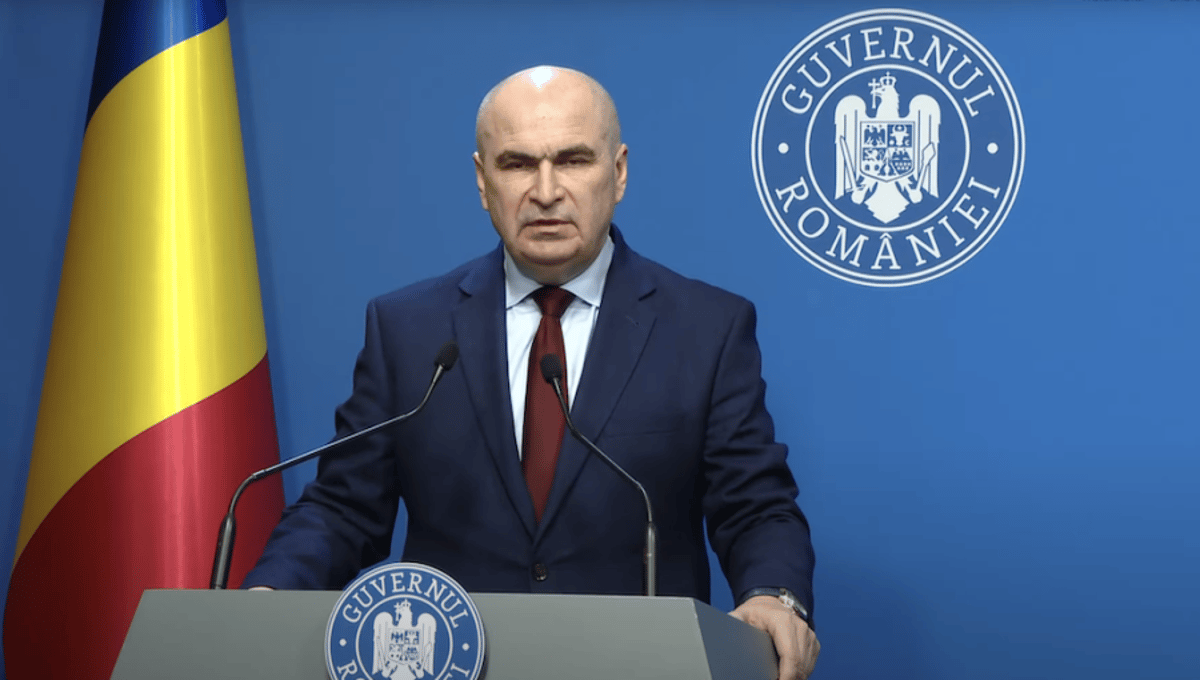
Romania’s Government Approves Public Administration Reform, Economic Stimulus Package
•February 25, 2026
0
Why It Matters
The reforms tighten fiscal discipline while trying to revive private‑sector investment, directly influencing Romania’s consolidation path and its attractiveness to investors. Successful implementation could lower public‑sector costs and boost growth in sectors where the country faces trade deficits.
Key Takeaways
- •10% staff reduction cuts 12,794 civil servants
- •30% overall position cut across local administrations
- •Economic package offers hyper‑accelerated amortisation and R&D tax credits
- •Small firms gain lenient VAT cash accounting regime
- •Reform targets 2,584 financially dependent UATs
Pulse Analysis
Romania’s public‑administration overhaul marks a decisive shift toward fiscal prudence and operational efficiency. By mandating unified staffing benchmarks and central wage caps, the decree aims to trim roughly 12,800 civil‑service positions and curb the bloated personnel budgets that have long strained local budgets. The move also seeks to streamline procedures and introduce standardized performance evaluations, a step that aligns with broader EU public‑sector modernization goals. While the reform stops short of merging the country’s 3,200+ territorial units, it forces financially dependent UATs to conform to centrally set expenditure limits, creating a more disciplined fiscal environment.
The accompanying economic relaunch package targets the private sector with a suite of incentives designed to offset the tightening of public finances. Hyper‑accelerated amortisation allows firms to write off capital investments at an accelerated pace, improving cash flow for large‑scale projects. Complementary tax credits for research and development encourage innovation, while expanded VAT cash‑accounting lets companies defer tax payments until invoices are collected, easing liquidity pressures for SMEs. Additional measures, such as profit‑reinvestment incentives and a dedicated fund for investments exceeding €200 million, aim to stimulate domestic production in high‑value‑added industries where Romania traditionally runs trade deficits.
Together, the administrative reforms and stimulus package represent a balancing act between austerity and growth. Critics warn that the lack of territorial consolidation may limit long‑term efficiency gains, and some incentive provisions have been recycled from previous schemes with mixed results. Nonetheless, the coordinated rollout signals political stability and a willingness to address both budgetary constraints and competitiveness. For investors, the reforms reduce fiscal risk, while the stimulus offers tangible tax benefits, positioning Romania as a more attractive destination for high‑tech and export‑oriented ventures in the coming years.
Romania’s government approves public administration reform, economic stimulus package
0
Comments
Want to join the conversation?
Loading comments...