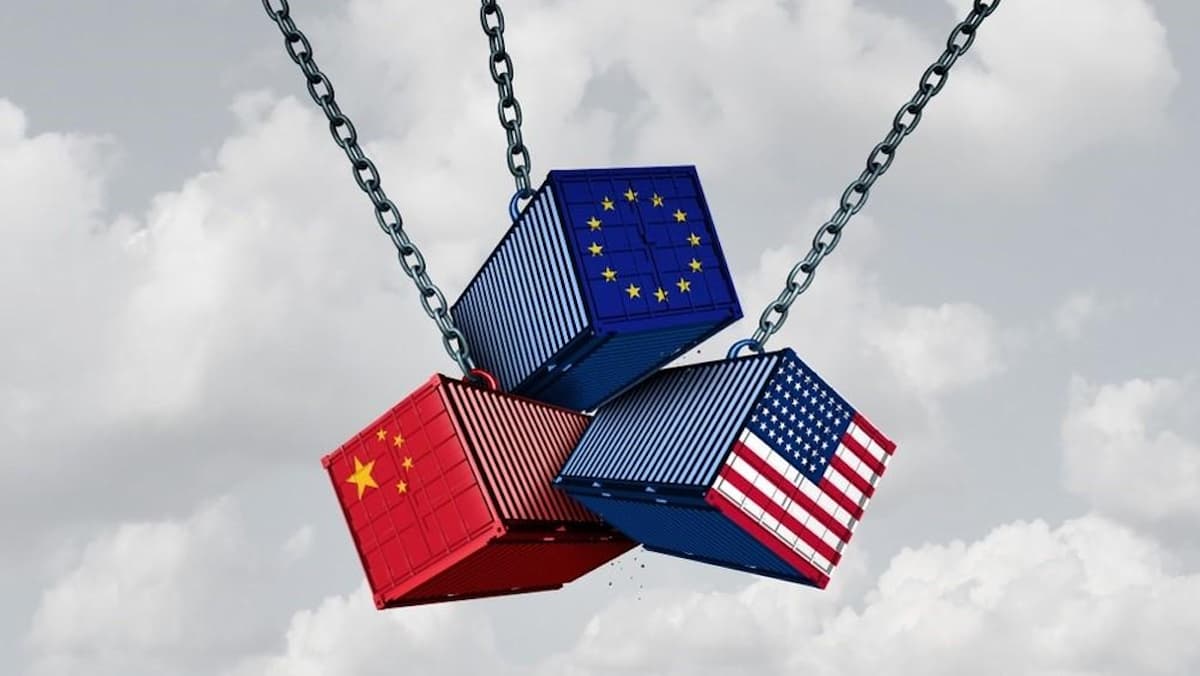
Sino-West Trade Strains Deepen on New Tariffs and Rules
Why It Matters
Higher tariffs and stricter EU rules could raise costs for U.S. and European firms reliant on Chinese inputs and may trigger a retaliatory trade spiral, threatening global supply‑chain stability.
Key Takeaways
- •USTR proposes up to 12.5% tariffs on Chinese imports over forced‑labor claims
- •EU's Industrial Accelerator Act aims to boost domestic sectors, limiting foreign competition
- •EU Cybersecurity Act imposes tougher certification for Chinese tech providers
- •Beijing signals possible counter‑tariffs, heightening retaliation risk
- •Electronics, automotive and renewables face higher costs and supply‑chain uncertainty
Pulse Analysis
The United States is moving beyond traditional anti‑dumping measures by linking new tariffs to forced‑labor allegations. 5% duty on a wide swath of Chinese goods, from consumer electronics to automotive components. For American importers, the immediate effect is a rise in landed costs that could compress margins or be passed on to consumers, feeding inflationary pressure in already sensitive sectors. Companies that have been reshoring or diversifying away from China may accelerate those plans, while firms still dependent on Chinese supply chains must weigh pricing, inventory and compliance risks.
Across the Atlantic, the European Union is tightening the gate for foreign technology through two complementary statutes. The Industrial Accelerator Act streamlines subsidies and permits for EU‑based manufacturers, effectively giving home‑grown firms a competitive edge in strategic areas such as batteries, renewable‑energy equipment and advanced composites. Meanwhile, the Cybersecurity Act raises the bar for digital‑infrastructure certification, demanding rigorous security audits that many Chinese vendors find burdensome. The combined effect is a gradual narrowing of market access for Chinese players, prompting them to seek partnerships, relocate R&D, or confront a slower growth trajectory in Europe’s high‑value markets. S.
tariff proposal and the EU’s regulatory push create a convergence of economic security and geopolitical rivalry that could spiral into a broader trade confrontation. Beijing’s warning of retaliatory measures signals that any escalation would likely reverberate through global supply chains, affecting sectors from semiconductors to pharmaceuticals. Investors should monitor policy negotiations closely and consider hedging exposure to Chinese inputs, while multinational firms might diversify sourcing or increase inventory buffers. Ultimately, the ability of Washington and Brussels to calibrate enforcement without triggering a tit‑for‑tat cycle will shape the stability of international trade in the coming years.
Sino-West trade strains deepen on new tariffs and rules
Comments
Want to join the conversation?
Loading comments...