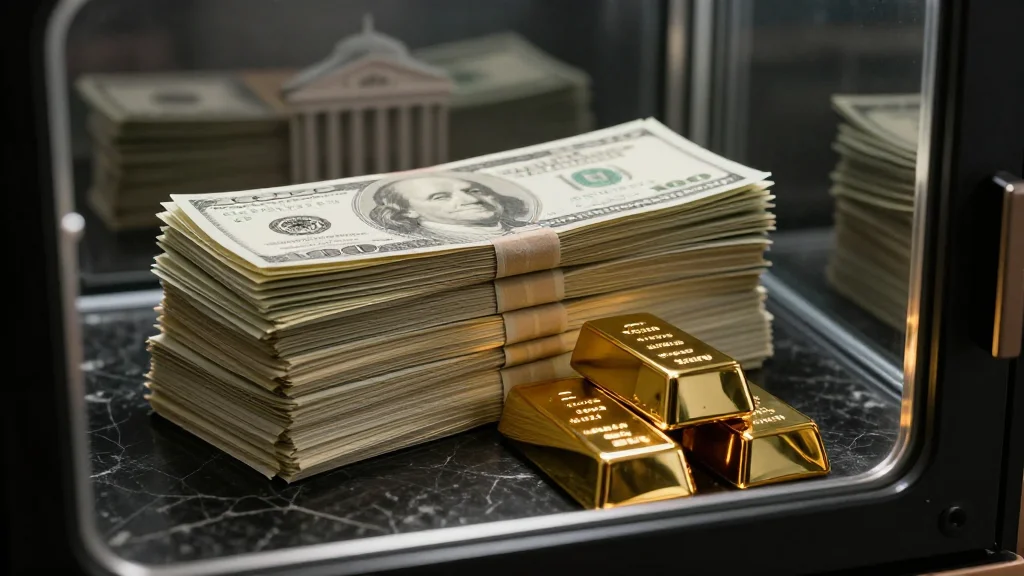
The $150B US Treasury Drain and the End of the “Ample Reserve” Buffer
Why It Matters
The liquidity drain directly pressures bank reserves, pushes short‑term rates higher, and reshapes risk‑asset valuations, making Treasury plumbing a key market driver for the rest of 2026.
Key Takeaways
- •Treasury will pull $150 billion from market by early June 2026
- •TGA balance near $1 trillion, depleting bank reserves
- •Reverse repo buffer fell to $7 billion, ending ample reserves
- •Bitcoin fell below $75 k, signaling liquidity squeeze
- •Short‑term rates expected to rise as SOFR climbs through September
Pulse Analysis
The U.S. Treasury’s balance sheet is swelling toward the $1 trillion mark as it prepares to issue roughly $671 billion of new debt in the July‑September quarter. Because each new issuance must be settled through the Treasury General Account (TGA) at the Federal Reserve, cash moves from private bank reserves into the government’s checkbook. Analysts call this “settlement‑day asymmetry,” a mechanical drain that will remove about $150 billion of liquidity from the market between May 28 and June 5, 2026. The shift is not driven by policy but by the timing of cash flows.
The rapid build‑up of the TGA coincides with a dramatic contraction of the Federal Reserve’s reverse‑repo facility, which has fallen from $143 billion a year ago to roughly $7 billion today. That facility once acted as a shock absorber, allowing Treasury issuance to draw on idle cash rather than bank reserves. With the buffer essentially exhausted, every new bill now directly drains liquidity from the banking system, tightening short‑term funding conditions. Market participants therefore anticipate upward pressure on the Secured Overnight Financing Rate (SOFR) and a broader rise in short‑term borrowing costs through September.
Crypto markets have already reflected the tightening, with Bitcoin slipping below $75 k after breaching a key support level. Because digital assets lack the corporate earnings cushion of equities, they react swiftly to changes in net cash supply, making them a real‑time barometer of liquidity stress. Investors should therefore monitor Bitcoin’s price action alongside traditional indicators, and consider reallocating toward assets that benefit from higher rates, such as short‑duration bonds or cash‑rich equities. Ignoring the Treasury’s plumbing risks exposure to sudden valuation adjustments as the liquidity gap widens.
The $150B US Treasury Drain and the End of the “Ample Reserve” Buffer
Comments
Want to join the conversation?
Loading comments...