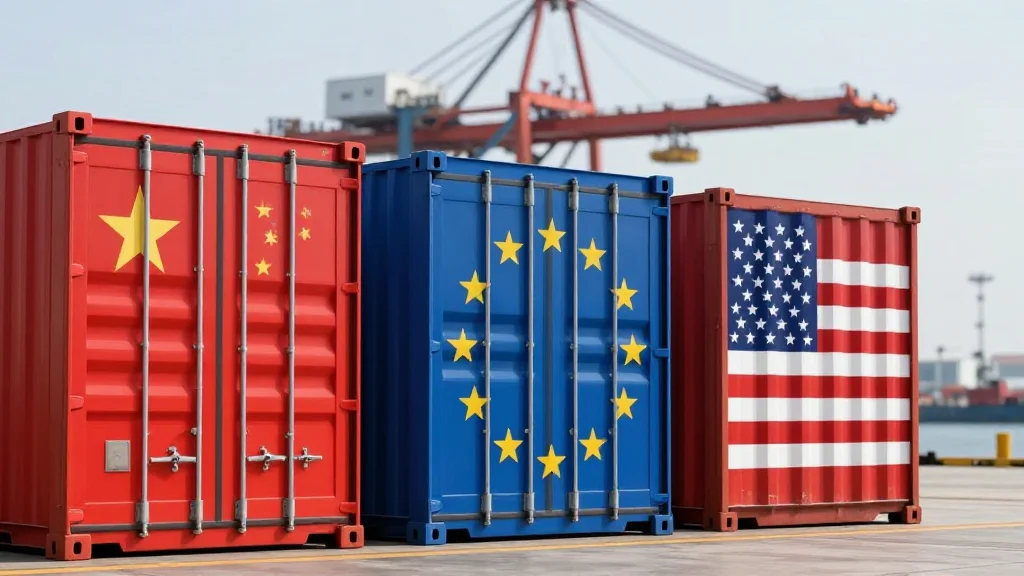
The China Shock 2.0
Why It Matters
The surge threatens competitive balance, prompting policy responses that could reshape global supply chains and investment flows. How nations react will influence the next decade of manufacturing and technology leadership.
Key Takeaways
- •China posted a $1.2 trillion trade surplus in 2023.
- •EU proposal forces Chinese firms to share tech and hire locally.
- •Subsidized Chinese high‑tech exports pressure global manufacturers.
- •Developing nations weigh cheap imports against domestic industry loss.
Pulse Analysis
The unprecedented $1.2 trillion surplus underscores China’s transition from a low‑cost manufacturer to a dominant exporter of sophisticated goods. While the surplus boosts Chinese GDP, it also amplifies trade tensions as countries confront a wave of competitively priced, high‑tech imports that can erode local market share. Analysts note that the scale of subsidies and state‑backed R&D grants give Chinese firms an edge, prompting a reassessment of tariff and anti‑dumping strategies across the West.
In Europe, the response is taking shape through regulatory proposals that tie market access to knowledge‑transfer obligations and local employment quotas. Brussels argues that such conditions will safeguard strategic industries and prevent a race‑to‑the‑bottom on labor standards. Critics, however, warn that overly restrictive rules could deter foreign direct investment and slow the continent’s own digital transformation. The policy debate reflects a broader dilemma: protecting domestic capabilities without isolating the EU from the benefits of Chinese innovation and capital.
Developing economies face a different calculus. Cheap Chinese components can accelerate infrastructure projects and lower consumer prices, yet the influx may crowd out nascent local producers, hindering long‑term industrial development. Some nations are exploring strategic partnerships, leveraging Chinese financing while imposing selective safeguards on critical sectors. The evolving "China Shock 2.0" thus represents a multifaceted challenge—balancing immediate economic gains against the strategic imperative of maintaining resilient, diversified supply chains.
The China Shock 2.0
Comments
Want to join the conversation?
Loading comments...