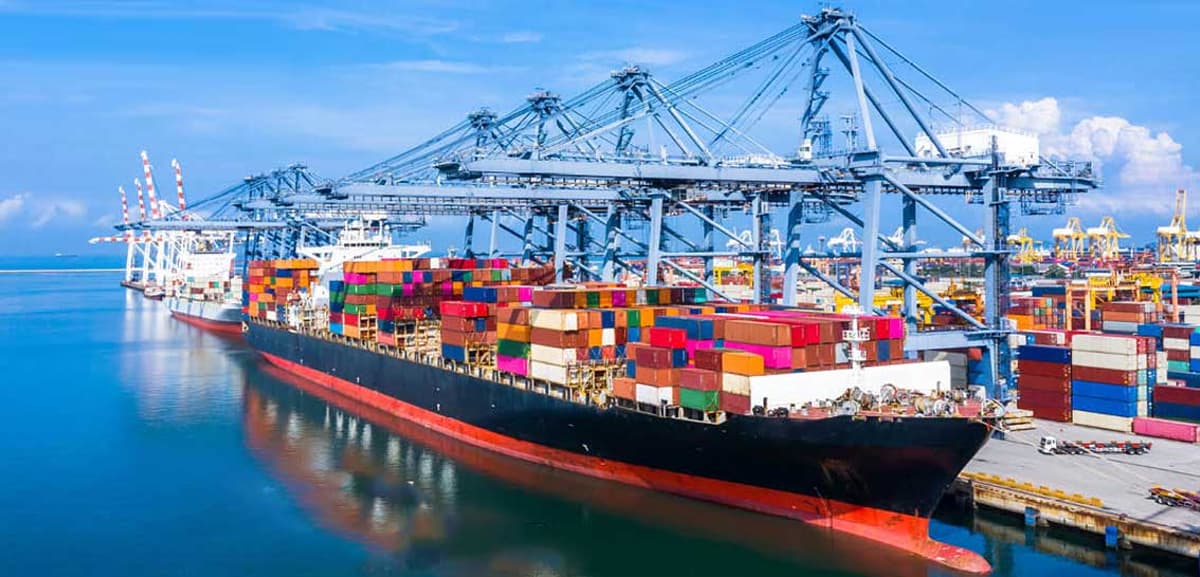
The New Power Corridor
Why It Matters
IMEC could reshape global supply chains by offering a secure, diversified route that reduces dependence on China‑controlled corridors, boosting India’s economic clout and regional stability.
Key Takeaways
- •IMEC aims to cut logistics costs up to 30%.
- •Project links major ports from India to Europe via the Gulf.
- •Expected to generate 2 million jobs across logistics and IT by 2030.
- •India’s GDP projected to exceed $20 trillion by 2040, boosting demand.
- •Funding includes $2.2 bn shipbuilding aid and $3 bn private expansion.
Pulse Analysis
The India‑Middle East‑Europe Economic Corridor (IMEC) emerges at a time when businesses are scrambling for resilient supply‑chain alternatives. By weaving together rail lines, highways, ports and digital infrastructure, the corridor creates a seamless conduit from Indian manufacturing hubs to European markets, bypassing traditional chokepoints such as the Suez Canal. Its design reflects a broader geopolitical shift: Western allies are seeking to dilute China’s Belt and Road influence, and IMEC offers a sovereignty‑first model that aligns with U.S. strategic interests while capitalising on India’s rapid economic ascent.
Economically, IMEC promises transformative gains. Analysts estimate logistics expenses could fall by as much as 30%, while transit times shrink 40%, delivering tangible cost savings for exporters and importers alike. The initiative is projected to generate about 2 million jobs across logistics, infrastructure, IT and related services by 2030, reinforcing India’s ambition to cross the $20 trillion GDP threshold by 2040. Complementary investments—such as the $2.2 bn shipbuilding assistance policy and a $3 bn private expansion in chemicals‑to‑renewables—underscore the corridor’s role as a catalyst for broader industrial growth and a magnet for foreign direct investment.
Nevertheless, IMEC faces formidable hurdles. Regional security volatility, divergent regulatory regimes and the need for a dedicated financing pool could stall progress. Experts advocate a binding IMEC charter, centralized arbitration and robust public‑private partnership frameworks to mitigate these risks. Integrating green technologies—hydrogen pipelines, AI‑driven logistics and blockchain‑enabled customs—will be essential for meeting sustainability goals and future‑proofing the corridor. If these challenges are navigated, IMEC could redefine intercontinental trade, cementing India’s status as a trans‑continental logistics hub.
The New Power Corridor
Comments
Want to join the conversation?
Loading comments...