The U.S. Inflation Problem Is Getting Worse
Companies Mentioned

Why It Matters
Persistently rising producer prices tighten the Fed’s policy options, making further rate hikes more likely and delaying any easing that could support growth. The broader inflationary pressure signals deeper supply‑side constraints beyond temporary energy spikes.
Key Takeaways
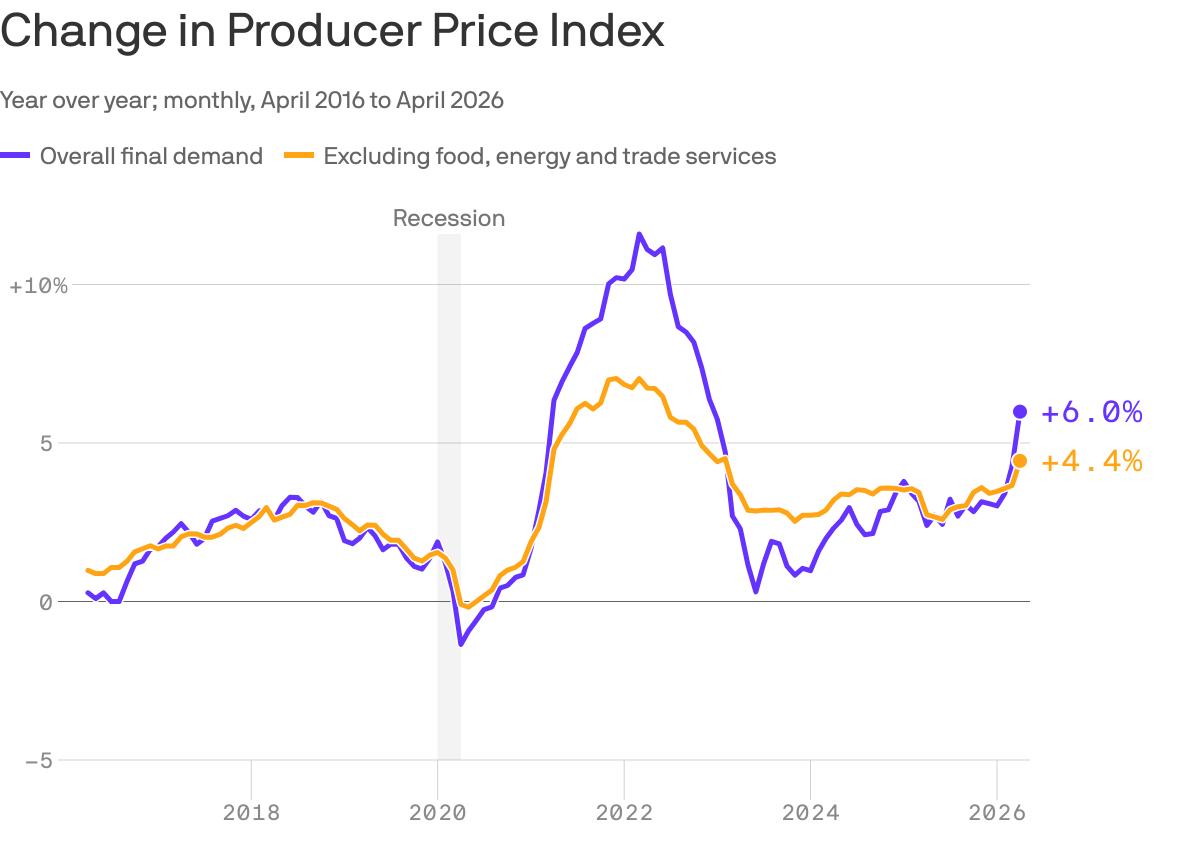
- •PPI rose 1.4% in April, 6% year‑over‑year
- •Core services inflation hit 4.4% YoY, highest since 2023
- •FedWatch odds of a rate hike rose to 34%
- •Fed officials signal maintaining restrictive policy amid persistent price pressures
Pulse Analysis
The latest Producer Price Index (PPI) data underscores a widening inflationary gap that goes beyond the energy shock from the Iran conflict. While headline consumer price numbers have dominated headlines, the PPI’s 1.4% month‑over‑month rise and 6% annual gain reveal that producers are facing higher input costs across a broad basket of goods. Notably, core services—excluding volatile food and energy—climbed 4.4% over the past year, the steepest increase since 2023, highlighting second‑order effects from higher fuel prices on transportation and warehousing.
For the Federal Reserve, these figures complicate an already delicate policy balance. Historically, the central bank has used rate cuts to stimulate a lagging economy, but the persistence of producer‑side inflation erodes the case for easing. Boston Fed President Susan Collins and other officials have signaled a willingness to keep monetary policy slightly restrictive, if not tighten further, to anchor inflation expectations. The CME FedWatch tool now reflects a 34% probability of a rate increase before year‑end, up from 16% just a week ago, suggesting markets are pricing in a more hawkish stance.
The broader macroeconomic implications are significant for businesses and investors. Higher production costs can translate into elevated consumer prices, squeezing household budgets and potentially dampening demand. Companies in transportation, logistics, and energy‑intensive sectors may see profit margins compressed unless they can pass costs onto customers. Meanwhile, investors should monitor the Fed’s messaging and the trajectory of core PPI components, as these will shape expectations for future rate moves and influence asset‑price volatility across equities, bonds, and real‑estate markets.
The U.S. inflation problem is getting worse
Comments
Want to join the conversation?
Loading comments...