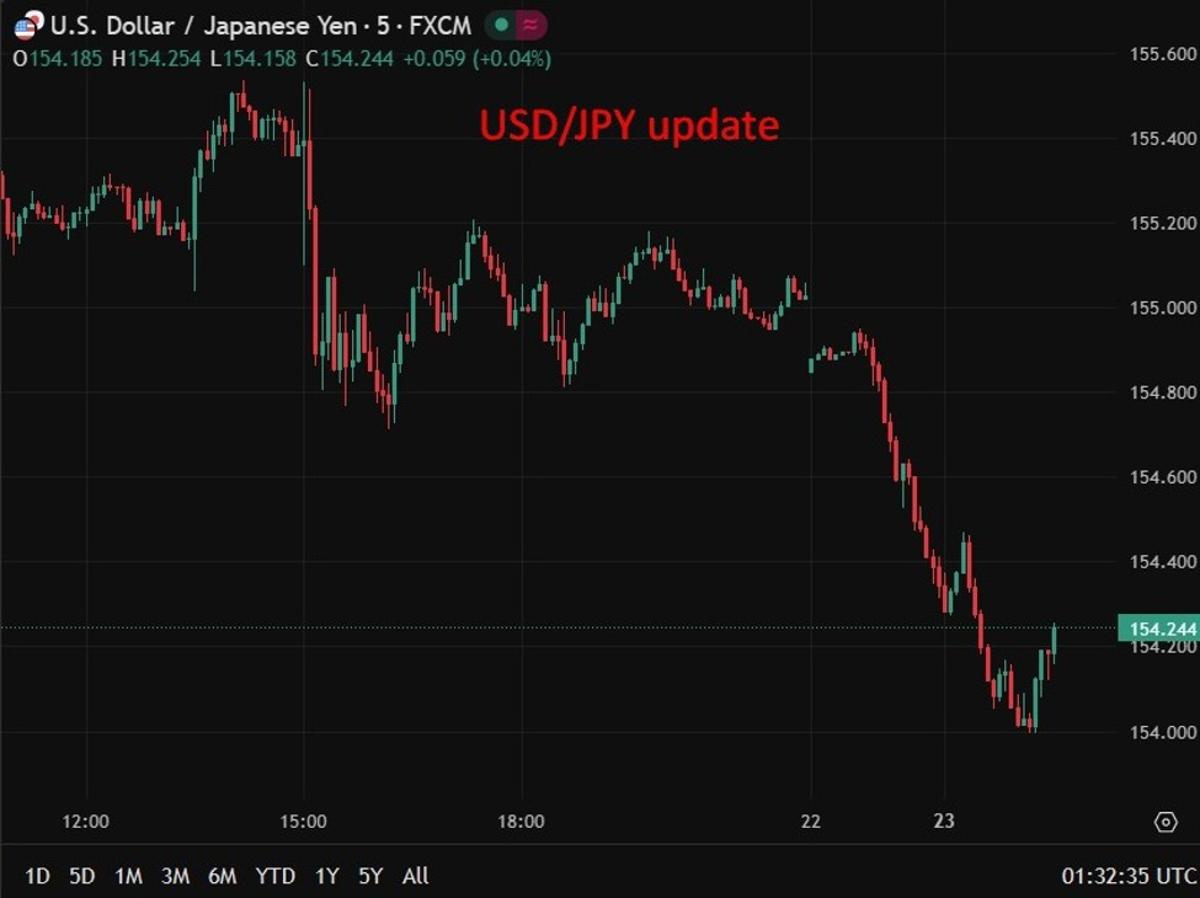
The USD Has Continued Its Slide in Asia Trade. USD/JPY Is Down a Big Figure.
•February 23, 2026
0
Why It Matters
The move signals heightened volatility in FX markets ahead of major Asian holidays, affecting multinational corporations and traders. A stronger yen and rising Hong Kong equities could reshape regional capital flows.
Key Takeaways
- •USD demand spikes amid new tariff dispute.
- •USD/JPY slides sharply, yen gains.
- •Japan's holiday curtails yen trading volume.
- •China remains closed until Feb 24, 2026.
- •Hong Kong Hang Seng climbs ~1.4%.
Pulse Analysis
The latest tariff dispute between the United States and key Asian exporters has reignited demand for the dollar in regional trade settlements. By forcing importers to hedge against potential cost escalations, the dispute pushes firms to lock in USD pricing, thereby swelling dollar‑denominated transaction volumes. This surge in dollar usage often translates into short‑term pressure on local currencies, especially those with historically tight correlations to trade flows, such as the Japanese yen and the Chinese renminbi.
Compounding the currency dynamics, both Japan and China are observing public holidays that significantly thin market liquidity. Japan’s holiday reduces yen market depth, making price movements more pronounced when large orders hit the order book. Similarly, China’s extended break postpones a flood of renminbi‑linked trades until after February 24, 2026, leaving the USD/JPY pair vulnerable to abrupt swings. The resulting yen rally against the dollar illustrates how calendar effects can amplify the impact of macroeconomic news, a pattern traders closely monitor during holiday windows.
In contrast, Hong Kong’s equity market displayed resilience, with the Hang Seng index climbing roughly 1.4%. The uptick reflects investor confidence in local corporate earnings and a relative decoupling from the currency turbulence affecting the broader region. For multinational firms, the divergent moves underscore the importance of hedging strategies that account for both FX volatility and equity market sentiment. As Asian markets reconvene, the interplay between tariff‑driven dollar demand, holiday‑induced liquidity gaps, and equity performance will shape capital allocation decisions across the Pacific.
The USD has continued its slide in Asia trade. USD/JPY is down a big figure.
0
Comments
Want to join the conversation?
Loading comments...