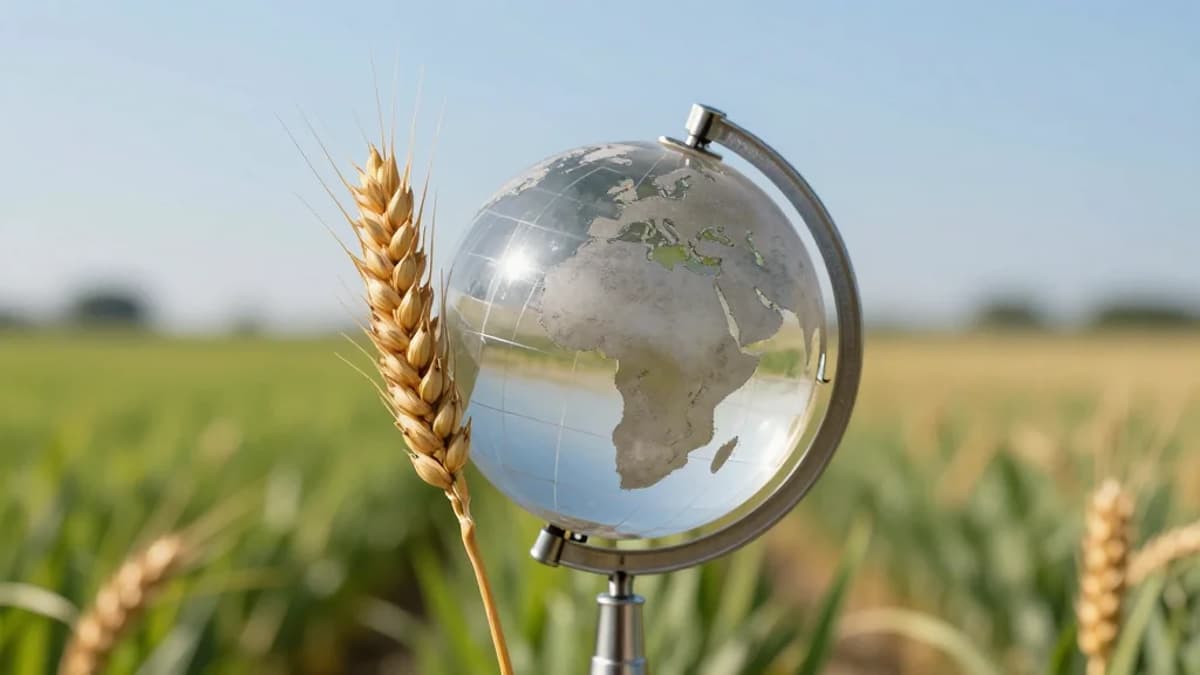
The trade pacts could significantly expand India’s export footprint while safeguarding farmer incomes, reinforcing the country’s position as a global food and manufacturing hub.
India’s last decade of structural reforms—UPI, GST, Jan Dhan, direct benefit transfers—has modernised the financial system and reduced leakages. These changes have boosted consumer confidence and created a more predictable business environment, laying the groundwork for ambitious trade negotiations. As the world’s fastest‑growing major economy, India now seeks to translate domestic efficiency into external market access. The digital backbone also facilitates real‑time trade data, easing customs procedures and compliance for exporters. Such infrastructure reduces transaction costs, making Indian goods more competitive abroad. Together, these reforms signal a shift toward a globally integrated economy.
The newly signed free‑trade agreements, especially the pending pact with the United States, are positioned to open fresh export corridors for agricultural and processed‑food products. Minister Chirag Paswan emphasized that these deals will not compromise farmer incomes, arguing that value‑addition, cold‑chain investment, and farmer‑producer organisations will raise farmgate prices and reduce distress sales. By shifting policy focus from sheer volume to higher‑margin processing, India aims to become a global food‑basket while curbing post‑harvest waste. Investments in cold storage and logistics are already attracting private capital, further strengthening supply chains.
Policy continuity—three consecutive terms of the same government and a finance minister with a nine‑year tenure—has reassured foreign investors of a stable regulatory climate. Global brands are now exploring India not just as a consumption market but also as a manufacturing hub for research, development and export‑oriented production. Recent incentives for green manufacturing and skill development align with the pacts’ sustainability clauses, enhancing long‑term viability. If the value‑chain upgrades keep pace, the trade pacts could accelerate India’s transition from a raw‑material supplier to a high‑value global food and manufacturing player.
ET Bureau · Last Updated: Feb 14, 2026, 01:00:00 AM IST
India’s economic reforms over the past decade are yielding positive outcomes, Minister Chirag Paswan said, highlighting achievements such as UPI and GST. New trade agreements are set to boost exports and create market opportunities, and assurances have been given that farmers’ interests will remain paramount. The focus is shifting towards value addition in agriculture and food processing.
New Delhi: India’s decade‑long reform push has begun delivering tangible results, food‑processing industries minister Chirag Paswan said, defending the government’s economic record while assuring farmers that recent trade agreements would not undermine their interests. Paswan was speaking at a summit here on Friday.
“We have taken a lot of decisions which have strengthened India’s economy. Many times, questions were raised about this. Today, after a decade, we are witnessing the results of the decisions taken by the government in the past one decade,” he added.
Citing measures such as the Unified Payments Interface, digitalisation, the Pradhan Mantri Jan Dhan Yojana, direct benefit transfers and the rollout of the Goods and Services Tax, he said the government had “connected a big segment of our society with the system” while reducing leakages and corruption. “We have simplified the economy with GST. Despite global challenges, India is still the fastest‑growing economy of the world,” he said.
“We have signed the FTAs, which have been pending for many years. The deal with the US can strengthen our system and open new markets for Indians,” he said, adding that such agreements would expand export opportunities.
Over the years, India’s exports have increased, he said, adding that the new agreements would push them further.
Addressing concerns about the potential impact of the US deal on agriculture and dairy, Paswan offered a categorical assurance:
“We are also elected representatives. We must face the electorate after three years. Can any government think against the interests of farmers, who are the largest segment of the population? Can it compromise with the interest of the farmers? It cannot and it will not. I assure this on behalf of our Prime Minister.”
He added that the government was working to bring agriculture and dairy further into the organised sector through backward linkages and farmer‑producer organisations. “If our reforms and policies were not right then we would not have seen growth in every sector. We have done it,” Paswan said, noting that the government had laid out a vision for the “second quarter of the current century” in the recent budget.
He said the aim was to build a system in which foreign companies view India not only as a large market but also as a manufacturing base. “Swadeshi means involvement of investment and sweat of Indians. We are speaking about strengthening the manufacturing system for the biggest foreign companies,” he said. “Global brands are excited about setting up their manufacturing units, starting research and development centres and to invest here in India.”
Highlighting policy continuity, he said: “Three terms of the same government and the same Prime Minister is not an ordinary thing. One finance minister presenting a budget continuously for nine years under the same Prime Minister shows our stability and continuity.” “Global investors look for stability in policy, and it is our big strength. We are marching ahead with a lot of positive energy,” he said. Paswan said reforms were aimed not only at improving ease of doing business but also ease of living for ordinary citizens.
Stressing India’s agrarian character, Paswan said policy focus had shifted over the last decade from “volume” to “value”. According to him, farmers often resort to distress sales due to a lack of capacity to hold. Processing, increasing shelf life and value addition can increase the holding capacity of farmers, he said, adding that the food‑processing industry could also reduce wastage of perishable items such as fruits and vegetables.
“We have the potential and the capabilities to project us as the global food basket,” he said, noting that India had both abundance and volume not just for domestic self‑sufficiency but also for other countries’ food security. However, “we have tapped a negligible part of our potential,” he said, while pointing to efforts to take processing units to rural areas to bridge the rural‑urban gap.
Comments
Want to join the conversation?
Loading comments...