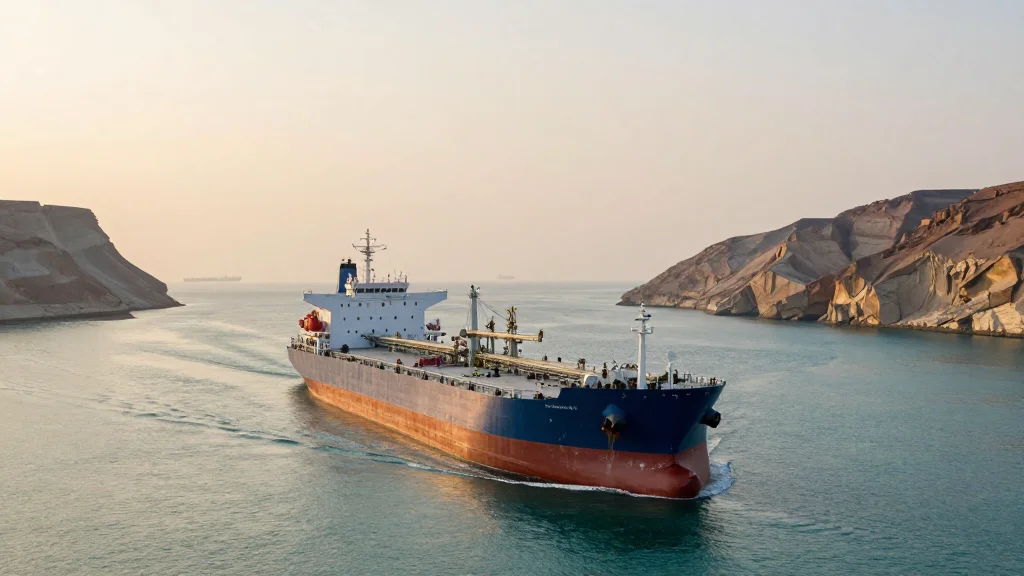
Trump Says US‑Iran Deal Will Reopen Strait of Hormuz, Raising Global Market Stakes

Why It Matters
Reopening the Strait of Hormuz would restore a critical chokepoint for global oil shipments, potentially lowering energy prices and stabilising trade balances for oil‑importing economies. The deal also intertwines nuclear diplomacy with broader regional security arrangements, meaning that any failure could reignite hostilities and keep oil markets volatile. For investors, the outcome will shape commodity price trajectories, sovereign debt risk in the Middle East, and the strategic calculus of energy‑dependent nations. Beyond immediate price effects, the agreement tests the United States' ability to broker a comprehensive settlement that links nuclear non‑proliferation, maritime security, and the Abraham Accords. A successful linkage could set a precedent for multi‑layered diplomacy, while a breakdown would reinforce the perception that geopolitical bargains are fragile, prompting firms to hedge against further supply disruptions.
Key Takeaways
- •President Trump announced a US‑Iran agreement that would reopen the Strait of Hormuz and unfreeze Iranian overseas assets.
- •The deal is structured in two phases: immediate reopening of shipping lanes, followed by 30‑60 days of nuclear negotiations.
- •U.S. Secretary of State Marco Rubio called the current situation unlawful and warned the negotiating language could take days.
- •Iran’s Fars News Agency disputed Trump’s claim, saying free passage will not be restored under the current proposal.
- •Analysts estimate the Hormuz reopening could add up to 2 million barrels per day to global oil supply, easing price pressures.
Pulse Analysis
The Trump‑led initiative to reopen the Strait of Hormuz is as much a geopolitical gambit as it is an economic lever. By tying the cease‑fire to a broader nuclear framework and the Abraham Accords, the administration is attempting to create a bundled peace package that extracts concessions across multiple fronts. Historically, similar attempts—most notably the 2015 Iran nuclear deal—showed that decoupling oil flow from nuclear talks can be precarious; sanctions relief often precedes, not follows, substantive security guarantees. If Trump’s timeline holds, the immediate market reaction could be a modest dip in oil prices, but the longer‑term impact hinges on the durability of the security architecture that underpins the agreement.
From a financial‑market perspective, the promise of resumed Hormuz traffic reduces the risk premium on energy‑linked assets, potentially boosting equities in oil‑intensive sectors and lowering yields on sovereign debt for countries heavily dependent on imported fuel. However, the conditional nature of the deal introduces a binary risk: a sudden reversal—whether from a missed nuclear deadline or a regional backlash over the Abraham Accords clause—could trigger a sharp sell‑off in commodities and a flight to safe‑haven assets. Investors should therefore monitor diplomatic signals from Doha, Tehran, and Jerusalem as closely as they watch oil inventories.
Strategically, the move tests the United States' leverage in a region where traditional allies (Saudi Arabia, Qatar) are wary of being forced into the Abraham Accords framework. If the U.S. can secure a broad coalition, it may reshape the Middle‑East economic order, integrating former adversaries into trade and security pacts that could spur long‑term growth. Conversely, a perceived overreach could alienate key partners, reinforcing a fragmented market that continues to price in geopolitical risk. The coming weeks will reveal whether Trump’s diplomatic overture translates into a durable economic win or merely a temporary market lull.
Trump says US‑Iran deal will reopen Strait of Hormuz, raising global market stakes
Comments
Want to join the conversation?
Loading comments...