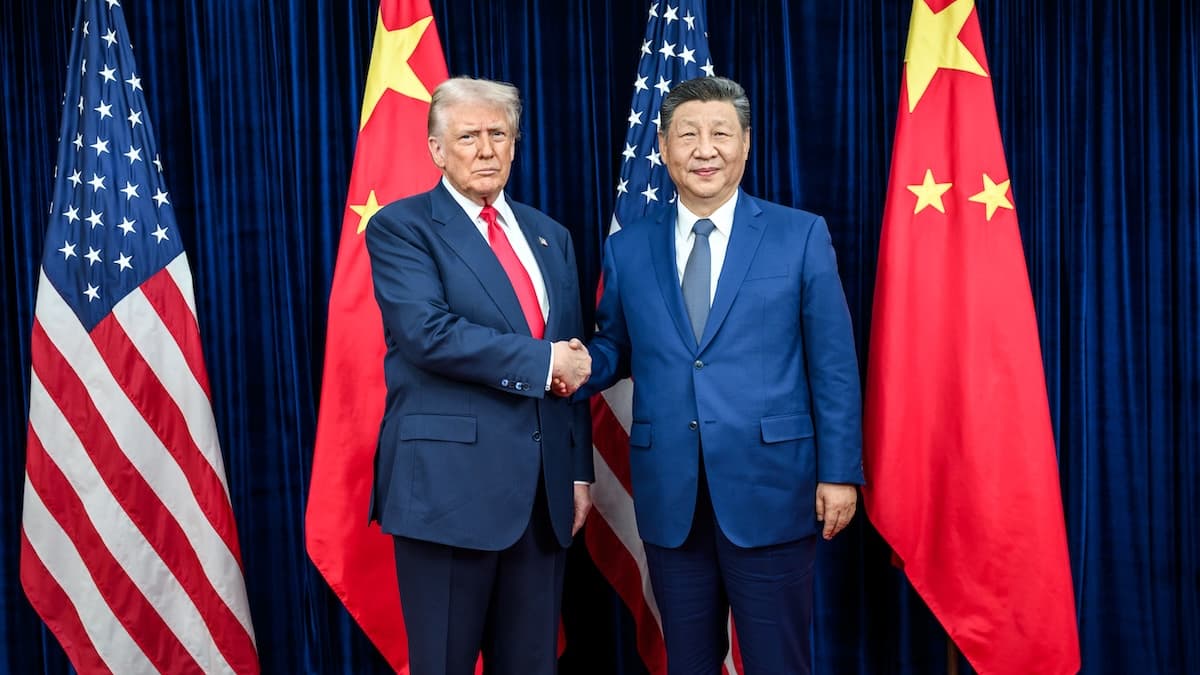
Trump-Xi Summit to Weigh US Energy Sales Amid Hormuz Crisis
Companies Mentioned
Why It Matters
Resuming U.S. energy exports could restore a $8‑billion trade stream and reduce China’s exposure to volatile Middle‑East routes, while giving the Trump administration leverage in broader geopolitical negotiations.
Key Takeaways
- •Trump‑Xi summit to restart U.S. oil and LNG sales to China.
- •China’s U.S. crude imports fell near zero after 20% tariff in 2025.
- •Hormuz disruptions pressure Beijing to diversify, reviving interest in U.S. energy.
- •U.S. sanctions on Iranian-linked vessels give leverage in energy talks.
- •China also leans on Central Asian pipelines and Canadian crude as alternatives.
Pulse Analysis
The United States and China have long been each other’s largest energy counterparties, but the trade war that began in April 2025 abruptly halted the flow of American crude and liquefied natural gas. A 20 % import tariff drove Chinese refiners to replace U.S. barrels with Canadian and Brazilian supplies, while LNG volumes collapsed from 7 million tons in 2021 to a mere 26,000 tons in 2025. Despite these setbacks, the United States still supplied over $8 billion worth of oil and gas in 2024, a figure that both governments hope to recapture at the upcoming summit.
The strategic backdrop has shifted dramatically with Iran’s escalation in the Strait of Hormuz, a chokepoint that accounts for roughly 60 % of China’s oil imports. Disruptions to tanker traffic have exposed the vulnerability of Beijing’s maritime supply chain, prompting officials to reconsider diversified sources. Washington is leveraging this pressure through secondary sanctions on Chinese banks that facilitate Iranian oil trades and by targeting “teapot” refiners linked to Iran’s shadow fleet. By offering a reliable, land‑based alternative—U.S. Gulf Coast and Alaskan exports—the Trump administration hopes to turn energy security into diplomatic capital.
If Beijing agrees to lift the tariff and restart purchases, the bilateral energy market could generate an additional $8‑$10 billion annually, bolstering U.S. trade balances and providing a hedge against Middle‑East volatility. However, China retains a growing portfolio of non‑U.S. supplies, including Central Asian pipeline gas, Canadian heavy crude and Venezuelan oil processed in Texas, which limits Washington’s bargaining power. Analysts predict that any agreement will be conditional, likely tied to broader issues such as sanctions relief, technology transfers, and the future of U.S. agricultural exports, making the summit a pivotal moment for both economies.
Trump-Xi summit to weigh US energy sales amid Hormuz crisis
Comments
Want to join the conversation?
Loading comments...