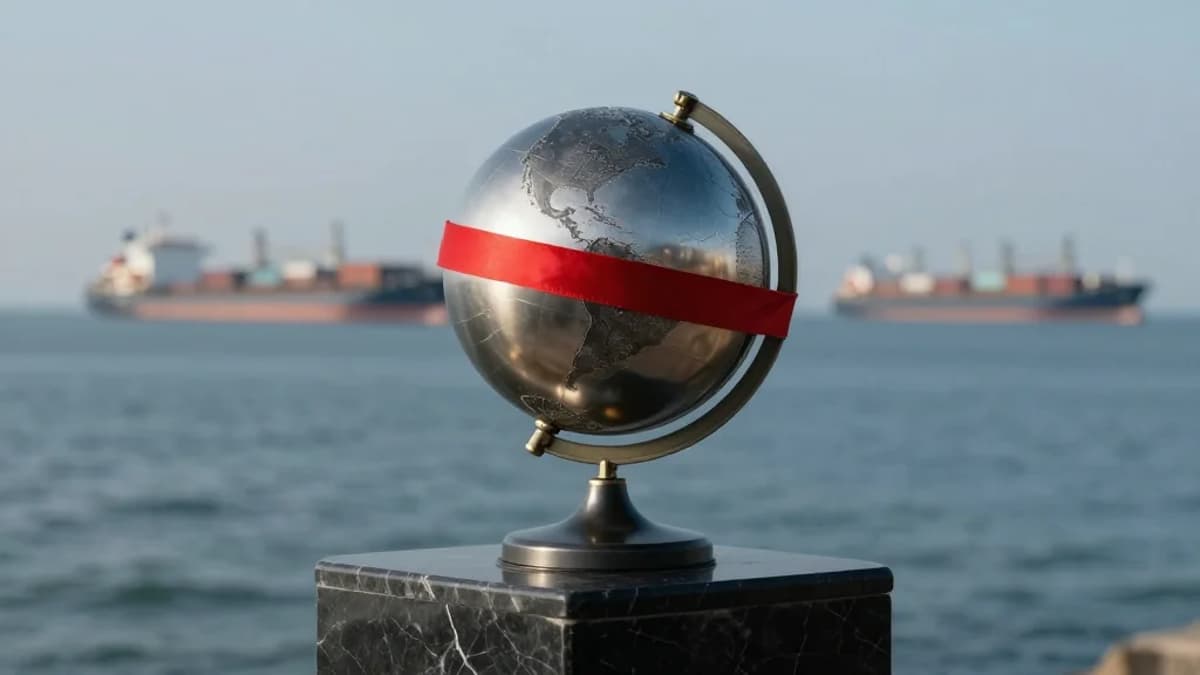
Trump’s 10% Global Tariffs Take Effect After Supreme Court Ruling; 15% Hike Under Consideration
•February 24, 2026
0
Companies Mentioned

Bloomberg
Why It Matters
The tariff shift reshapes global trade dynamics, pressuring negotiations and potentially raising costs for import‑dependent economies. It also signals the administration’s intent to sustain a protectionist stance despite judicial setbacks.
Key Takeaways
- •10% global tariff effective Tuesday after Supreme Court ruling
- •Administration drafting order to raise tariff to 15% soon
- •Effective US tariff rate falls to ~10.2% from 13.6%
- •EU and India pause trade talks amid tariff uncertainty
- •Trump’s emergency powers limited; future investigations remain pending
Pulse Analysis
The Supreme Court’s decision forced the White House to pivot from the controversial emergency‑powers tariffs that Trump used to leverage negotiations. By invoking Section 122 of the 1974 Trade Act, the administration can impose a 10% global levy for 150 days without congressional approval, preserving a core element of Trump’s trade playbook while sidestepping the legal hurdle that toppled the earlier scheme. This maneuver underscores the president’s reliance on executive authority to sustain a protectionist agenda, even as the legal landscape tightens around unilateral trade actions.
Internationally, the abrupt implementation of the 10% tariff has injected fresh uncertainty into ongoing trade talks. The European Union halted ratification of its pending agreement, and India postponed its interim deal, reflecting broader concerns that fluctuating duties could erode the predictability essential for cross‑border commerce. Traditional allies such as the United Kingdom risk facing less favorable terms if the baseline rises to 15%, while adversarial economies like China may find new bargaining chips as the U.S. recalibrates its enforcement tools. These dynamics illustrate how tariff policy can ripple through diplomatic channels, reshaping both cooperative and competitive relationships.
Domestically, the tariff rollout arrives on the eve of Trump’s State of the Union address, positioning trade policy as a centerpiece of his economic narrative. Polls indicate growing public disapproval, with 64% of Americans criticizing the approach, suggesting potential political costs for a strategy perceived to fuel inflation. Yet the administration’s promise of additional investigations hints at a continued push to cement a robust tariff regime. Stakeholders will watch closely for the timing of any 15% increase, as it could amplify price pressures and further influence the midterm electoral calculus.
Trump’s 10% global tariffs take effect after Supreme Court ruling; 15% hike under consideration
0
Comments
Want to join the conversation?
Loading comments...