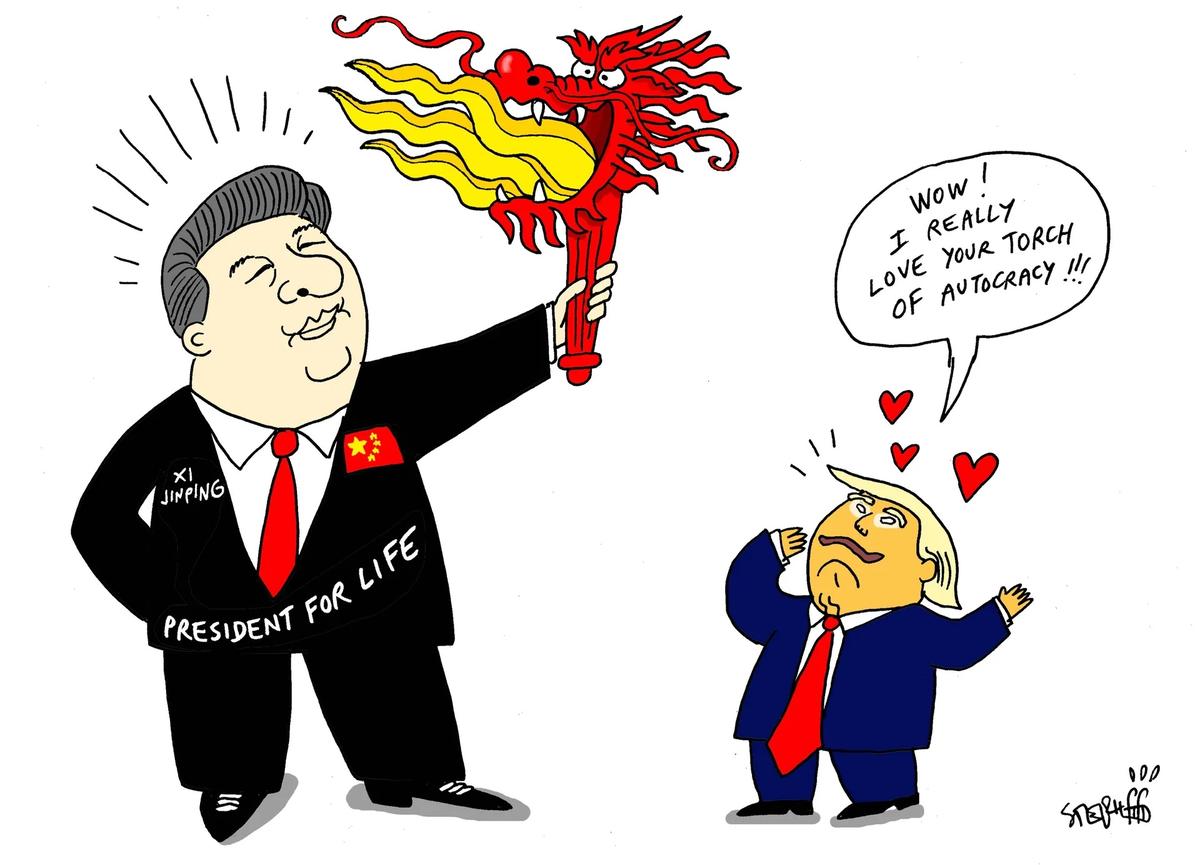
Trump’s Coming Kowtow to Chinese Dictator He Admires and Envies
Why It Matters
The summit could reshape the Iran nuclear standoff and test the fragile U.S.-China relationship, with downstream effects on global oil prices and regional security around Taiwan.
Key Takeaways
- •Trump seeks Chinese help to end Iran conflict.
- •Trade tariffs remain high despite truce talks.
- •Xi may leverage Taiwan policy for Iran concessions.
- •China's economy now about 60% size of US.
- •US strategic alliances eroded during Trump's presidency.
Pulse Analysis
The upcoming Beijing summit marks a rare pivot for U.S.-China diplomacy, shifting focus from the lingering tariff impasse to the volatile Iran war. Trump’s decision to postpone the meeting until after his February‑initiated conflict underscores his dependence on Beijing’s diplomatic weight to de‑escalate tensions in the Strait of Hormuz. By framing China as a potential mediator, the United States tacitly acknowledges Beijing’s unique position as both a major oil importer and a strategic partner to Tehran, a dynamic that could force a recalibration of traditional Western‑led negotiation models.
For Iran, Chinese involvement could be a game‑changer. Beijing’s recent hosting of Iranian Foreign Minister Abbas Araghchi signals a willingness to facilitate back‑channel talks, while its massive oil purchases keep Tehran’s economy afloat. If China can broker a limited nuclear‑related agreement, it would not only lower global oil prices—currently inflated by the Hormuz blockade—but also bolster its image as a responsible global power, counterbalancing criticism over its support for Russia in Ukraine. Such a breakthrough would likely hinge on concessions that align with U.S. interests, creating a delicate diplomatic dance where both superpowers must manage competing priorities.
Beyond the immediate Iran calculus, the summit reverberates across broader geopolitical fault lines. Xi may extract tacit promises on Taiwan, leveraging any U.S. goodwill earned from Iran negotiations to curb American arms sales to the island. Meanwhile, the United States grapples with weakened alliances after years of transactional foreign policy, leaving regional partners wary of relying solely on Washington. Economically, China’s GDP now hovers just above 60% of the U.S., a stark reminder that the once‑predicted overtaking has stalled. The outcome of these talks will therefore shape not only the near‑term resolution of the Iran crisis but also the long‑term balance of power in the Indo‑Pacific and the credibility of both nations on the world stage.
Trump’s coming kowtow to Chinese dictator he admires and envies
Comments
Want to join the conversation?
Loading comments...