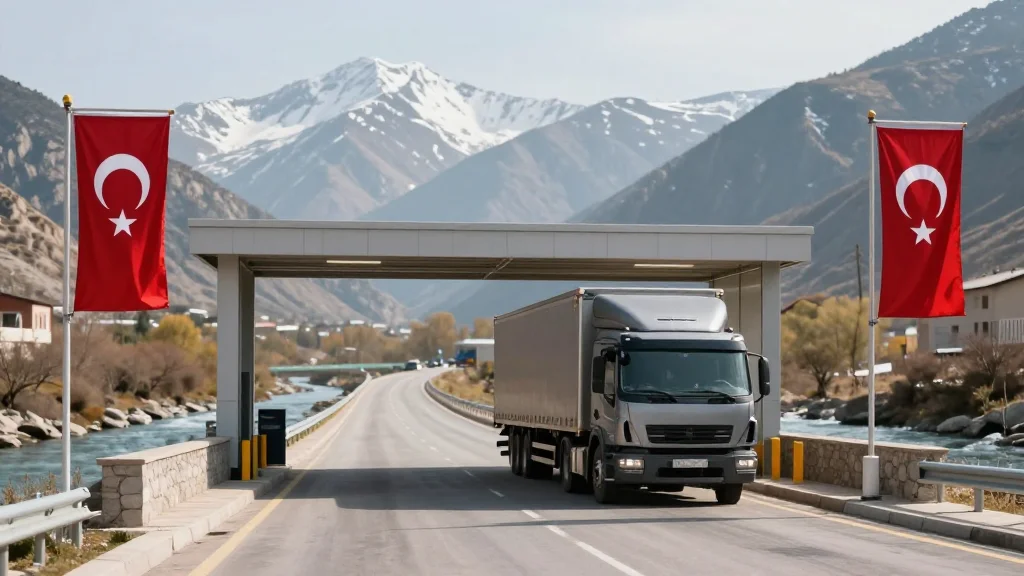
Türkiye-Armenia Border Reopening: A Turning Point For The South Caucasus
Companies Mentioned
Why It Matters
Reopening the border would give Armenia a new trade gateway to Europe and the Middle East while cementing Turkey’s role as a regional logistics hub, fundamentally altering South Caucasus economic and security calculations.
Key Takeaways
- •Turkish Airlines began regular Istanbul‑Yerevan flights in March 2026.
- •Visa procedures simplified, allowing easier travel for citizens of both nations.
- •Armenia renovated Margara checkpoint; Turkey upgraded Alican crossing for trade.
- •Reopening could shift regional trade toward Turkey, reducing Armenia's reliance on Iran.
- •Border talks remain tied to Armenia‑Azerbaijan peace negotiations.
Pulse Analysis
The decades‑long closure of the Türkiye‑Armenia frontier has been a symbolic flashpoint since 1993, reflecting Ankara’s solidarity with Azerbaijan during the first Nagorno‑Karabakh war. Recent confidence‑building steps—regular Turkish Airlines service, visa facilitation, and infrastructure upgrades at Margara and Alican—signal a transition from diplomatic rhetoric to concrete implementation. This shift aligns with broader post‑Cold War realignments in the South Caucasus, where Russia’s waning influence and the 2020 Armenia‑Azerbaijan conflict have opened space for new regional partnerships.
Economically, a reopened border would dramatically diversify Armenia’s export routes, which currently rely on Georgia and Iran. Direct land access to Turkey would integrate Armenian producers into the Middle Corridor, linking the Black Sea to the Persian Gulf and offering faster, lower‑cost pathways to European markets. Turkish businesses, in turn, could tap into Armenian agricultural and tech sectors, expanding their reach into the Caucasus and beyond. The resulting trade surge could stimulate border towns, boost tourism, and create a network of logistics hubs that reinforce Turkey’s ambition to become a Eurasian gateway.
However, the initiative remains fragile. Ankara’s willingness to proceed is closely tied to progress on a comprehensive Armenia‑Azerbaijan peace settlement, given Turkey’s strategic alliance with Baku. Domestic political pressures—Armenian historical grievances and Turkish electoral calculations—add further complexity. Successful implementation will require coordinated customs, security, and regulatory frameworks, as well as confidence‑building among local communities that have lived apart for generations. If these challenges are managed, the border could evolve from a contested line into a catalyst for lasting regional stability and economic interdependence.
Türkiye-Armenia Border Reopening: A Turning Point For The South Caucasus
Comments
Want to join the conversation?
Loading comments...