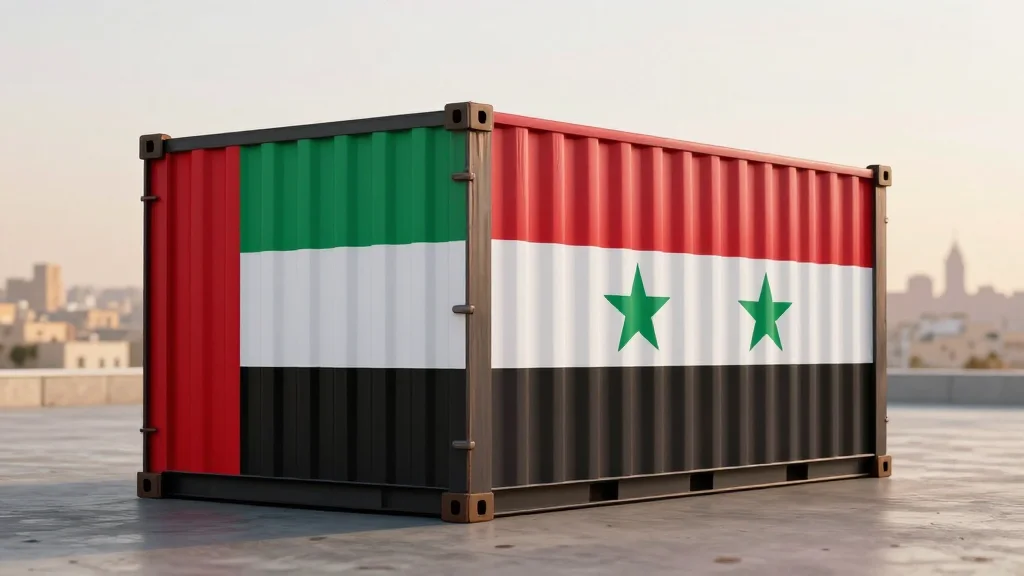
UAE Sees Rapidly Growing Trade with Syria, as Ties Warm
Companies Mentioned
Why It Matters
The surge signals a rapid reintegration of Syria into regional supply chains and offers Emirati firms a foothold in a post‑war reconstruction market, reshaping Middle‑East trade dynamics.
Key Takeaways
- •UAE‑Syria non‑oil trade hit $1.4 bn in 2025, up 132% YoY
- •Preliminary deals cover tourism, construction, infrastructure, agriculture, aviation, logistics
- •Emaar eyes $19 bn of projects across Damascus and Syrian coast
- •Etihad to restart Abu Dhabi‑Damascus flights in June, first since 2012
- •Syrian technical delegation will visit UAE to develop implementation roadmap
Pulse Analysis
The United Arab Emirates and Syria have moved from diplomatic caution to active economic partnership, as evidenced by a 132 % jump in non‑oil trade to $1.4 billion in 2025. The surge follows the removal of most Western sanctions on Damascus at the end of 2023 and reflects a broader realignment prompted by the Iran‑UAE conflict, which pushed the UAE to seek new allies. By channeling trade through sectors less vulnerable to geopolitical risk, Abu Dhabi is positioning itself as a bridge between the Gulf and a war‑torn Syrian market eager for reconstruction capital.
At the Syrian‑Emirati Investment Forum, officials outlined a slate of preliminary agreements covering tourism, construction, infrastructure, agriculture, aviation and logistics. Emirati real‑estate powerhouse Emaar signaled interest in projects valued at up to $19 billion across Damascus and the Syrian coastline, while Etihad Airways announced the resumption of Abu Dhabi‑Damascus flights in June, restoring the only direct air link since 2012. A Syrian technical delegation will travel to the UAE to draft a comprehensive implementation roadmap, translating high‑level memoranda into concrete contracts that could catalyze the country’s battered economy.
The deepening UAE‑Syria ties have ripple effects across the Gulf, where Saudi Arabia and Qatar have already secured multi‑billion‑dollar deals with Damascus. Abu Dhabi’s measured approach—leveraging trade, tourism and logistics rather than overt political endorsement—offers a model for cautious engagement that may attract Western investors wary of regional volatility. For U.S. firms, the expanding market presents opportunities in energy, construction and technology, while also providing a counterbalance to Iranian influence in Syria. If the early momentum sustains, the partnership could reshape trade flows and investment patterns throughout the Middle East for years to come.
UAE sees rapidly growing trade with Syria, as ties warm
Comments
Want to join the conversation?
Loading comments...