U.S. Warns Peru Is ‘Losing Sovereignty’ Over Chinese-Owned Chancay Port
•February 11, 2026
0
Why It Matters
The dispute spotlights a growing U.S.–China rivalry in Latin America, where strategic infrastructure can shift regional influence and affect Peru’s economic autonomy.
Key Takeaways
- •US warns Peru over Chinese port sovereignty
- •Judge exempts Chancay from state regulator oversight
- •Cosco defends private‑port status, cites court complaints
- •Peru regulator fears lack of consumer protection
- •US negotiating $1.5 bn naval base near Chancay
Pulse Analysis
China’s investment in the Chancay deep‑water terminal reflects its broader Belt and Road ambitions, turning the Pacific coast of Peru into a logistical hub for mineral and agricultural exports. By granting Cosco full control and bypassing Peru’s state regulator, the project sidesteps traditional oversight mechanisms, raising questions about transparency, revenue sharing, and long‑term strategic dependence on Beijing. The port’s capacity to handle mega‑container ships positions it as a rival to existing Latin American terminals, potentially reshaping trade routes and giving China a foothold in the continent’s supply chain.
Washington’s reaction is rooted in concerns that unchecked Chinese assets could erode democratic oversight and compromise security. The State Department’s public warning, coupled with Ambassador Navarro’s social‑media criticism, signals a willingness to pressure Lima into aligning more closely with U.S. interests. The parallel negotiation of a $1.5 billion naval base—just miles from Chancay—illustrates a classic balance‑of‑power play, where the United States seeks to counter Beijing’s economic leverage with a military presence, reinforcing its status as a major non‑NATO ally in the region.
For Peru, the episode forces a delicate policy calculus. Accepting Chinese capital accelerates infrastructure development and diversifies export markets, yet it also risks ceding regulatory authority and inviting geopolitical friction. The regulator’s objections highlight domestic pressures to protect consumer rights and maintain sovereign control over critical assets. As Latin American nations grapple with competing superpower offers, Peru’s handling of Chancay could set a precedent for how the region negotiates foreign investment, national security, and economic sovereignty.
U.S. Warns Peru is ‘Losing Sovereignty’ Over Chinese-Owned Chancay Port
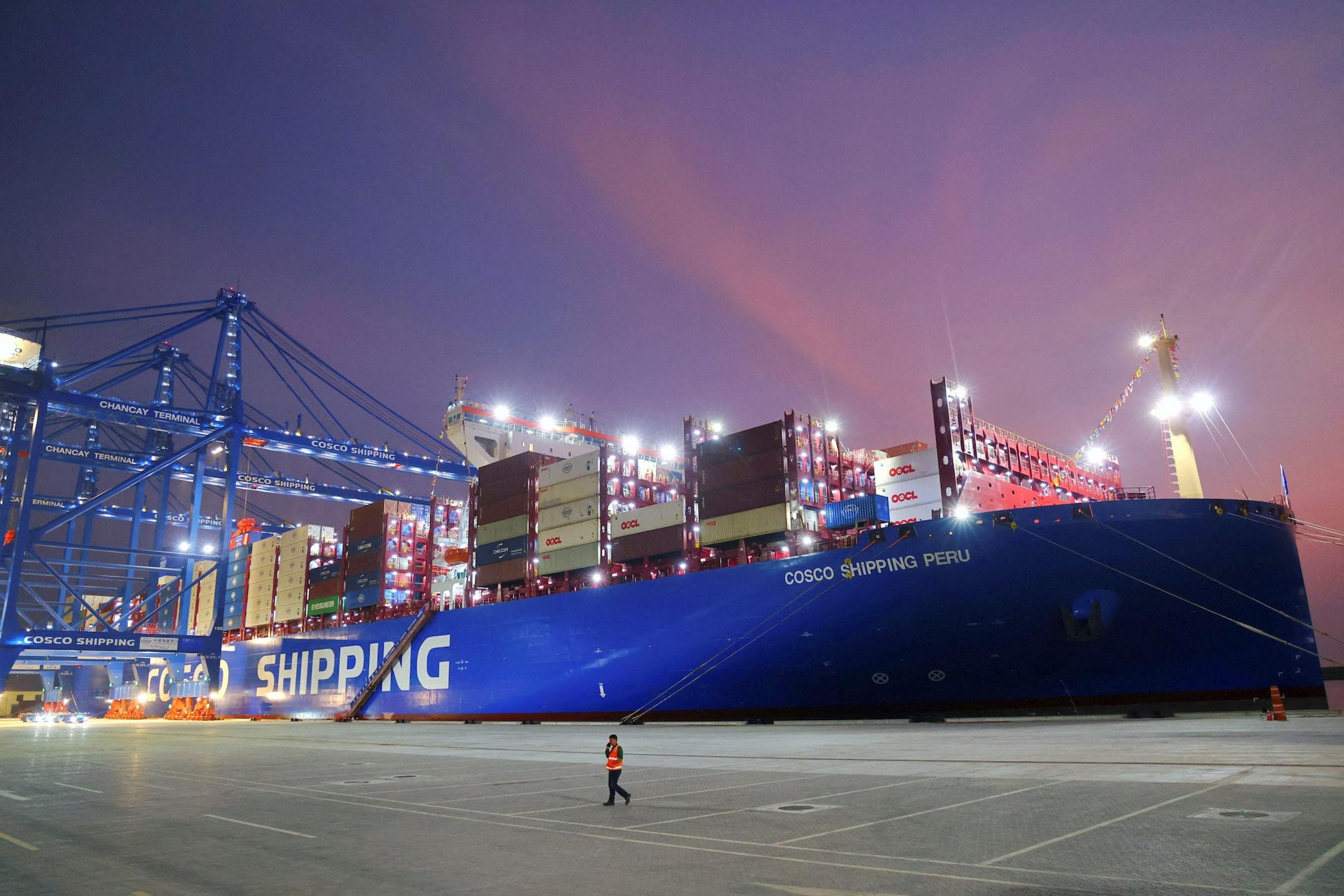
By Marcelo Rochabrun (Bloomberg) · February 11, 2026 · Image caption: A man walks at China’s state‑owned Cosco Shipping Chancay port inaugurated during the APEC Summit, in Chancay, Peru, November 14, 2024. APEC Peru/Handout via REUTERS
The Trump administration warned that Peru is losing sovereignty over a Chinese‑owned port near its capital city, after a local judge ruled that the port is exempt from some regulatory oversight.
“Concerned about latest reports that Peru could be powerless to oversee Chancay, one of its largest ports, which is under jurisdiction of predatory Chinese owners,” the U.S. State Department’s Bureau of Western Hemisphere Affairs said in a post on X on Wednesday. “Let this be a cautionary tale for the region and the world: cheap Chinese money costs sovereignty.”
The warning is the most direct criticism yet from the Trump administration of Peru’s close ties to China, which is the South American nation’s top trading partner followed by the United States. At issue is the Chinese‑owned Chancay port, which cost $1.3 billion to build and was inaugurated by Chinese President Xi Jinping in 2024. The port, which helps expedite shipments to China from South America, is operated by Chinese‑owned Cosco Shipping Ports.
While a local judge ruled against state oversight, the head of Peru’s infrastructure regulator Ositran, Verónica Zambrano, has been vocal in criticizing the decision, saying it will leave users of the port unprotected. Ositran oversees Peru’s other major ports, which are concessions on public land, while Chancay is a privately‑owned port.
“We understand that what has happened, because we have yet to be notified, is that there is a lower court ruling accepting their request, which is not to be supervised by Ositran,” Zambrano said.
Gonzalo Ríos, general manager at Cosco’s Peruvian unit, told local radio RPP that the port had sued to defend its rights as a private port and that users will still be able to file complaints in court or with the consumer‑protection agency.
China has invested heavily in Peru in recent years, including in the electricity and mining sectors as well as shipping. Meanwhile, the United States has designated Peru as a major non‑NATO ally and is negotiating a contract worth as much as $1.5 billion to be paid by Peru to build a new naval base for the Andean country just a few miles from Chancay.
Newly installed U.S. Ambassador to Peru Bernie Navarro also criticized Peru. “Everything has a price. In the long term, what was cheap is costly,” Navarro wrote on X. “There is no higher price to pay than losing sovereignty.”
He also recently posted a photo with Peruvian President José Jeri eating cheeseburgers and calling it a “changing the menu,” in an apparent reference to unreported meetings that the Peruvian president held in Chinese restaurants.
© 2026 Bloomberg L.P.
0
Comments
Want to join the conversation?
Loading comments...