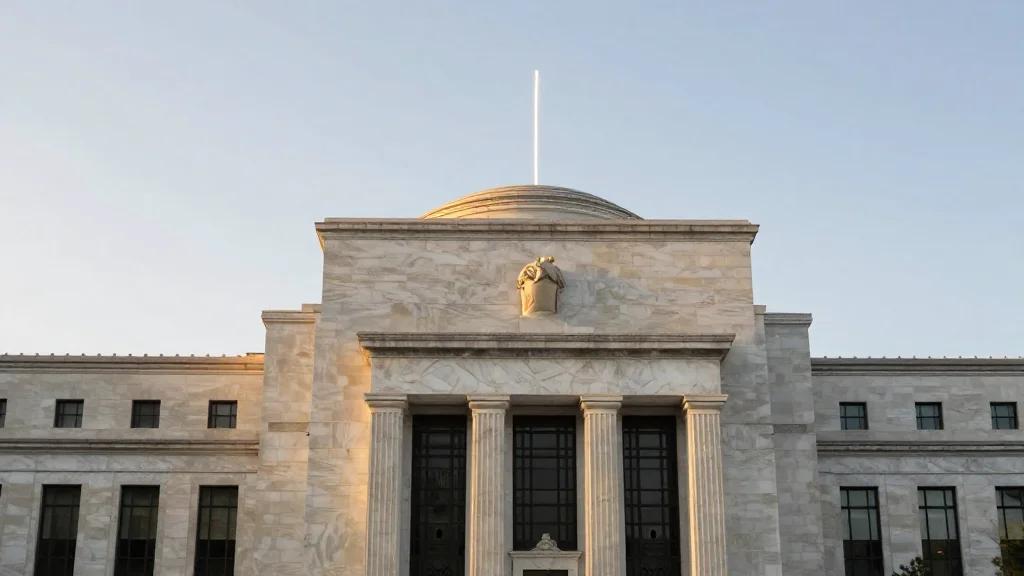
Why the Fed Could Shrink Its Balance Sheet Again (and Markets Might Not Notice)
Companies Mentioned
Why It Matters
The Fed’s reserve‑demand dynamics shape Treasury market liquidity and the line between monetary and fiscal policy, so any balance‑sheet reduction strategy directly affects financing costs and central‑bank independence.
Key Takeaways
- •Fed ended latest QT, shrinking balance sheet by $2 trillion.
- •Post‑crisis regulations keep bank reserve demand rising, expanding Fed liabilities.
- •Proposed reforms could free $500 billion in reserves within a year.
- •Gradual QT restart likely to have negligible market impact.
- •Monitoring money‑market spreads vs IORB will gauge reserve‑demand changes.
Pulse Analysis
The Federal Reserve’s recent quantitative‑tightening (QT) unwind was notable for its silence in the markets. After a peak of almost $9 trillion—roughly a third of U.S. GDP—the Fed trimmed the sheet by more than $2 trillion, yet bond yields and liquidity metrics barely budged. This calm outcome aligns with the Fed’s long‑standing goal of making balance‑sheet adjustments “like watching paint dry,” and it underscores the market’s growing comfort with a smaller central‑bank footprint.
Underlying the quiet exit is a structural shift: post‑crisis regulations now require banks to hold larger buffers of high‑quality liquid assets, chiefly reserves, to back expanding deposit bases. As deposits rise, so does the demand for Fed liabilities, creating a built‑in pressure for the balance sheet to grow even without active asset purchases. Fed Governor Stephen Miran and other policymakers have outlined a menu of reforms—ranging from tweaks to the Fedwire settlement system to adjustments in large‑bank liquidity rules—that could shave up to $500 billion of excess reserves from the system within the next 12‑18 months. While the full $1‑2 trillion potential reduction may be aspirational, the near‑term measures are feasible and already under discussion.
If the Fed proceeds with a measured QT restart, the broader market impact is expected to stay muted. Banks would likely reallocate freed‑up reserves into short‑dated Treasury securities, a move that should be absorbed by the deep Treasury market without materially moving yields. Analysts will watch the spread between money‑market rates and the Fed’s interest‑on‑reserve balances (IORB) as a real‑time gauge of reserve demand. A narrowing spread would signal that the reforms are working, reinforcing confidence that the Fed can manage its balance sheet without destabilizing liquidity or blurring the line between monetary and fiscal policy.
Why the Fed Could Shrink Its Balance Sheet Again (and Markets Might Not Notice)
Comments
Want to join the conversation?
Loading comments...