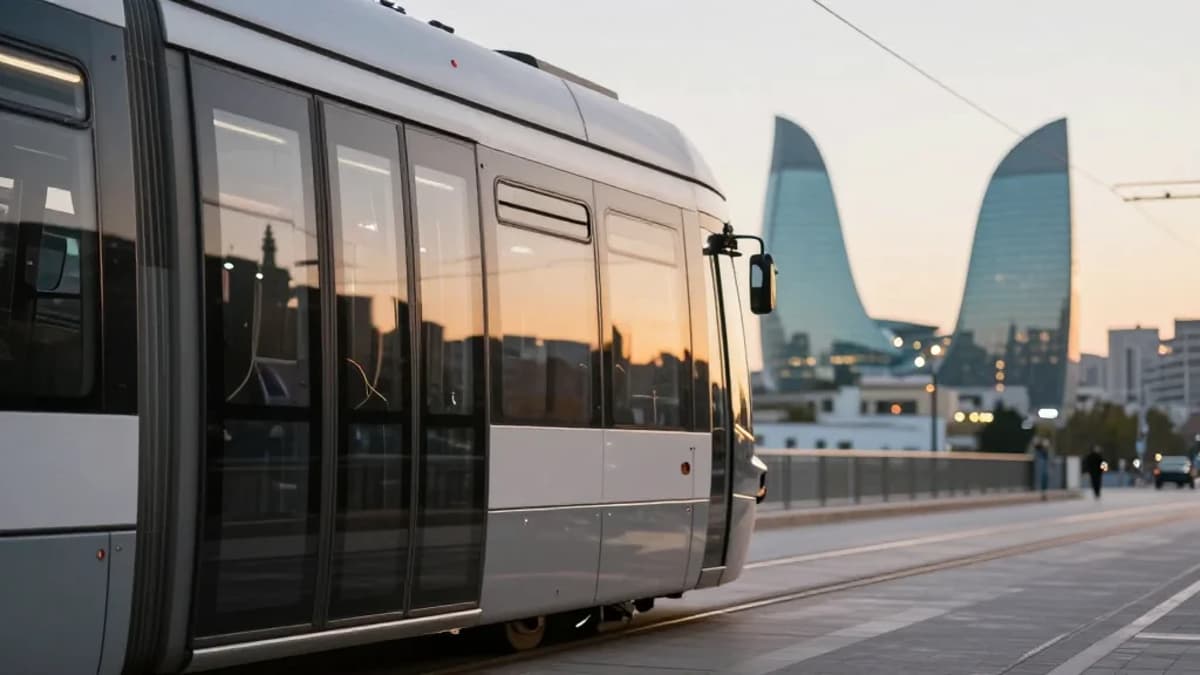
Azerbaijan to Build Baku Tram System
•February 20, 2026
0
Why It Matters
The tram initiative will expand mass‑transit capacity, reducing congestion and emissions, and signals a major infrastructure push that could attract further investment in Azerbaijan’s transport sector.
Key Takeaways
- •Five tram lines slated for completion by 2030
- •First line links northern outskirts to May 28 metro hub
- •Open tender for design and build due end 2026
- •Network will integrate with metro, bus, and rail
- •Project targets reduced traffic congestion and smog levels
Pulse Analysis
Baku’s traffic woes have reached a tipping point, with nearly 550,000 registered vehicles clogging streets and driving the city into the top‑100 most polluted metros worldwide. The chronic congestion not only hampers productivity but also fuels a smog problem that undermines public health and deters tourism. In this context, a modern tram system offers a high‑capacity, low‑emission alternative that can shift commuters from cars to rail‑based transit, easing pressure on road networks and delivering immediate environmental relief.
The government’s “Improving Transport Infrastructure in Baku and Surrounding Areas for 2025–2030” program outlines five tram lines, beginning with a north‑south corridor that terminates at the new May 28 transport hub. An open tender slated for late 2026 will invite global design firms, ensuring competitive pricing and cutting‑edge technology. By linking the tram to existing metro, bus, and upgraded suburban rail services, planners aim for seamless multimodal journeys, reducing transfer times and encouraging broader adoption of public transport across the Absheron Peninsula.
Beyond congestion mitigation, the tram project is poised to generate significant economic ripple effects. Construction will create jobs, while improved connectivity can stimulate real‑estate development and attract foreign investors seeking stable, growth‑oriented markets. Moreover, the anticipated drop in vehicle emissions aligns with Azerbaijan’s broader sustainability goals, potentially lowering healthcare costs linked to air‑quality‑related illnesses. As the network nears completion in 2030, Baku could emerge as a regional benchmark for integrating tramways into a fast‑growing urban landscape.
Azerbaijan to build Baku tram system
0
Comments
Want to join the conversation?
Loading comments...