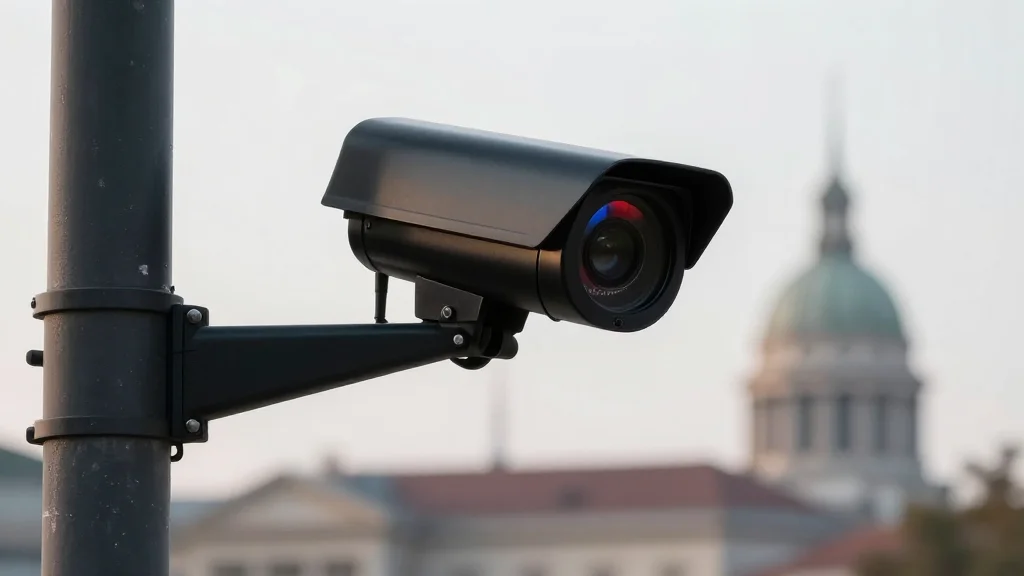
China and Serbia Launch Intergovernmental Tech Committee to Expand Surveillance Camera Network

Companies Mentioned
Why It Matters
The Serbia‑China surveillance pact illustrates how state‑backed technology firms can embed themselves in the civic infrastructure of aspiring EU members, creating a new vector for geopolitical influence. By coupling hardware deployment with AI analytics, Beijing gains not only commercial footholds but also potential access to granular biometric data across a strategic Balkan corridor. For the broader GovTech market, the deal signals a shift toward multilateral technology committees that blend diplomatic, economic and technical agendas. Western vendors may find it harder to compete in markets where Chinese financing and political backing lower the cost of entry, prompting a reassessment of export‑control policies and data‑privacy standards.
Key Takeaways
- •Serbian President Vučić and Chinese President Xi announced an intergovernmental tech committee to expand Huawei surveillance cameras in Belgrade, Novi Sad and Niš.
- •Bilateral trade between Serbia and China reached $7.4 billion in 2024, with Chinese investment in Serbia climbing to nearly $20 billion.
- •The initiative follows 29 bilateral agreements signed in 2024 covering legal, regulatory and economic cooperation.
- •EU officials warn the project may breach accession requirements and raise data‑sovereignty concerns under upcoming AI regulations.
- •Pilot installations are planned for early 2027, financed by a mix of Serbian funds and Chinese concessional loans.
Pulse Analysis
China’s foray into Serbian public‑surveillance infrastructure is less about crime‑prevention than about establishing a data‑collection pipeline in a geopolitically sensitive region. Historically, Beijing has leveraged Belt and Road projects to secure strategic footholds; the current surveillance push extends that playbook into the digital realm. By embedding AI‑enabled cameras in the heart of Serbia’s urban centers, China not only creates a revenue stream for firms like Huawei but also gains a persistent presence in the data ecosystem of a country that sits on the EU’s eastern frontier.
The move also forces Western GovTech firms to confront a new competitive reality. Traditional vendors such as Siemens, Thales and IBM have relied on transparent procurement processes and compliance with EU data‑privacy standards. In contrast, Chinese offerings bundle hardware, software and financing, often sidestepping the rigorous certification regimes that slow down Western bids. If Serbia proceeds without robust oversight, it could set a precedent for other Balkan states seeking rapid digital upgrades, potentially eroding the EU’s normative influence in the region.
Looking ahead, the intergovernmental committee’s success will hinge on three variables: the transparency of data‑governance frameworks, the durability of Serbia’s EU accession timeline, and the willingness of Western allies to counterbalance Chinese financing with alternative GovTech solutions. A failure to address these factors could see a cascade of AI‑driven surveillance networks across the Balkans, reshaping the balance of digital power in Europe for the next decade.
China and Serbia Launch Intergovernmental Tech Committee to Expand Surveillance Camera Network
Comments
Want to join the conversation?
Loading comments...