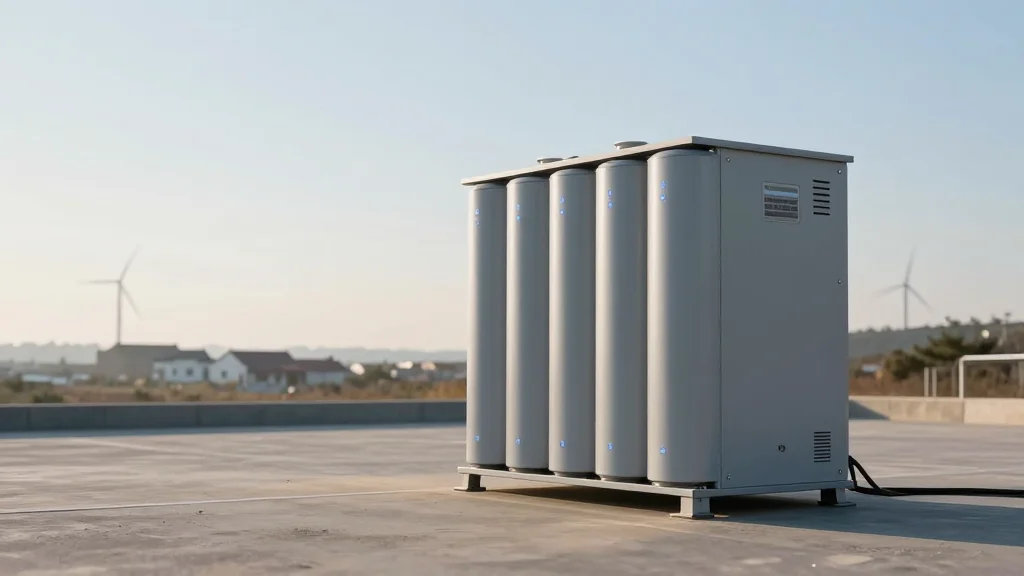
Rockefeller Foundation Pours $350M Into Battery Storage to Power Millions

Why It Matters
Reliable electricity is a cornerstone of modern public services, from health clinics to schools. By funding battery storage, the Rockefeller Foundation helps governments overcome the intermittency of renewable energy, reducing blackouts that can cripple essential services. The projects also demonstrate how philanthropic capital can catalyze large‑scale infrastructure upgrades that might otherwise stall due to fiscal constraints. In the GovTech arena, the deployment of smart‑grid technologies and real‑time monitoring tools creates a data ecosystem that can be leveraged for broader digital transformation. Governments that successfully integrate these systems will gain operational insights that improve service delivery, enhance transparency, and support climate‑resilient planning.
Key Takeaways
- •Rockefeller Foundation commits >$350 million to utility‑scale battery storage via the Global Energy Alliance.
- •New Delhi’s first standalone battery system now powers >100,000 residents.
- •Haiti’s northwest mesh grid will connect 21,000 households to reliable electricity.
- •Projected lifetime impact: 91 million people with improved energy access, 3.1 million jobs, 296 million tonnes CO₂ avoided.
- •Funding model blends philanthropy with government and multilateral partners to accelerate GovTech‑enabled grid modernization.
Pulse Analysis
The Rockefeller Foundation’s $350 million injection signals a shift in how critical infrastructure can be financed. Traditional public‑sector budgeting often struggles to accommodate the upfront capital costs of battery storage, especially in low‑income economies. By front‑loading capital and tying disbursements to performance metrics, the foundation reduces risk for governments and creates a template for blended finance that could be applied to other GovTech initiatives, such as health information exchanges or digital identity platforms.
Historically, large‑scale energy projects have been dominated by state‑owned utilities and multinational investors. This philanthropic approach introduces a third axis of influence that prioritizes social outcomes alongside financial returns. The emphasis on modular, solar‑powered mesh grids aligns with the broader GovTech trend toward decentralized service delivery, where local authorities can manage micro‑infrastructure with minimal central oversight. The data generated by these systems will feed into national dashboards, enabling more granular policy decisions and fostering a culture of evidence‑based governance.
Looking forward, the success of these battery projects will likely hinge on regulatory agility. Governments must adapt grid codes, tariff structures, and procurement processes to accommodate storage assets. If they can do so, the model could accelerate the rollout of other digital public‑service tools, creating a virtuous cycle where improved infrastructure fuels further GovTech innovation. Conversely, bureaucratic inertia or misaligned incentives could stall progress, underscoring the importance of coordinated policy reform alongside financing.
Rockefeller Foundation Pours $350M into Battery Storage to Power Millions
Comments
Want to join the conversation?
Loading comments...