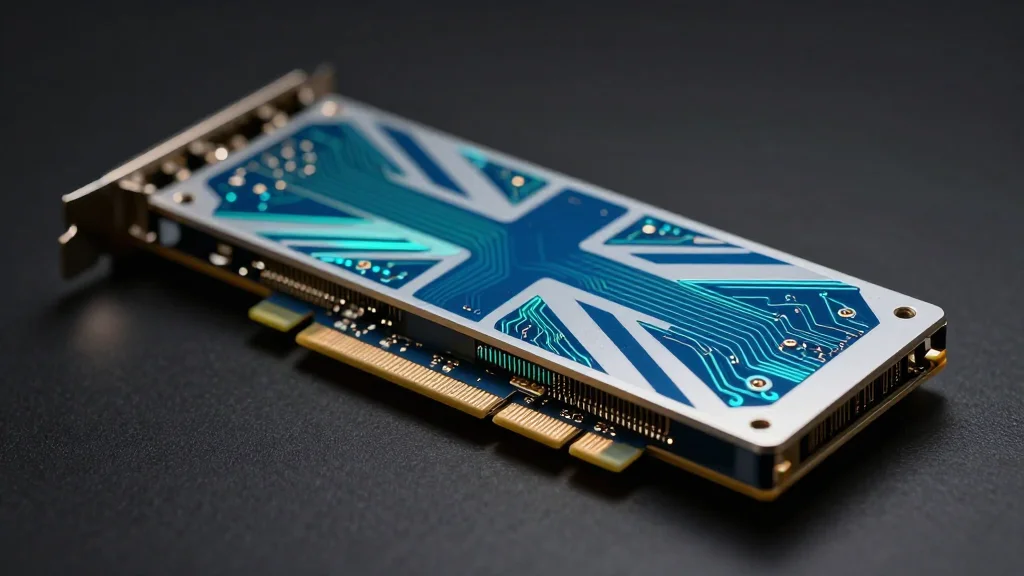
UK Government Awards Cosine 500,000 GPU Hours in £500M Sovereign AI Push

Companies Mentioned



Why It Matters
Cosine’s grant illustrates a concrete step toward a British AI ecosystem that is independent of foreign cloud providers, addressing longstanding concerns about data sovereignty in defence and critical infrastructure. By enabling on‑premise, air‑gapped AI, the UK reduces legal and operational risks associated with sending code to overseas servers, a barrier that has limited AI adoption in high‑security environments. The partnership also signals to the broader GovTech market that the UK government is willing to back domestic AI innovators with both compute resources and capital. This could accelerate the development of home‑grown AI tools, stimulate private investment, and position Britain as a leader in secure AI deployment, influencing policy and procurement decisions across Europe and beyond.
Key Takeaways
- •UK government selects Cosine for Sovereign AI programme, awarding 500,000 GPU hours on Isambard‑AI.
- •Grant valued at several million pounds (≈ $3‑5 million) and includes venture‑arm investment option.
- •Cosine’s models have outperformed OpenAI, Anthropic, Mistral and DeepSeek on coding benchmarks for two years.
- •Company already works with UK defence primes and critical national infrastructure operators.
- •Cosine previously raised $8 million from Lakestar, SOMA Capital and Gaingels.
Pulse Analysis
The Cosine deal marks a rare convergence of public funding and private‑sector technical capability in the UK’s AI strategy. Historically, sovereign AI initiatives have struggled with the chicken‑and‑egg problem of needing both massive compute and a viable commercial use case. By providing a substantial GPU allocation and a potential equity stake, the Sovereign AI Fund removes the compute barrier while signaling confidence in Cosine’s market traction. This dual‑track approach could catalyze a virtuous cycle: successful deployments in defence and critical infrastructure will generate revenue, which in turn can fund further model development and attract additional investors.
From a competitive standpoint, Cosine’s air‑gapped architecture differentiates it from cloud‑centric rivals like OpenAI and Anthropic, whose models rely on large, globally distributed data centers. In sectors where data cannot leave national borders, Cosine’s on‑premise solution is not just a convenience but a regulatory necessity. If the company can demonstrate performance parity—or superiority—while meeting strict security constraints, it could capture a niche that is currently underserved by the major AI vendors.
Looking ahead, the real test will be whether the sovereign model trained on Isambard‑AI can deliver tangible operational benefits for its defence customers. Success could prompt the UK government to expand the programme, allocate more compute resources, and perhaps replicate the model in other allied nations. Conversely, any shortfall in performance or cost‑effectiveness could reinforce the perception that building a fully sovereign AI stack is prohibitively expensive, potentially slowing the momentum of similar initiatives worldwide.
UK Government Awards Cosine 500,000 GPU Hours in £500M Sovereign AI Push
Comments
Want to join the conversation?
Loading comments...