Companies Mentioned
Why It Matters
Without standardized AI instruction, emerging oncologists risk inconsistent clinical decisions and erosion of critical reasoning, jeopardizing patient safety and workforce readiness.
Key Takeaways
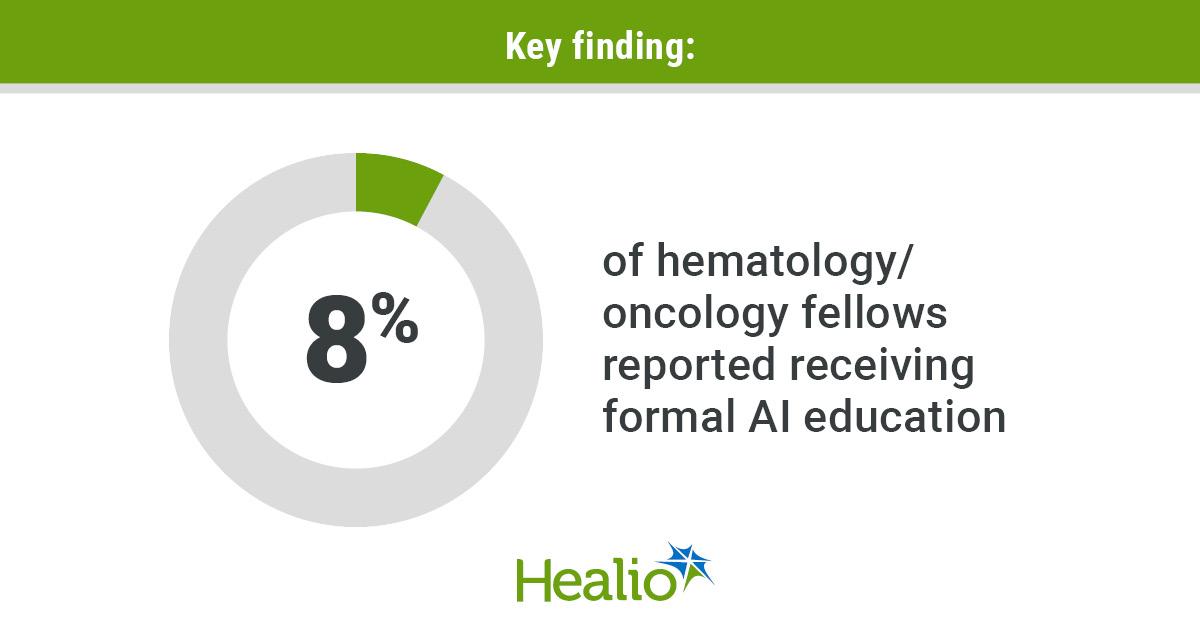
- •74% of hem/onc fellows use AI tools; only 8% trained formally
- •AI adoption viewed as useful for education, but curriculum lacking
- •AI‑HOPE curriculum aims to pilot structured AI training nationwide
- •92% expect AI use to increase in the next five years
Pulse Analysis
The ASCO‑presented survey underscores a paradox in modern oncology education: trainees are eager to leverage large language models and other AI utilities, yet formal instruction remains scarce. While 74% of fellows already employ AI for tasks ranging from concept clarification to journal summarization, only a single‑digit fraction—8%—have participated in a dedicated curriculum. This mismatch creates a fertile ground for inconsistent tool usage, potential over‑reliance, and the dreaded "de‑skilling" of future oncologists, who may forgo deep clinical reasoning in favor of algorithmic shortcuts.
Industry observers see the AI‑HOPE (Artificial Intelligence in Hematology/Oncology Pilot Education) initiative as a timely corrective. Designed as a three‑phase, multisite pilot, the program will embed responsible AI use into fellowship curricula, covering critical appraisal of model outputs, ethical considerations, and integration into patient documentation workflows. By standardizing training, AI‑HOPE aims to transform AI from a novelty into a vetted clinical aid, preserving diagnostic rigor while enhancing efficiency. Early adoption could also set a precedent for other specialties grappling with similar technology influxes.
The broader implications extend beyond academic halls. As the oncology workforce confronts aging demographics, rising survivorship, and specialist shortages, AI promises to streamline decision support and data synthesis. However, without robust educational scaffolding, institutions risk regulatory scrutiny, liability exposure, and erosion of clinician confidence. Professional societies like ASCO are poised to issue responsible‑use guidelines, while health systems may need to allocate resources for faculty development and tool validation. In short, formal AI training is becoming a strategic imperative for maintaining high‑quality, safe cancer care in the AI‑driven era.
Hem/onc fellows lack formal training in AI use
Comments
Want to join the conversation?
Loading comments...