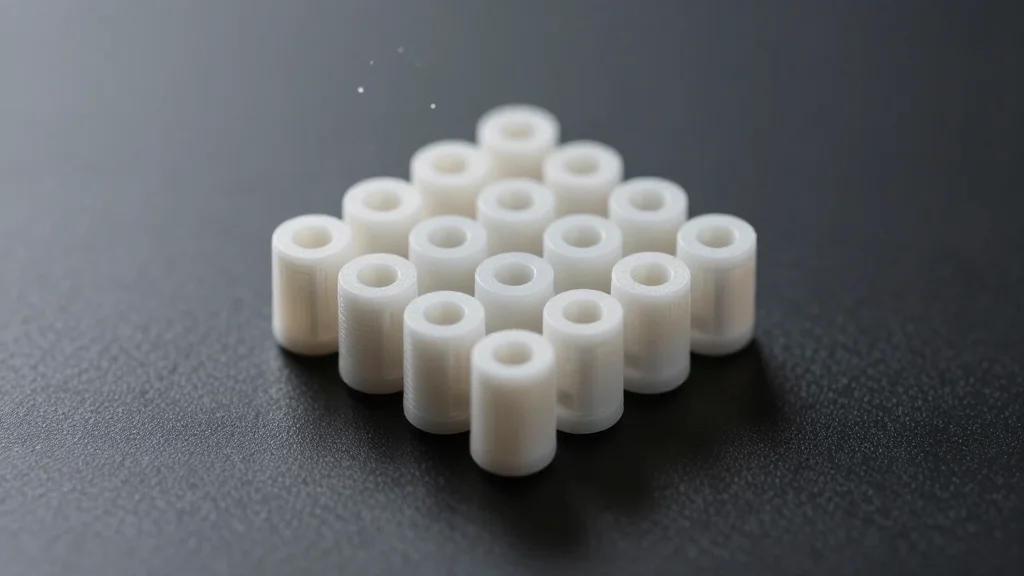
3D-Printed Nozzle Array Could Streamline Production of Drug-Delivery Microparticles
Why It Matters
By democratizing high‑precision electrospray manufacturing, the technology could lower costs and accelerate commercialization of targeted drug‑delivery systems and smart materials, reshaping biotech and materials markets.
Key Takeaways
- •MIT 3D‑printed array produces 16 triaxial electrospray nozzles on 1 cm²
- •One‑step vat photopolymerization prints 25 µm layers in hours
- •Uniform three‑layer droplets enable scalable drug‑delivery microparticle manufacturing
- •Design eliminates need for costly semiconductor clean‑room fabrication
- •Adjustable flow rates tailor layer thickness for controlled release profiles
Pulse Analysis
Electrospray technology has long been prized for its ability to generate monodisperse droplets that solidify into functional microparticles, a capability essential for controlled‑release pharmaceuticals, biosensors and advanced composites. Traditional triaxial emitters, however, require multi‑step semiconductor clean‑room fabrication, driving up costs and limiting design flexibility. The need for high‑throughput production further forces manufacturers to operate large arrays of single‑nozzle devices, which often suffer from variability and crosstalk. Overcoming these bottlenecks is critical for bringing multilayered micro‑products from the lab to the market.
The MIT team addressed the bottleneck by leveraging vat photopolymerization, an additive‑manufacturing process that cures resin layer by layer with ultraviolet light. Within a few hours they printed a compact 1 cm² chip containing 16 triaxial electrospray nozzles, each fed by 25 µm‑high helical microchannels that deliver three immiscible liquids simultaneously. The resulting droplets exhibit consistent core‑shell‑shell geometry, and the researchers demonstrated that fine‑tuning flow rates and voltage precisely controls each layer’s thickness. This one‑step approach eliminates the need for costly lithography and enables rapid design iterations.
The ability to produce uniform, multilayered particles at scale opens new commercial pathways for precision medicine and smart materials. Pharmaceutical firms can now explore cost‑effective manufacturing of oral dosage forms that release active ingredients sequentially along the gastrointestinal tract, while materials scientists can embed self‑healing agents within protective shells for longer‑lasting composites. Moreover, the democratized fabrication method lowers the entry barrier for startups and academic labs, accelerating innovation cycles. Future work that integrates conductive or dielectric elements could further expand applications into micro‑electronics and tissue‑engineered scaffolds.
3D-printed nozzle array could streamline production of drug-delivery microparticles
Comments
Want to join the conversation?
Loading comments...