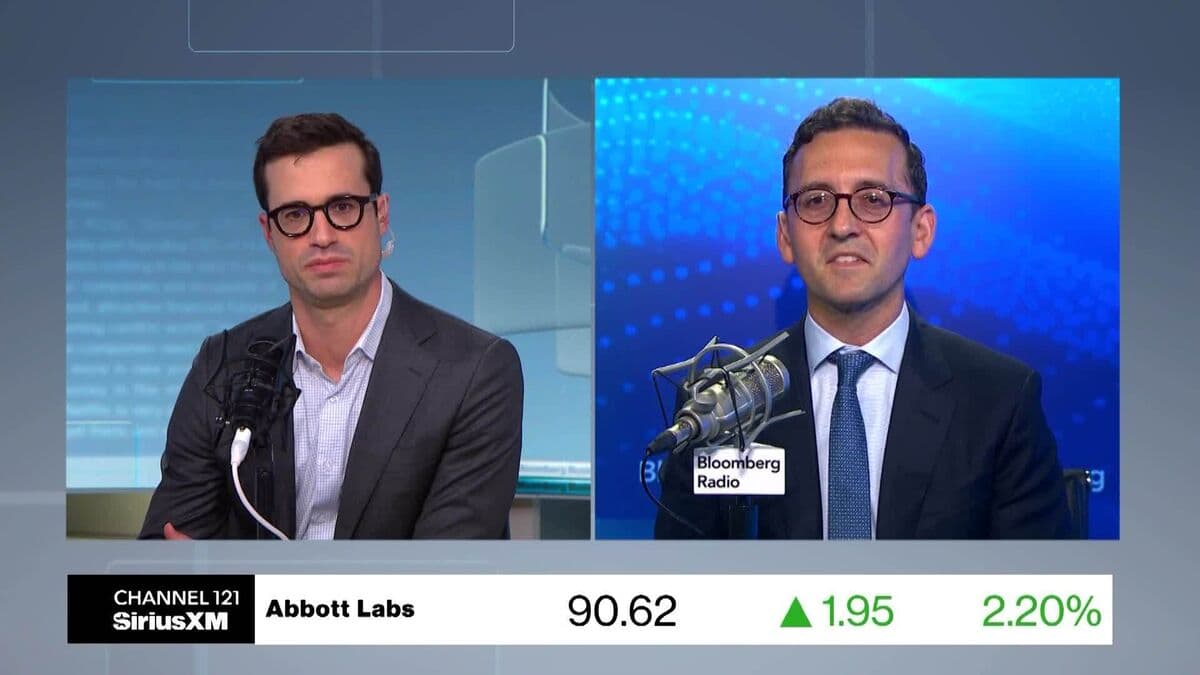
AI Can Play 'Significant' Role in Tech for Managing Diabetes, Says David Roman
Companies Mentioned
Why It Matters
AI is turning raw health data into actionable tools, accelerating med‑tech adoption and creating new revenue streams, which could revitalize a sector that has lagged in 2026. The technology’s scalability promises broader consumer health monitoring and more efficient clinical decision‑making.
Key Takeaways
- •Dexcom AI predicts carb impact from meal photos
- •Zio Patch AI triages arrhythmia risk from continuous monitoring
- •Intuitive Plus uses data to standardize robotic surgery training
- •Med‑tech rotation to biotech depresses Dexcom, Intuitive shares
- •CGM consumer market projected 50% growth, expanding wellness use
Pulse Analysis
Artificial intelligence is reshaping diabetes care by moving beyond passive monitoring to proactive guidance. Dexcom’s AI engine can analyze a photo of a meal and instantly estimate its glucose impact, simplifying carb counting for insulin‑dependent patients. Coupled with Abbott’s push to market CGMs to health‑conscious consumers, the sector is poised to capture a broader wellness audience, as evidenced by the Stelo line’s $100 million revenue and projected 50% growth. This convergence of AI and consumer wearables signals a new revenue frontier for med‑tech firms.
Beyond glucose management, AI is unlocking value in cardiac monitoring and surgical precision. The Zio Patch generates continuous ECG data that AI algorithms sift to flag arrhythmia risk, enabling earlier interventions and reducing costly hospital stays. Meanwhile, Intuitive Surgical’s Intuitive Plus platform aggregates procedural data to standardize robotic surgery training, driving consistency and potentially lowering operative complications. These applications illustrate how AI can transform massive data streams into clinical intelligence, enhancing both patient outcomes and provider efficiency.
Despite these technological advances, 2026 saw a sharp rotation out of med‑tech into biotech, dragging down shares of leaders like Dexcom (‑40%) and Intuitive Surgical (‑26%). Macro‑level concerns—such as ACA revisions and Medicaid funding shifts—exacerbated short‑term pessimism. Roman, however, expects a rebound in 2027 as AI‑enabled products mature, regulatory pathways clear, and insurers adopt continuous monitoring as a standard of care. Investors should watch for partnerships that integrate CGM data with broader health platforms, a catalyst that could reignite growth across the med‑tech landscape.
AI Can Play 'Significant' Role in Tech for Managing Diabetes, Says David Roman
Comments
Want to join the conversation?
Loading comments...