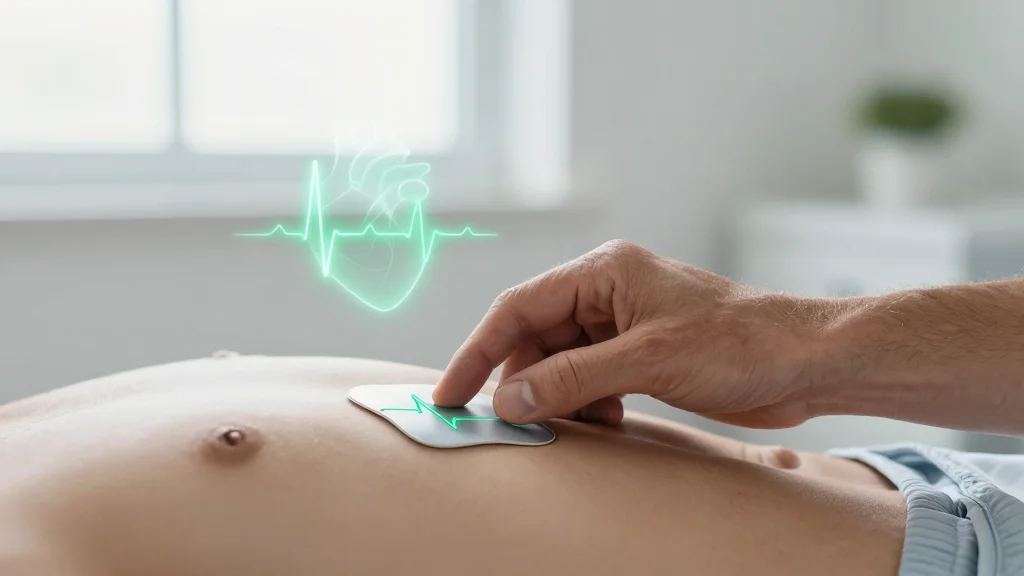
AI-Powered Electrocardiogram Detects Early Signs of Heart Failure
Why It Matters
Early, affordable detection of heart‑failure risk can reduce mortality and health‑system costs in low‑income regions, accelerating equitable cardiovascular care worldwide.
Key Takeaways
- •AI‑ECG detected LVSD in 14.1% of screened Kenyan patients.
- •Negative predictive value reached 99.1%, minimizing false‑negative results.
- •Sensitivity 95.6% and specificity 79.4% show strong diagnostic performance.
- •Study enrolled nearly 6,000 patients across eight Kenyan health facilities.
- •Low‑cost ECG plus AI offers scalable screening where echocardiography is scarce.
Pulse Analysis
Heart failure remains a leading cause of death globally, with sub‑Saharan Africa bearing a disproportionate share due to younger onset and limited diagnostic infrastructure. Traditional echocardiography, the gold standard for identifying left ventricular systolic dysfunction (LVSD), is costly and requires specialized equipment and expertise. By leveraging the ubiquitous, inexpensive electrocardiogram and augmenting it with deep‑learning algorithms, researchers have created a pathway to democratize cardiac risk assessment, turning a routine test into a powerful predictive tool.
The Kenyan study underscores the clinical robustness of AI‑ECG in a real‑world, low‑resource environment. With a 95.6% sensitivity, the model captures the vast majority of true LVSD cases, while its 79.4% specificity limits unnecessary follow‑ups. The 99.1% negative predictive value means clinicians can confidently rule out LVSD in most patients, conserving scarce echocardiography slots for those most likely to benefit. Such performance, achieved across eight diverse clinics, signals that AI‑ECG can be integrated into primary‑care workflows, enabling community health workers to flag high‑risk individuals for timely referral.
Beyond immediate clinical impact, the technology opens new market opportunities for med‑tech firms and health systems seeking cost‑effective screening solutions. Investment in AI‑driven diagnostics is likely to accelerate, especially as regulatory bodies gain familiarity with algorithmic validation in heterogeneous populations. Coupled with telemedicine platforms, AI‑ECG could form the backbone of remote cardiac monitoring networks, extending specialist oversight to remote villages. Continued longitudinal studies will be essential to confirm outcome benefits, but the current evidence positions AI‑ECG as a catalyst for equitable, data‑driven cardiovascular care.
AI-powered electrocardiogram detects early signs of heart failure
Comments
Want to join the conversation?
Loading comments...