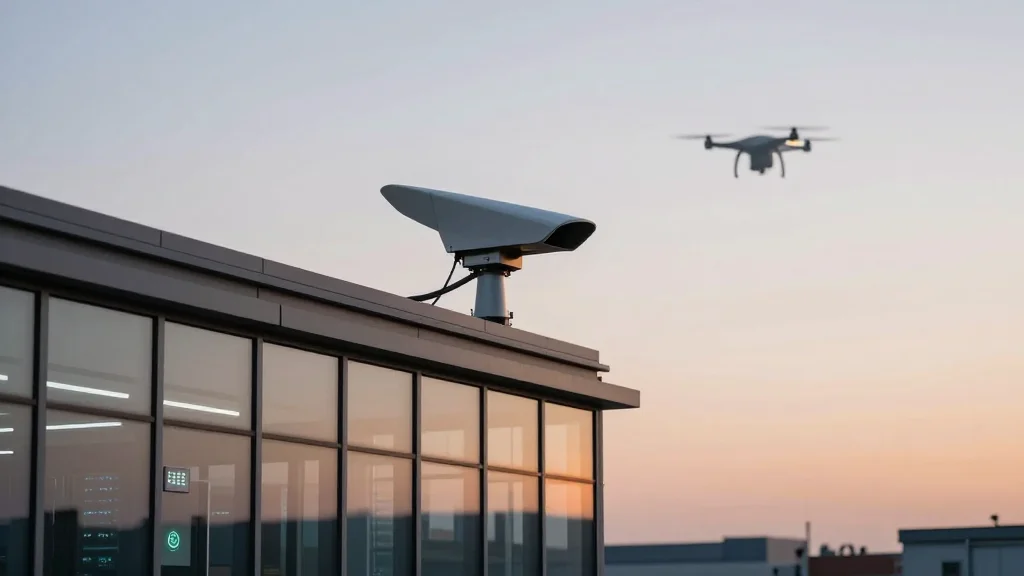
AI‑Powered Counter‑Drone Systems Target Data‑Center Threats to Health Records

Companies Mentioned
Why It Matters
Physical attacks on data‑center infrastructure threaten the confidentiality, integrity and availability of health information, a cornerstone of modern patient care. By introducing AI‑driven counter‑drone systems, the industry can close a security gap that traditional cyber‑only defenses leave open, protecting billions of dollars of health data and preserving trust in digital health services. The move also signals a shift in risk management, where geopolitical threats are factored into compliance and operational planning for health‑tech companies. If successful, these systems could become a standard component of data‑center design, prompting new industry guidelines and insurance models. Conversely, failure to adopt such defenses may expose health providers to costly data loss, regulatory penalties, and erosion of patient confidence, especially as AI‑enhanced drones become more affordable and sophisticated.
Key Takeaways
- •Sentradel proposes AI‑driven counter‑drone systems after March 2026 Shahed drone attacks on AWS data centers.
- •Global data‑center capex is projected to reach $1 trillion in 2026, with $600 billion from the top four hyperscalers.
- •Kamikaze drones cost $30,000‑$80,000, far less than the potential loss of hundreds of millions in health data.
- •Medical records stored in data centers are subject to HIPAA and could trigger massive breach penalties if destroyed.
- •Pilot deployments are expected within the next 12 months, targeting hyperscalers and large colocation providers.
Pulse Analysis
The emergence of AI‑powered counter‑drone technology marks a convergence of physical security and health‑tech risk management. Historically, data‑center resilience has focused on redundancy, fire suppression and cyber defenses. The 2026 Iranian drone strikes exposed a blind spot: kinetic threats that bypass traditional perimeters. For health‑tech firms, the fallout is more than a service interruption; it is a potential breach of patient privacy that could trigger regulatory action under HIPAA and GDPR.
From a market perspective, the $1 trillion data‑center investment pool creates a sizable addressable market for Sentradel and similar vendors. Early adopters—likely the hyperscalers with the deepest pockets—can amortize the cost of autonomous sentry systems across multiple sites, reducing per‑facility expense. Insurance carriers may also adjust premiums, rewarding operators that demonstrate layered physical defenses. However, the technology faces hurdles: integration with existing security stacks, false‑positive rates that could disrupt legitimate drone traffic, and the need for clear regulatory guidance on kinetic counter‑measures.
Looking ahead, the health‑tech sector will likely push for industry standards that incorporate physical threat modeling into compliance frameworks. If AI sentry guns prove effective, they could become a prerequisite for certifications akin to SOC 2 or ISO 27001 for facilities handling ePHI. Conversely, a high‑profile failure—such as an accidental shoot‑down of a legitimate aircraft—could stall adoption and invite stricter government oversight. The next 12‑18 months will be decisive, as pilot programs generate data on efficacy, cost, and legal ramifications, shaping the future of health‑data security in an increasingly contested airspace.
AI‑Powered Counter‑Drone Systems Target Data‑Center Threats to Health Records
Comments
Want to join the conversation?
Loading comments...