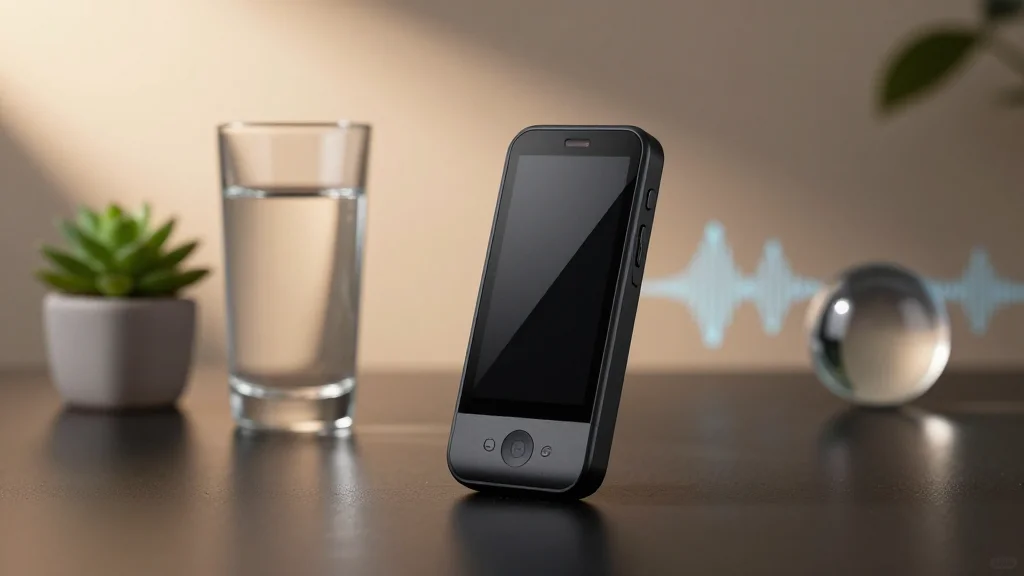
Deep Care Launches Isa Desk Gadget to Boost Posture and Wellness for Remote Workers

Companies Mentioned
Why It Matters
Remote work has turned home desks into primary workplaces, exposing millions to poor posture, dehydration and suboptimal indoor air quality—factors linked to chronic back pain, reduced cognitive performance and long‑term health costs. Isa offers a single, privacy‑first device that quantifies these risk factors in real time, giving users actionable nudges to correct behavior before injuries develop. By targeting both individual consumers and corporate wellness programs, the gadget could help shift workplace health strategies from reactive medical care to proactive ergonomics, potentially lowering employer health‑care expenditures. Moreover, the device’s camera‑free design addresses growing privacy concerns around constant video monitoring. As remote‑work tools proliferate, employees increasingly demand solutions that respect personal data. Isa’s sensor‑only approach demonstrates a viable path for health‑tech innovators to balance data richness with privacy, a trade‑off that could shape product development across the sector.
Key Takeaways
- •Isa features a 5.5‑inch IPS HD screen and a Time‑of‑Flight 3D depth sensor with a 0.15‑m to 1.8‑m range
- •Power consumption is roughly 2.45 W via USB‑C, allowing use with existing chargers
- •Sensors track posture, hydration, light, sound, CO₂, temperature and humidity
- •Device vibrates to alert slouching and offers on‑device guided movement exercises
- •Deep Care, founded by ex‑Bosch engineers, initially sold Isa to businesses before launching consumer sales
Pulse Analysis
Isa’s launch reflects a broader pivot in HealthTech toward integrated, privacy‑first wearables and ambient devices. Traditional posture solutions have relied on cameras or external wearables, raising data‑privacy red flags and creating friction for adoption in corporate settings. By consolidating multiple environmental metrics into a single desk‑mounted unit, Deep Care differentiates itself from niche products that address only one aspect of ergonomics. This holistic approach could appeal to enterprises seeking unified dashboards for employee wellness, especially as ESG and employee‑wellbeing reporting become mandatory in many jurisdictions.
However, the device’s success will depend on algorithmic accuracy and user experience. Early reports of false stationary alerts caused by objects or pets highlight the challenges of sensor‑only detection in cluttered home environments. If Deep Care can refine its machine‑learning models to distinguish between human presence and background noise, it will improve trust and reduce user fatigue. Additionally, expanding time‑zone support and offering API integrations with popular HR platforms could accelerate B2B adoption.
From a market perspective, Isa competes with established players like Lumo Lift, Upright, and emerging smart‑chair manufacturers. Its price point—yet to be disclosed—will be critical; a modest cost could drive volume sales to both consumers and corporate wellness budgets, while a premium price may limit reach to niche early adopters. In the next 12‑18 months, we can expect Deep Care to pursue strategic partnerships with wellness software vendors and possibly explore data‑licensing models that aggregate anonymized posture and environmental data for research, positioning Isa as both a preventive health tool and a data asset in the evolving remote‑work ecosystem.
Deep Care launches Isa desk gadget to boost posture and wellness for remote workers
Comments
Want to join the conversation?
Loading comments...