Why It Matters
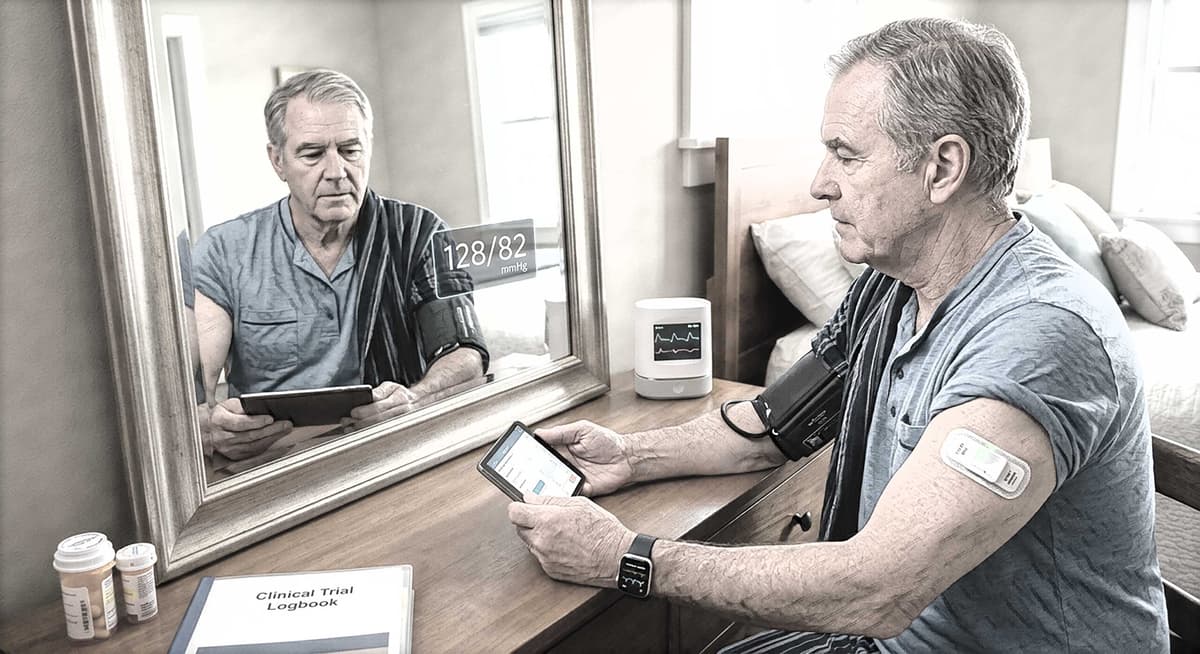
Real‑time, longitudinal data from wearables reshapes drug development, improving safety detection, patient adherence, and evidence generation for faster market access. Companies that master wearable‑derived endpoints will gain a competitive advantage in trial efficiency and post‑approval commercialization.
Key Takeaways
- •Over 1,000 trials (2001‑2025) used wearable-derived data
- •FDA now accepts wearables as legitimate trial endpoints
- •Continuous monitoring enables earlier safety signals and personalized dosing
- •Ambient sensors capture data without patient interaction, boosting compliance
- •Wearables give pharma edge in trial design and market access
Pulse Analysis
The wearable revolution is no longer a niche curiosity; it is a foundational layer of modern clinical research. Improved photoplethysmography, multi‑parameter patches, and AI‑enhanced signal processing now deliver clinical‑grade ECG, blood pressure, and metabolic metrics outside the hospital. Regulators have responded, granting FDA acknowledgment of wearable‑derived endpoints, which transforms raw sensor streams into actionable trial data. This convergence reduces reliance on intermittent clinic visits and opens pathways for more granular safety and efficacy assessments.
For pharmaceutical developers, continuous digital biomarkers translate into sharper patient selection and dynamic dose titration. In cardiovascular and metabolic programs, real‑time hemodynamic data can flag adverse events days before they manifest clinically, allowing proactive intervention and preserving adherence. Neurological trials benefit from objective, moment‑by‑moment cognitive and motor readouts, addressing the historic measurement gap that has hampered CNS drug approvals. Moreover, decentralized and hybrid trial models become feasible at scale, as wearables eliminate geographic constraints and lower participant burden, accelerating enrollment and diversifying study populations.
Looking ahead, ambient sensing technologies—radar‑based vital sign monitoring and camera‑derived optical imaging—promise truly frictionless data capture. By removing the need for a device to be worn, these solutions improve compliance among elderly and psychiatric cohorts, expanding the reachable patient pool. Pharma companies that integrate such platforms into their development pipelines will generate richer real‑world evidence, support label expansions, and differentiate their therapeutic offerings in an increasingly data‑driven market. The speed at which the industry adopts these tools will dictate its ability to stay ahead of the competition.
From Gimmick to Gold Standard
Comments
Want to join the conversation?
Loading comments...