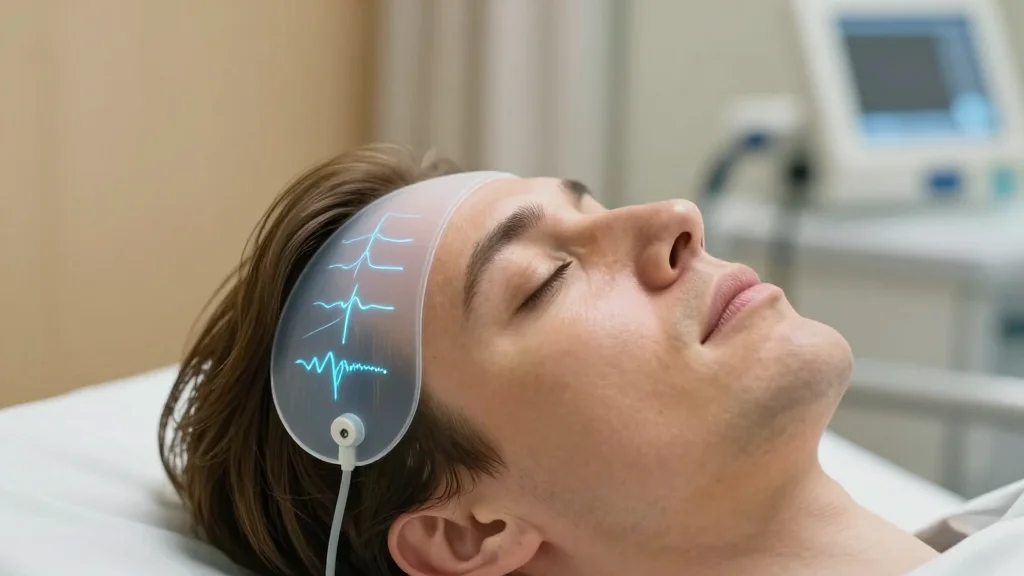
Noninvasive Skull Sensor Prevents Brain Injuries in Critically Ill ICU Patients
Why It Matters
The sensor transforms neurocritical care from a reactive to a proactive model, improving survival and functional outcomes while delivering significant cost savings for health systems.
Key Takeaways
- •Non‑invasive brain4care sensor reduces ICU mortality from 37% to 6%.
- •Functional independence at discharge doubled with intracranial compliance monitoring.
- •ICU stay shortened by 3.7 days, saving ~$13,800 per patient.
- •Daily neuro‑ICU cost $2,600‑$3,000; savings per case $13,800.
- •Sensor avoids invasive PtiO₂ catheters, expanding use to lower‑resource hospitals.
Pulse Analysis
Traditional neuro‑ICU monitoring relies on intracranial pressure and cerebral perfusion metrics that often miss early signs of cerebral hypoxia. While these parameters guide therapy, they can appear normal even as brain tissue oxygenation falls, leading to silent secondary injury. Emerging technologies that capture the brain's mechanical response to each heartbeat promise a more nuanced view of intracranial dynamics, enabling clinicians to intervene before irreversible damage occurs.
The brain4care headband translates micro‑movements of the skull into a compliance waveform, offering continuous, non‑invasive insight into intracranial pressure trends. In a prospective study at São Paulo’s Hospital 9 de Julho, patients monitored with this sensor experienced a mortality drop from 37.3% to 5.9% and a rise in discharge independence from 27.5% to 58.8%. Hospital stays shortened by nearly four days, translating to roughly $13,800 saved per patient after accounting for daily neuro‑ICU costs of $2,600‑$3,000. These outcomes demonstrate both clinical and economic value, especially in resource‑constrained settings.
Beyond immediate cost benefits, the technology could reshape public‑health strategies for traumatic brain injury and stroke, conditions that affect 50 million people worldwide each year. Its non‑invasive nature eliminates the need for specialized surgical teams and expensive disposable catheters, making advanced brain monitoring feasible in mid‑level hospitals and potentially in emerging markets. Continued multicenter trials will be essential to confirm scalability, but the early data position brain4care as a catalyst for personalized, affordable neurocritical care that could reduce long‑term disability and improve quality of life for survivors.
Noninvasive skull sensor prevents brain injuries in critically ill ICU patients
Comments
Want to join the conversation?
Loading comments...