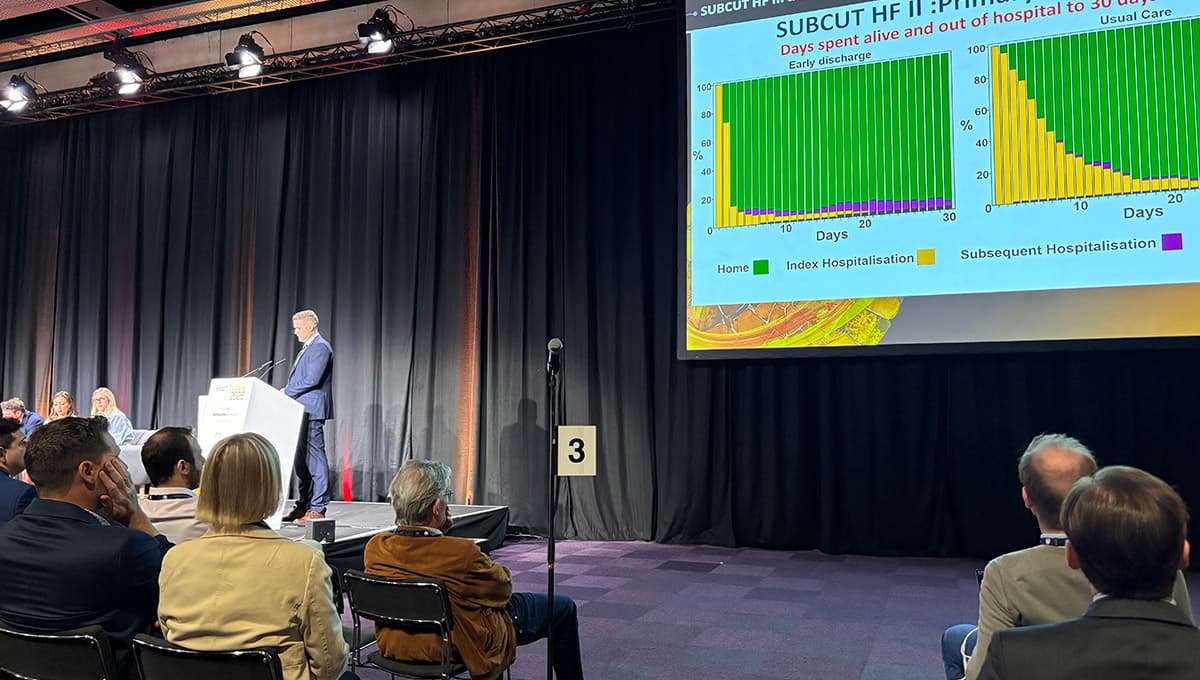
Subcutaneous Furosemide Aids With Earlier Discharge: SUBCUT II HF
Why It Matters
Earlier discharge cuts costly inpatient days while preserving outcomes, offering a scalable model for heart‑failure management amid rising hospital capacity pressures.
Key Takeaways
- •Subcutaneous furosemide cut average hospital stay by 5.4 days.
- •Early discharge added 4 alive‑out‑of‑hospital days at 30 days.
- •No serious device‑related adverse events observed among home‑treated patients.
- •Successful use required patients to be stable, cognitively intact, with caregiver help.
- •Open‑label design may bias results, but safety profile remains strong.
Pulse Analysis
Heart failure remains a leading cause of hospital admissions, with intravenous diuretics the standard inpatient therapy for congestion. The recent FDA approval of Lasix Onyu, a formulation designed for subcutaneous infusion, opens a new therapeutic avenue that bypasses the need for prolonged IV lines. By attaching a small, battery‑powered pump to the abdomen, clinicians can deliver precise furosemide doses at home, aligning with broader trends toward ambulatory care and digital health integration.
The SUBCUT II HF trial enrolled 172 patients with acute decompensated heart failure across the United Kingdom. Participants randomized to early discharge received 80 mg of subcutaneous furosemide once or twice daily, while the control group stayed in the hospital for IV therapy. Results were striking: the early‑discharge cohort left the hospital after an average of 5.6 days versus 11.0 days for usual care, and they accrued four extra days alive and out of the hospital within the first month. Safety signals were minimal, with over 90 % of doses administered by patients or caregivers and no serious device‑related events recorded.
While the open‑label design introduces potential bias, the trial demonstrates a viable, patient‑centered pathway that could alleviate bed shortages and reduce costs. Ongoing plans for a U.S. cluster‑randomized study will test scalability and broader health‑system impact. If replicated, subcutaneous furosemide could become a standard discharge tool, extending its use to community‑based congestion management and palliative care, thereby reshaping heart‑failure treatment paradigms.
Subcutaneous Furosemide Aids With Earlier Discharge: SUBCUT II HF
Comments
Want to join the conversation?
Loading comments...