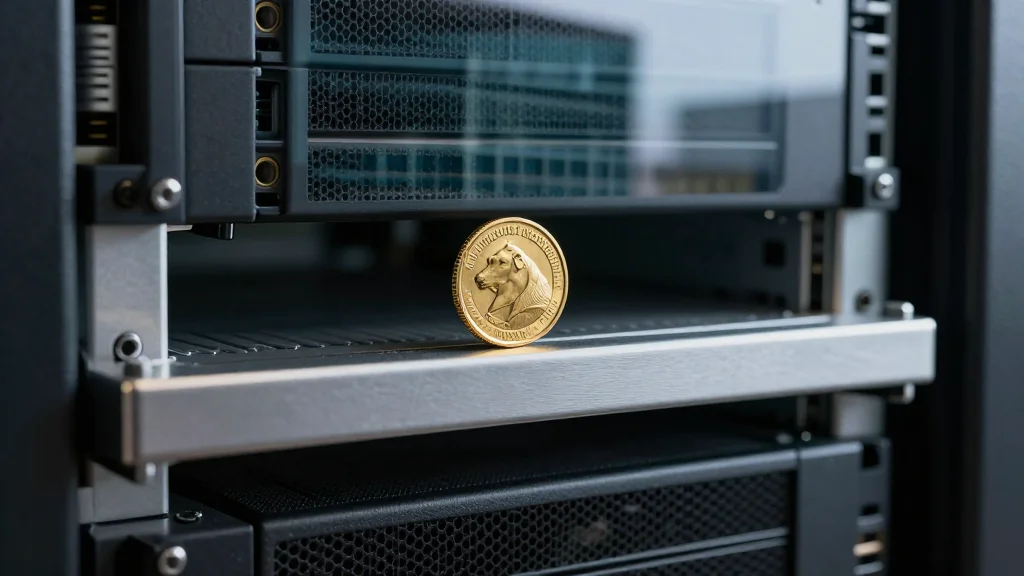
Blackstone, Blue Owl and Peers Chase $900 Billion AI Data‑Center Market

Why It Matters
The $900 billion data‑center opportunity is reshaping the asset‑allocation landscape for hedge funds. By flooding the market with private‑credit and equity capital, firms like Blackstone and Blue Owl are compressing financing costs and raising the bar for return expectations. Hedge funds that rely on traditional fixed‑income yields must now compete for higher‑risk tranches or pivot to equity‑linked strategies, altering portfolio construction and risk‑management frameworks. Moreover, the AI‑driven infrastructure boom creates a new set of macro‑economic levers—energy consumption, semiconductor supply, and regional power‑grid capacity—that hedge funds must monitor. Success will depend on integrating sector‑specific intelligence into trading models, forging co‑investment partnerships, and navigating the regulatory environment surrounding large‑scale data‑center construction.
Key Takeaways
- •Blackstone reports $150 billion of owned data‑center assets and $160 billion in pipeline projects.
- •Blue Owl holds an equity stake in Amazon’s $12 billion Louisiana data‑center, its fourth >$10 billion deal.
- •Ares co‑president Blair Jacobson cites a $900 billion third‑party investment opportunity in data centers.
- •Apollo disclosed $8 billion of financing across two data‑center deals in 2024‑25.
- •KKR’s 2023 Cool‑It acquisition generated a 15‑times return, highlighting the profitability of data‑center adjacent assets.
Pulse Analysis
The data‑center rush marks a structural shift from speculative AI software bets to tangible, asset‑backed exposure. Historically, hedge funds have profited from the early‑stage AI hype by taking equity positions in chip makers and cloud providers. Today, the bottleneck is physical capacity—power, cooling and real‑estate—where private‑equity sponsors have deep balance‑sheet resources. This creates a symbiotic but competitive environment: hedge funds can supply flexible capital and take advantage of pricing inefficiencies, while sponsors lock in long‑term, low‑beta returns.
From a market‑timing perspective, the surge aligns with a plateau in traditional data‑center supply and a surge in generative‑AI workloads that demand high‑density GPU clusters. The resulting demand shock is driving up land values near power‑rich regions, prompting hedge funds to explore land‑based REIT structures and infrastructure‑linked credit. However, the influx of capital also raises the risk of over‑building, especially if AI model usage stabilizes. Funds that maintain disciplined exposure—favoring projects with secured power contracts and diversified tenant bases—will likely outperform.
Looking forward, the next inflection point will be the integration of renewable energy and modular nuclear solutions to power AI workloads sustainably. Hedge funds that can assess the credit quality of these emerging power‑supply partners, or that can structure hybrid debt‑equity instruments tied to energy‑price hedges, will capture the upside of the AI infrastructure wave while mitigating climate‑related regulatory risk. In short, the $900 billion data‑center market is not just a new asset class; it is a catalyst reshaping the risk‑return calculus for the entire hedge‑fund ecosystem.
Blackstone, Blue Owl and Peers Chase $900 Billion AI Data‑Center Market
Comments
Want to join the conversation?
Loading comments...