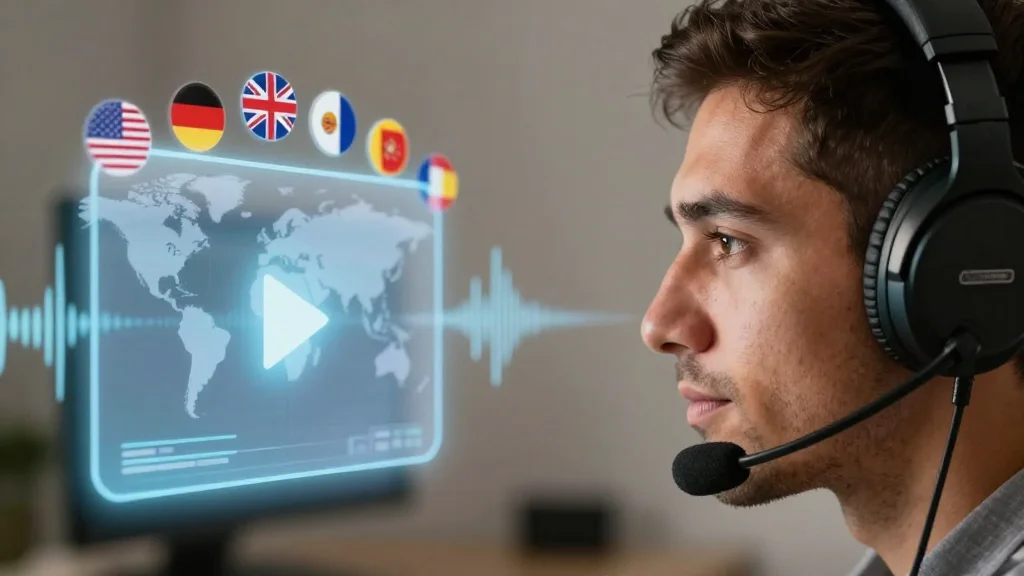
How L&D and Training Teams Localize Video at Scale in 2026: A Practical Playbook for Multilingual Internal Content

Key Takeaways
- •AI dubbing cuts training video localization cost from $163k to $5.5k.
- •European firms achieved up to 85% cost reduction using AI dubbing.
- •L&D localization requires GDPR‑compliant, API‑enabled platforms with custom vocab.
- •4‑step playbook: audit, language selection, workflow, iterative scaling.
- •Dubly.AI meets enterprise procurement needs; other tools lack compliance or lip‑sync quality.
Pulse Analysis
The surge of AI video dubbing is reshaping corporate learning by turning a historically expensive, time‑intensive process into a rapid, cost‑effective service. Traditional studios once demanded six‑figure budgets and weeks of turnaround for multilingual training, creating bottlenecks for compliance and skill development across dispersed teams. Today, generative speech models paired with frame‑accurate lip‑sync can translate a dozen hours of content into seven languages for under $6,000, delivering native‑speaker quality that satisfies both learners and auditors. This shift not only democratizes access to training but also aligns with tighter data‑privacy mandates, especially in Europe.
To capitalize on the technology, L&D leaders must adopt a disciplined, repeatable workflow. The first step is a comprehensive audit of existing video assets to identify high‑impact, compliance‑critical modules. Next, teams should prioritize languages based on workforce distribution rather than sheer count, ensuring resources focus on the most valuable audiences. Building an end‑to‑end pipeline—upload, AI‑generated transcript, native‑speaker review, export, and LMS integration—creates a scalable engine that can handle continuous content updates. Embedding custom glossaries and brand‑voice rules guarantees consistency across iterations, while API access enables batch processing for large libraries.
Choosing the right platform is equally crucial. Enterprise‑grade solutions like Dubly.AI provide GDPR‑native hosting, unlimited revisions, and robust multi‑speaker detection, meeting the stringent procurement checklists of multinational corporations. In contrast, many US‑based tools fall short on data‑sovereignty or lip‑sync fidelity, risking compliance breaches and learner disengagement. As AI dubbing matures, vendors that combine technical excellence with rigorous compliance frameworks will dominate the L&D market, allowing organizations to deliver consistent, localized training at unprecedented speed and scale.
How L&D and Training Teams Localize Video at Scale in 2026: A Practical Playbook for Multilingual Internal Content
Comments
Want to join the conversation?