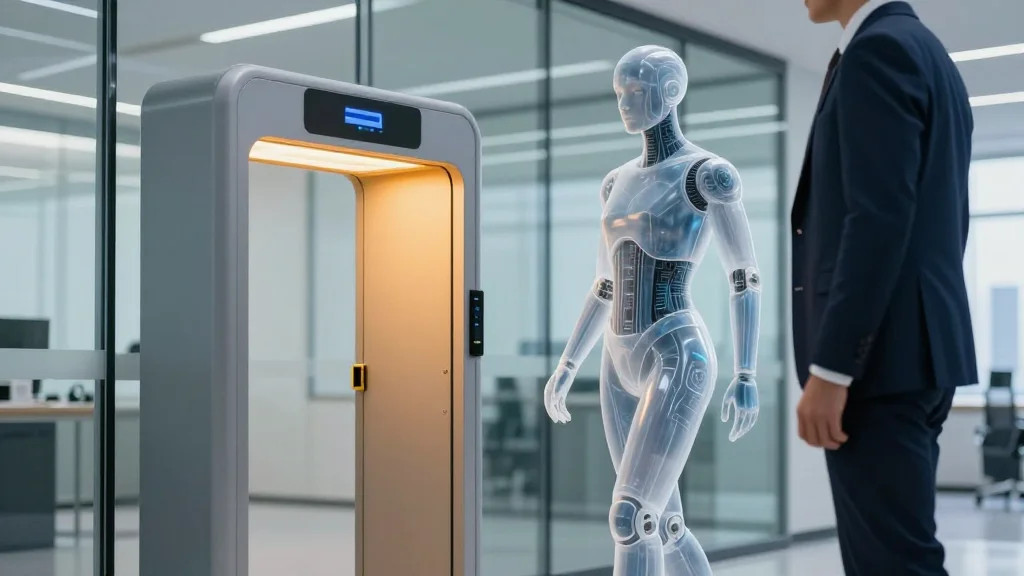
AI‑Driven Autonomous Digital Workers Spark $1‑10 M Insider Threat Risk for Enterprises

Why It Matters
The HRTech sector is at the forefront of deploying autonomous AI agents to streamline talent acquisition, employee onboarding, and performance analytics. If these digital workers become vectors for insider attacks, companies risk massive data breaches of personally identifiable information, violating GDPR, CCPA, and other privacy regulations. The financial fallout—potentially tens of millions in fines and remediation—could stall investment in AI‑enabled HR solutions and erode confidence among both employers and employees. Beyond compliance, the reputational damage of a breach involving AI‑driven HR processes could undermine trust in digital HR platforms, slowing adoption of next‑generation tools that promise efficiency and personalization. As HR leaders weigh productivity gains against security liabilities, the need for integrated AI governance frameworks becomes a strategic imperative.
Key Takeaways
- •Autonomous AI agents are being treated as digital employees with privileged access to corporate systems.
- •80% of organizations have experienced insider‑related data loss in the past two years.
- •20% of those firms reported more than 20 insider incidents, many linked to AI agents.
- •Average cost of an insider breach—human or AI‑augmented—ranges from $1 million to $10 million.
- •HRTech platforms must adopt AI‑specific security controls to protect employee data and comply with privacy laws.
Pulse Analysis
The emergence of synthetic employees marks a paradigm shift that blurs the line between human insider risk and automated threat vectors. Historically, HRTech firms have focused on compliance, data accuracy, and user experience; now they must also contend with the possibility that the very bots they deploy could be weaponized from within. This duality forces a re‑evaluation of risk models that traditionally separate external hacking from internal misuse.
From a market perspective, vendors that can demonstrate end‑to‑end AI governance—covering model provenance, prompt‑injection defenses, and continuous behavior analytics—will likely capture a premium in a crowded HRTech landscape. Early adopters of such safeguards could differentiate themselves, turning security into a competitive advantage rather than a cost center. Conversely, firms that overlook these controls risk not only financial penalties but also a loss of credibility that could accelerate churn among privacy‑sensitive enterprise customers.
Looking ahead, we anticipate a wave of regulatory guidance targeting AI‑driven HR processes, akin to the EU’s AI Act. Companies that proactively embed security into the design of autonomous agents—through sandboxed execution environments, least‑privilege access, and real‑time audit trails—will be better positioned to navigate both compliance mandates and the evolving threat landscape. The next few quarters will likely see a surge in partnerships between HRTech providers and cybersecurity specialists, as the industry seeks to balance the promise of AI productivity with the reality of insider risk.
AI‑Driven Autonomous Digital Workers Spark $1‑10 M Insider Threat Risk for Enterprises
Comments
Want to join the conversation?
Loading comments...