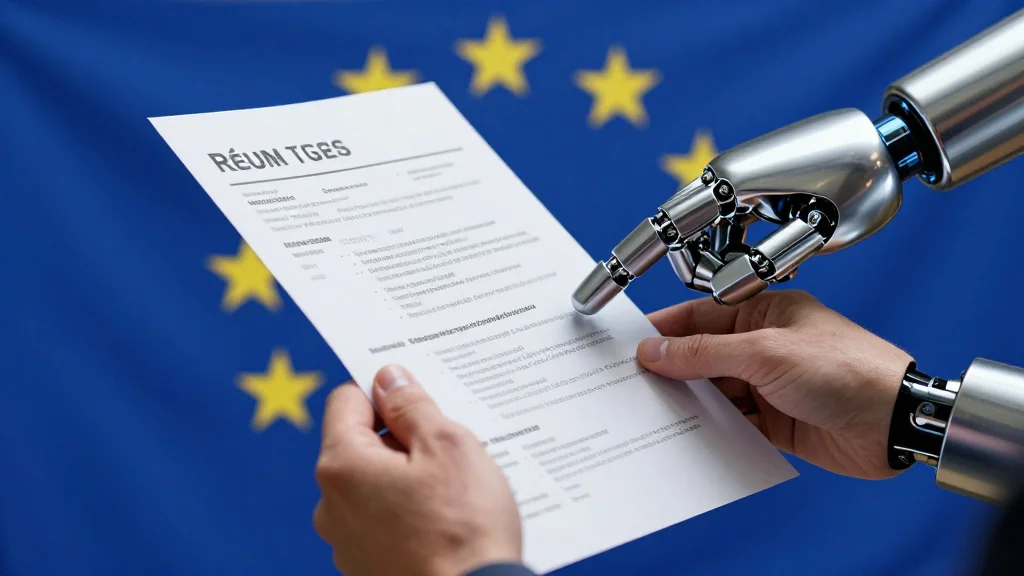
EU Sets High‑Risk Rules for Agentic AI in Recruitment and Workplace Automation

Why It Matters
The EU’s high‑risk classification of agentic AI directly targets the core of modern HRTech—automated talent acquisition and workforce analytics. By imposing transparency and human‑oversight mandates, the regulation aims to curb algorithmic bias and prevent large‑scale job displacement, but it also raises the cost of compliance for vendors operating in Europe’s lucrative market. Companies that adapt quickly can differentiate themselves as trustworthy providers, while those that lag may lose market share or face penalties. Beyond Europe, the extraterritorial scope of the AI Act means that global HR platforms will likely adopt the EU standards as a de‑facto baseline to simplify cross‑border operations. This could accelerate the harmonisation of AI governance practices worldwide, shaping the future of responsible AI deployment in recruitment and broader workplace automation.
Key Takeaways
- •EU AI Act classifies autonomous AI agents as high‑risk, effective Aug. 2, 2026
- •Providers must disclose AI interaction, maintain action inventories and obtain ENISA certification
- •Regulation applies to non‑EU vendors whose outputs affect EU users
- •Member states must launch at least one AI sandbox by Aug. 2, 2026
- •HRTech firms face added development costs and potential market consolidation
Pulse Analysis
The EU’s move reflects a broader regulatory trend that treats autonomous decision‑making systems as a distinct risk class, separating them from traditional robotic process automation. In HRTech, where speed and scale have driven adoption of AI‑driven screening tools, the new rules force a recalibration toward explainability and human oversight. Historically, Europe has led on data‑privacy legislation; extending that philosophy to AI governance could give European firms a competitive edge if they can certify compliance faster than rivals.
From a market perspective, the compliance burden may accelerate consolidation. Larger vendors with existing legal teams and access to ENISA‑approved auditors can absorb certification costs, while startups may either partner with larger players or pivot to niche, low‑risk functionalities. This dynamic mirrors the post‑GDPR landscape, where compliance readiness became a market differentiator. Moreover, the requirement for AI sandboxes creates a testing ground that could foster innovation in safe AI deployment, potentially spawning a new ecosystem of compliance‑focused service providers.
Looking ahead, the interplay between the AI Act and overlapping regulations such as GDPR and the Cyber Resilience Act will test firms’ ability to manage multi‑layered compliance. Companies that invest early in modular, auditable AI architectures will likely reap first‑mover advantages, both in market access and in building trust with enterprise customers wary of algorithmic bias. The upcoming General‑Purpose AI Code of Practice will be a critical reference point; firms that shape its content through industry consultations may steer standards toward more pragmatic implementation pathways.
EU Sets High‑Risk Rules for Agentic AI in Recruitment and Workplace Automation
Comments
Want to join the conversation?
Loading comments...