Gen‑AI Service Robots Poised to Redefine HR Support Functions

Companies Mentioned

Why It Matters
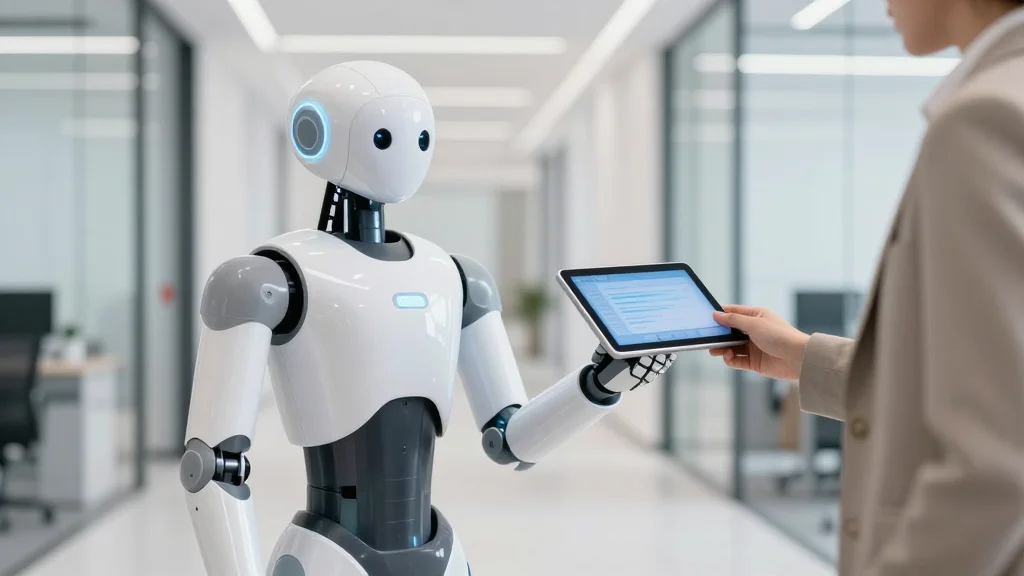
Embedding generative AI into physical robots could dramatically expand the scope of HR automation beyond digital chat interfaces, offering a new channel for employee engagement in large, distributed workforces. By handling routine inquiries and navigation tasks, robots could free HR professionals to focus on strategic initiatives such as talent development and organizational design. However, the high upfront costs and skill gaps highlighted by McKinsey mean that only firms with strong capital and a culture of experimentation are likely to lead early deployments, potentially widening the gap between tech‑savvy enterprises and laggards. If successful, the convergence of AI and robotics could also reshape employee expectations around service speed and personalization, prompting a re‑evaluation of HR service models. Companies that master this integration may set new standards for employee experience, while those that hesitate could face pressure as competitors deliver faster, more consistent support through embodied agents.
Key Takeaways
- •Global professional service‑robot market grew 9% in 2024, reaching ~200,000 units sold.
- •McKinsey finds 71% of firms cite high up‑front costs as a barrier to robot adoption.
- •61% of companies report a lack of automation expertise as a major hurdle.
- •Robin robot provides emotional support in 30 pediatric units and nursing homes, showcasing advanced LLM capabilities.
- •HRTech vendors eye partnerships with robot makers to pilot AI‑driven employee‑service assistants.
Pulse Analysis
The convergence of generative AI and robotics marks a subtle but potentially disruptive shift for HRTech. Historically, HR automation has been dominated by software solutions—payroll systems, applicant tracking, and chat‑based self‑service portals. Physical robots introduce a new modality that can operate in the physical workspace, bridging the gap between digital information and real‑world interaction. This could be especially valuable in large campuses, manufacturing floors, or remote sites where employees need on‑the‑spot assistance.
From a market perspective, the modest 9% growth in service robots signals a transition from niche pilots to a more mature supply chain. As sensor costs decline and AI models become more efficient, the total cost of ownership for a robot capable of handling HR queries could fall within the range of existing SaaS contracts, making the investment more palatable. Early adopters that successfully integrate robots into their HR service centers will likely generate data on usage patterns, employee satisfaction, and ROI, creating a feedback loop that accelerates broader adoption.
Competitive dynamics will also evolve. Traditional HR software vendors may partner with robot manufacturers or acquire AI‑robotics startups to embed physical agents into their platforms. Meanwhile, pure‑play robotics firms will need to develop domain‑specific knowledge—understanding labor laws, benefits structures, and confidentiality requirements—to meet HR compliance standards. The firms that can marry deep HR expertise with robust, reliable robotics will capture the emerging niche of "embodied HRTech," setting a new benchmark for employee experience in the era of AI‑augmented workplaces.
Gen‑AI Service Robots Poised to Redefine HR Support Functions
Comments
Want to join the conversation?
Loading comments...