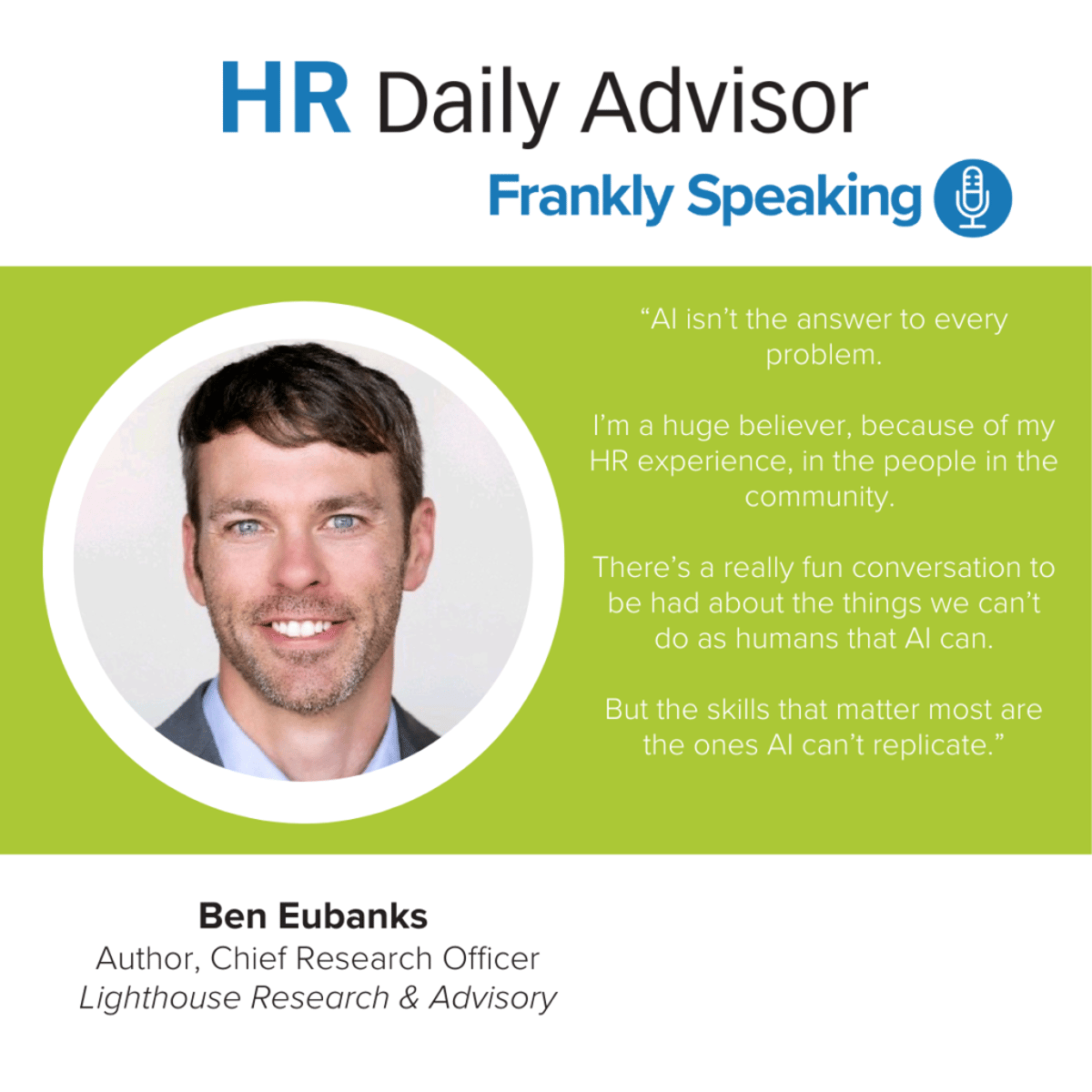
HRDA Frankly Speaking: ‘AI Isn’t the Answer to Every Problem’
•February 9, 2026
0
Why It Matters
HR leaders who over‑invest in AI risk inefficiencies and bias, while missing opportunities to enhance strategic decision‑making. Understanding AI’s limits enables more effective, people‑centric HR transformation.
Key Takeaways
- •AI automates routine HR processes, freeing strategic time
- •Human judgment remains essential for complex employee relations
- •Overreliance on AI risks bias and data privacy issues
- •HR leaders must blend technology with empathetic leadership
- •SPARK HR 2026 will explore practical AI integration strategies
Pulse Analysis
The excitement surrounding artificial intelligence has spilled into every corner of the talent function, from recruiting chatbots to predictive turnover models. Yet, as Ben Eubanks cautions, the industry’s enthusiasm often outpaces a sober assessment of what AI can truly deliver. Researchers at Lighthouse Research & Advisory point to a growing body of evidence that many HR challenges—culture, engagement, and nuanced performance feedback—remain stubbornly human. By grounding AI conversations in data‑driven outcomes rather than hype, organizations can avoid costly missteps and allocate resources where technology genuinely adds value.
Practical AI deployments excel at handling high‑volume, rule‑based tasks such as resume screening, benefits enrollment, and payroll processing. These applications free HR professionals to focus on strategic initiatives like workforce planning and leadership development. However, the same algorithms can perpetuate existing biases if trained on flawed data, and they raise privacy concerns when employee information is processed at scale. Ethical frameworks and transparent model governance are therefore essential, ensuring that AI augments rather than replaces human insight, especially in delicate areas like employee relations and conflict resolution.
For senior HR leaders, the takeaway is clear: adopt a hybrid model that leverages AI’s efficiency while preserving the empathetic core of people management. This balanced approach will be a central theme at SPARK HR 2026, where Eubanks will share actionable roadmaps for integrating AI responsibly. Companies that master this blend will not only improve operational metrics but also strengthen employee trust, positioning themselves competitively in a talent‑driven market. The future of HR lies in smart collaboration between machines and humans, not in a wholesale replacement of one by the other.
HRDA Frankly Speaking: ‘AI Isn’t the Answer to Every Problem’
0
Comments
Want to join the conversation?
Loading comments...