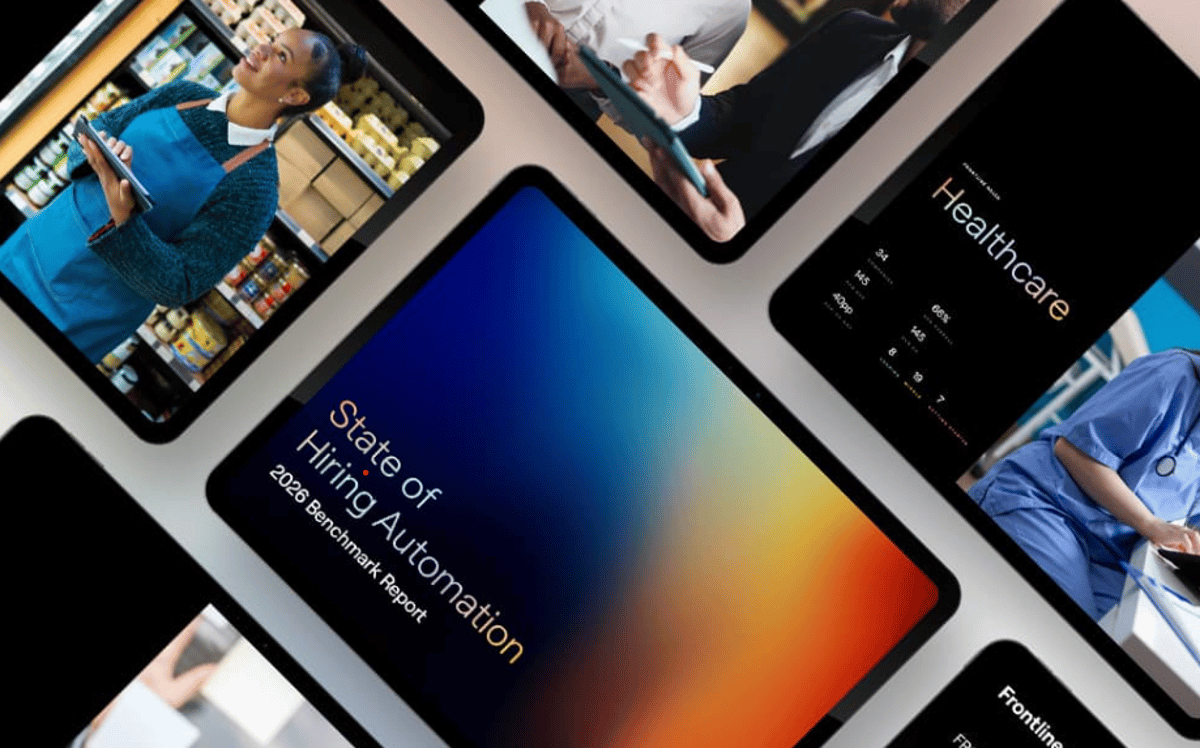
Introducing the State of Hiring Automation 2026: The Gap Is Larger than You Think
Key Takeaways
- •Average hiring automation score post-apply is only 21%.
- •94% of firms still schedule interviews outside the application flow.
- •Less than 1% have fully orchestrated inline qualification workflows.
- •Only 11% use early role-specific qualification or assessments.
- •Inline automation can compress time-to-hire and improve candidate retention.
Pulse Analysis
The talent acquisition landscape has been reshaped over the past decade by a steady stream of technology investments aimed at attracting and engaging candidates. Career sites, AI‑driven job discovery tools, and automated communication have lifted organizations to roughly 62 % of their theoretical potential in attraction, engagement, and conversion, according to the new State of Hiring Automation 2026 report from Aptitude Research and Phenom. While these gains are tangible, they represent only the first half of a hiring funnel that now demands deeper automation beyond the point of application.
The report uncovers a stark contrast once a candidate submits an application: automation scores plunge to an average of 21 %, and 94 % of firms still rely on manual interview scheduling. Fewer than one in a hundred companies have built a fully orchestrated inline qualification workflow, and only 11 % embed role‑specific screening or assessments within the application stream. This fragmentation erodes candidate intent at the moment of highest interest, leading to higher drop‑off rates and longer time‑to‑fill, especially in competitive sectors such as healthcare and retail.
Enterprises that accelerate inline automation stand to gain a decisive edge. By integrating early qualification, AI‑driven assessments, and real‑time interview orchestration directly into the application flow, companies can compress the apply‑to‑interview window, improve candidate experience, and capture top talent before it drifts to rivals. The next wave of hiring technology will shift from peripheral tools to embedded decision‑support engines that surface insights at the moment of intent. Organizations that invest now in a connected, end‑to‑end workflow are likely to see faster hires, lower costs, and stronger employer branding.
Introducing the State of Hiring Automation 2026: the gap is larger than you think
Comments
Want to join the conversation?