Why AI Improves Employee Engagement for some Organizations and How to Make It Work for Yours
Why It Matters
Effective AI rollouts can boost productivity, retention and talent attraction, while sloppy deployments squander spend and erode morale. The findings signal that AI’s impact on engagement is a strategic differentiator for competitive advantage.
Key Takeaways
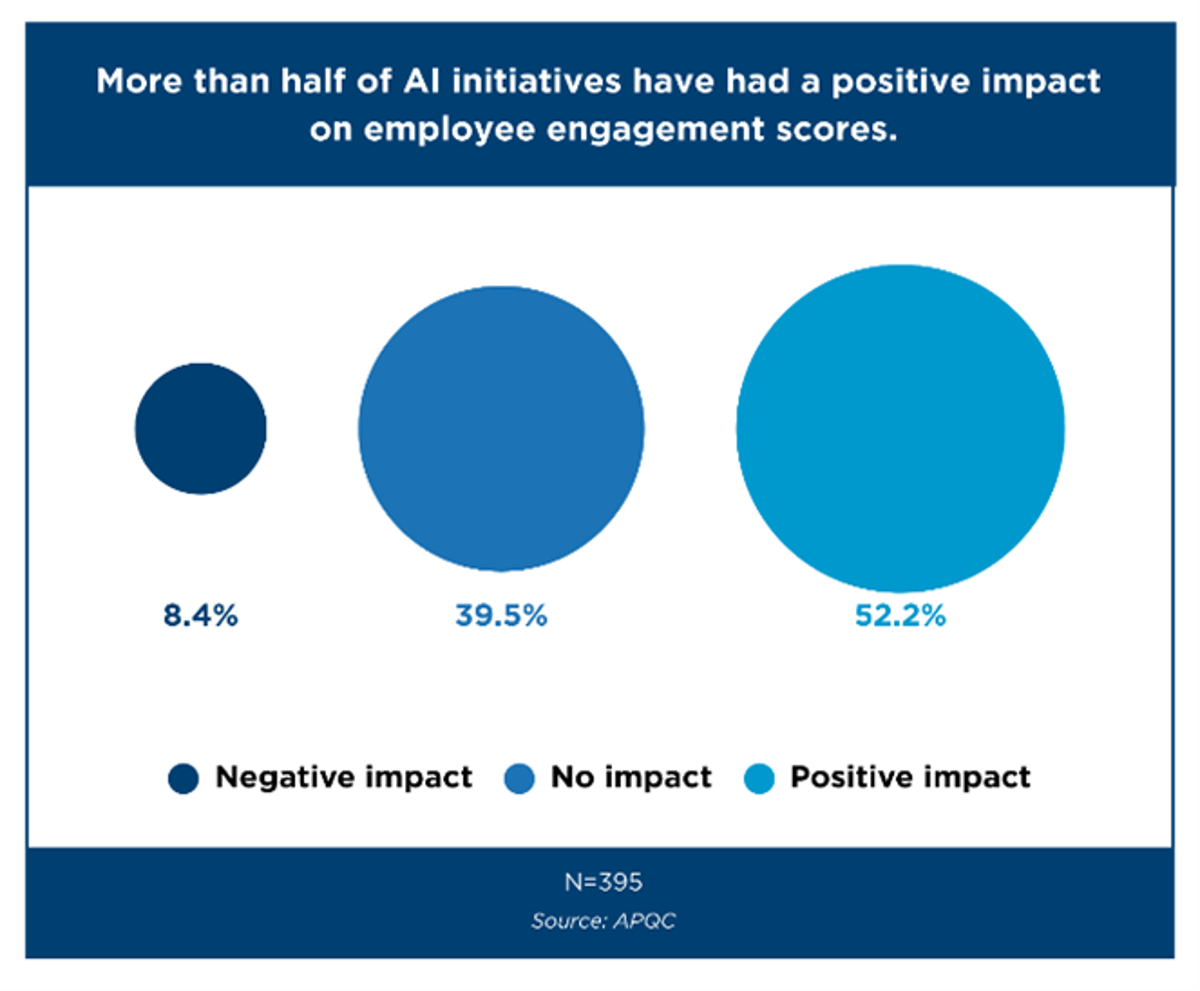
- •~50% of leaders report AI improves engagement
- •<10% say AI harms engagement
- •Coordinated AI rollout links tools, skills, workflows
- •Fragmented pilots create role ambiguity and disengagement
- •Align AI with high‑impact work, clear ownership, guardrails
Pulse Analysis
AI spending is accelerating across enterprises, yet the employee experience often lags behind the technology hype. Recent APQC data reveals a nuanced picture: about 40% of organizations see no change in engagement and just 8% experience a dip, while nearly half report a boost. This suggests that AI is not inherently disruptive to morale, but its value hinges on how it is woven into daily work. Analysts at Gartner and McKinsey echo this, warning that technology alone cannot drive cultural change without deliberate execution.
The decisive factor is implementation style. Companies that treat AI as a coordinated transformation—synchronizing new tools with updated processes, targeted skill‑building, and clear workflow redesign—enable employees to see tangible benefits. When AI is introduced as isolated pilots or optional add‑ons, workers often lack clarity on how it reshapes their responsibilities, leading to confusion and lower engagement. Redesigning work before AI deployment ensures that existing processes are robust, data‑consistent, and ready to be amplified, preventing the technology from merely exposing existing inefficiencies.
For leaders aiming to replicate the positive outcomes, three practical steps emerge. First, map AI use cases to business‑critical outcomes so employees can link the technology to measurable results. Second, establish dedicated ownership and governance, including ethical guardrails and ongoing support, to create a coherent rollout experience. Third, embed engagement metrics—such as adoption rates, satisfaction scores, and productivity gains—into AI program reviews. By treating AI as an integrated work‑enhancement platform rather than a standalone gadget, organizations can turn technology spend into a driver of higher engagement, retention, and competitive advantage.
Why AI improves employee engagement for some organizations and how to make it work for yours
Comments
Want to join the conversation?
Loading comments...