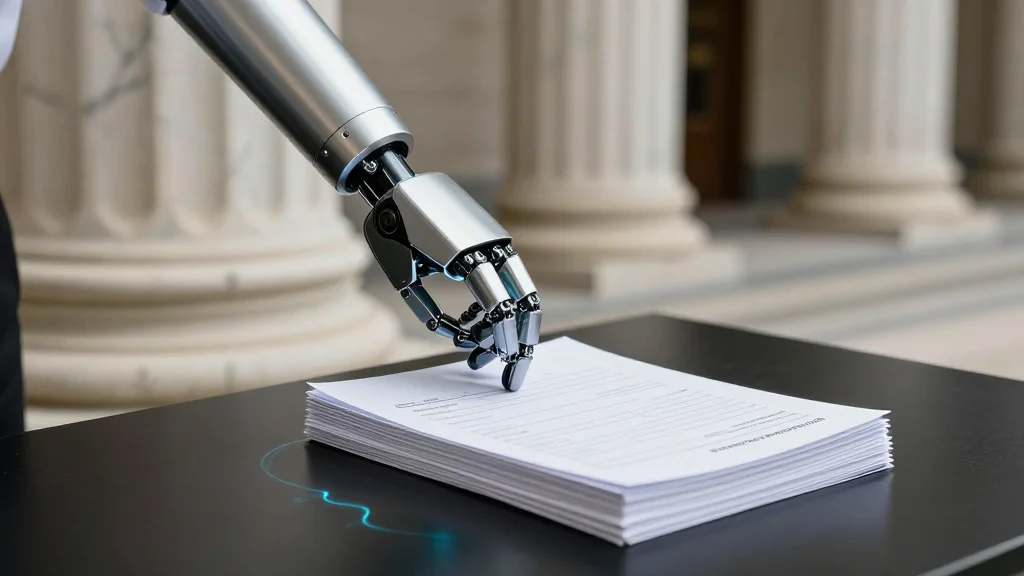
Workday Government Launches AI‑driven PAR Agent, Slashing Federal HR Cycle Times by up to 60%

Companies Mentioned
Why It Matters
The PAR Agent marks a watershed moment for government HRTech, demonstrating that AI can move beyond experimental pilots to address core operational bottlenecks. By cutting processing times and reducing errors, the tool promises faster staffing for mission‑critical roles, directly influencing national security and public‑service delivery. Moreover, the projected $3.5 million annual savings for a single agency underscores the fiscal upside for taxpayers, a compelling argument for broader adoption across the federal landscape. Beyond the immediate efficiencies, Workday’s rollout signals a shift in how public‑sector software vendors compete: AI‑driven automation, real‑time analytics and integrated compliance will become baseline expectations. Agencies that fail to adopt such capabilities risk falling behind in both operational performance and budget stewardship, while vendors that can deliver secure, scalable AI solutions stand to capture a growing share of the multi‑billion‑dollar federal IT spend.
Key Takeaways
- •Workday Government unveiled an AI‑powered Personnel Action Request (PAR) Agent on April 28, 2026.
- •The agent reduces typical HR cycle times from 22‑45 days to 9‑18 days, a 60% improvement.
- •A 10,000‑employee agency processing 5,000 PARs monthly could save ~64,000 labor hours and $3.56 million annually.
- •The solution embeds U.S. OPM requirements, maintains human oversight, and offers real‑time status visibility.
- •Availability slated for 2027, aligning with Workday’s broader AI “Power of One” platform strategy.
Pulse Analysis
Workday’s PAR Agent arrives at a moment when federal agencies are under intense pressure to modernize legacy HR processes while demonstrating fiscal responsibility. Historically, government HR systems have lagged behind the private sector, relying on paper forms and siloed databases that inflate cycle times and error rates. By injecting AI into the core PAR workflow, Workday not only accelerates transactions but also creates a data‑rich environment that can feed downstream analytics, workforce planning and predictive talent management.
The competitive landscape is also shifting. Oracle and SAP have long held a foothold in public‑sector HR, but their AI roadmaps have been less visible. Workday’s aggressive positioning—highlighted by CEO Aneel Bhusri’s “Power of One” mantra—forces rivals to either accelerate their own AI agent development or risk losing market share. However, the rollout is not without risk. Federal IT environments are heavily regulated, and any AI system must meet stringent security and privacy standards. Workday’s promise of human oversight at every critical step may mitigate some concerns, but integration challenges with legacy mainframes could delay adoption.
Looking ahead, the PAR Agent could serve as a template for a broader suite of AI agents targeting finance, procurement and compliance. If agencies can demonstrate measurable cost savings and mission‑critical staffing improvements, the model may become a de‑facto standard for public‑sector digital transformation. Investors will be watching closely: while the AI litigation cloud hovering over the tech sector adds volatility, successful government deployments could provide a stable revenue anchor for Workday, reinforcing its position as a leading HRTech platform.
Workday Government launches AI‑driven PAR Agent, slashing federal HR cycle times by up to 60%
Comments
Want to join the conversation?
Loading comments...