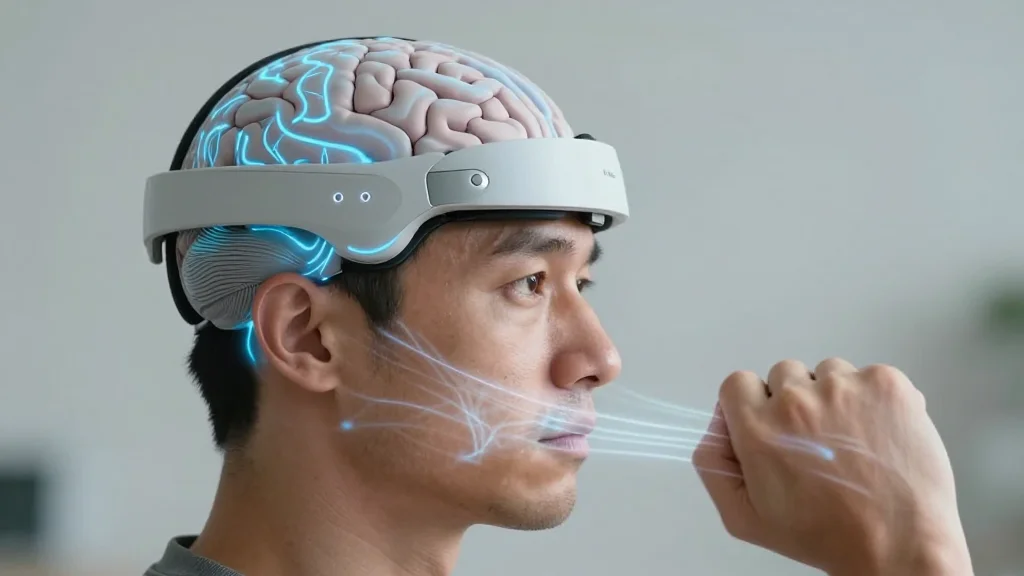
BCI Neurofeedback Lets Humans Volitionally Switch Cortical States, Cutting Reaction Times

Companies Mentioned
Why It Matters
The ability to deliberately steer cortical states opens a new frontier in human potential, moving beyond passive observation of brain activity to active self‑modulation. Faster reaction times and improved behavioral flexibility could translate into tangible benefits in high‑stakes environments such as aviation, surgery, and competitive sports, where split‑second decisions are critical. Beyond immediate performance gains, the research suggests a scalable framework for mental‑training that could be personalized to individual neural signatures. If refined, BCI‑based neurofeedback could become a cornerstone of next‑generation cognitive enhancement, reshaping how education, rehabilitation, and productivity are approached.
Key Takeaways
- •Human participants learned to volitionally toggle sensorimotor rhythm amplitude via BCI neurofeedback
- •Trained participants showed significantly shorter reaction times for muscle contraction and relaxation
- •Neural analysis revealed stronger medial frontal phase coupling and steeper broadband spectral slope during state switches
- •Skill transferred to overt motor tasks without ongoing BCI feedback
- •Study data and cortical atlas annotation are publicly available for replication
- •
Pulse Analysis
The breakthrough reported in PNAS marks a shift from traditional sensorimotor BCI applications—typically focused on restoring lost function—to a proactive model of cognitive self‑optimization. Historically, neurofeedback has been limited by modest effect sizes and poor transfer to real‑world tasks. By coupling real‑time SMR feedback with a clear performance metric (reaction time), the researchers created a closed‑loop that reinforces both neural and behavioral outcomes, a design that could become a template for future enhancement protocols.
From a market perspective, the findings arrive as consumer‑grade EEG headsets are gaining traction. Companies that have previously marketed these devices for meditation or sleep tracking may now see a pathway to premium performance‑oriented products. However, the transition from laboratory proof‑of‑concept to commercial viability will hinge on demonstrating durability of the skill, safety across diverse users, and clear regulatory pathways. Early adopters—such as elite athletes or military units—could drive demand, but broader consumer acceptance will require transparent efficacy data.
Looking ahead, the open‑source nature of the study’s cortical atlas and analysis pipeline lowers the barrier for independent verification and iterative improvement. If subsequent studies confirm that repeated BCI neurofeedback sessions produce lasting neuroplastic changes, we could witness a new class of mental‑training tools that rival physical exercise in their impact on performance. The key challenge will be balancing the promise of enhanced focus and resilience with ethical safeguards to prevent misuse or inequitable access.
BCI Neurofeedback Lets Humans Volitionally Switch Cortical States, Cutting Reaction Times
Comments
Want to join the conversation?
Loading comments...