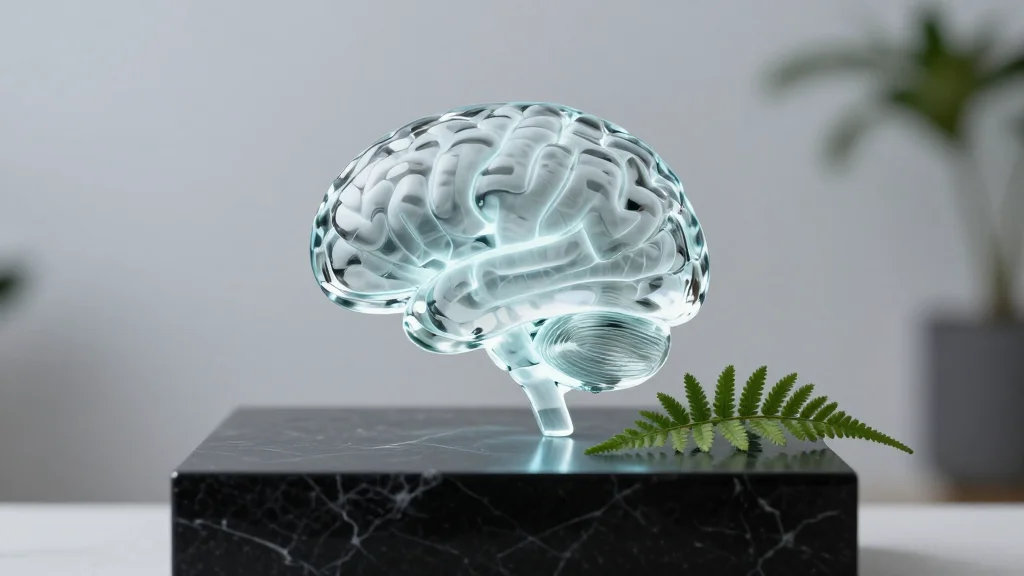
Cambridge Neuroscientist Releases 'The 21st Century Brain' Guide to Future‑Proof Mental Agility

Why It Matters
The release of *The 21st Century Brain* underscores a shift from passive consumption of neuroscience to actionable self‑improvement, a hallmark of the Human Potential movement. By linking brain health to tangible lifestyle changes—nature exposure, gut diversity, mitochondrial support—the book offers a roadmap that could reduce the cognitive strain many feel in an AI‑saturated environment. If the guide’s recommendations prove effective, they could influence corporate wellness programs, educational curricula, and even public‑policy discussions about mental‑health funding. In a world where cognitive overload is a growing risk factor, scalable, science‑backed interventions may become a cornerstone of societal resilience.
Key Takeaways
- •Hannah Critchlow, Cambridge neuroscientist, publishes *The 21st Century Brain* as a practical guide for mental agility.
- •Book emphasizes bioenergetics, emotional intelligence, and adaptability as core pillars for cognitive resilience.
- •Cites research linking gut microbiome diversity to increased altruism and empathy.
- •Positions itself amid a $10 billion global brain‑health market driven by self‑optimization trends.
- •Upcoming Cambridge‑hosted webinars and a 12‑month reader study will test the guide’s real‑world impact.
Pulse Analysis
Critchlow’s entry into the Human Potential space arrives at a convergence point: AI is reshaping how we work, learn, and interact, while public appetite for brain‑health solutions is at an all‑time high. Historically, popular neuroscience books have oscillated between sensationalism and rigorous scholarship. *The 21st Century Brain* leans toward the latter, grounding its advice in peer‑reviewed studies and offering concrete, low‑cost interventions. This credibility differentiates it from many commercial self‑help titles that rely on anecdote.
From a market perspective, the book could catalyze a ripple effect across adjacent sectors. Wellness platforms may integrate its protocols into digital coaching modules, while supplement manufacturers might highlight mitochondrial support as a selling point. However, the real test will be longitudinal data. If the forthcoming reader cohort demonstrates statistically significant improvements in cognitive flexibility, the book could become a benchmark for evidence‑based self‑optimization, prompting insurers and employers to endorse its practices.
Looking ahead, the dialogue between neuroscience and AI—highlighted by Critchlow’s observation that AI stems from brain research—may evolve into a feedback loop. As AI tools become more adept at personalizing cognitive training, they could operationalize the book’s recommendations at scale, delivering real‑time adjustments based on biometric feedback. The success of such integration will hinge on rigorous validation, ethical data handling, and the ability to translate complex neurobiology into user‑friendly experiences. In the meantime, *The 21st Century Brain* offers a timely, scientifically anchored blueprint for individuals seeking to future‑proof their most valuable asset: their mind.
Cambridge Neuroscientist Releases 'The 21st Century Brain' Guide to Future‑Proof Mental Agility
Comments
Want to join the conversation?
Loading comments...