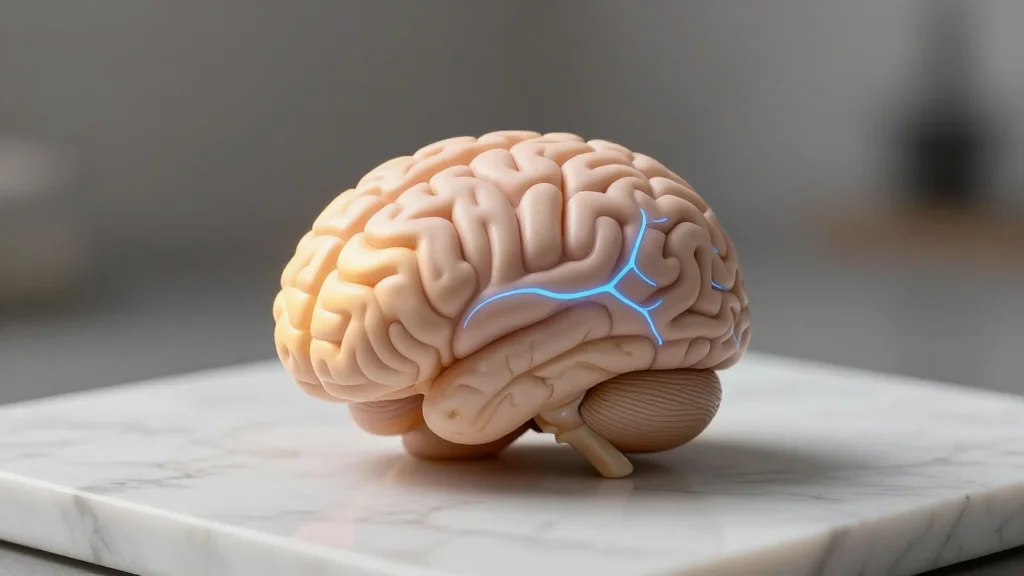
Georgetown Study Shows Brain Rewires to Bypass Prefrontal Bottleneck, Automating Complex Skills

Why It Matters
The discovery that the brain can rewire itself to bypass the prefrontal bottleneck reshapes our understanding of human potential. By pinpointing a cortical mechanism for skill automation, the research offers a concrete target for interventions aimed at accelerating expertise, reducing cognitive fatigue, and enhancing multitasking ability. For industries that rely on rapid decision‑making—medicine, aviation, finance—the ability to train workers to shift routine tasks out of conscious awareness could improve safety and productivity. Beyond human training, the findings provide a biologically grounded model for next‑generation AI. Current machine‑learning systems often retrain entire networks for new tasks, consuming massive computational resources. Emulating the brain’s incremental, pathway‑specific reorganization could lead to AI that learns more like humans, preserving prior knowledge while efficiently integrating new skills. This convergence of neuroscience and technology may unlock tools that amplify human capabilities rather than merely replace them.
Key Takeaways
- •Georgetown researchers showed that after 30,000+ practice trials, task processing moved from prefrontal to temporal cortex.
- •The shift creates a neural shortcut that frees executive resources for other activities.
- •Study used longitudinal fMRI and EEG scans to capture before‑and‑after brain activity.
- •Findings complement basal‑ganglia models of automation, suggesting multiple pathways for skill mastery.
- •Implications span education, high‑performance training, and AI systems that mimic incremental learning.
Pulse Analysis
The Georgetown study arrives at a moment when both neuroscience and artificial intelligence are converging on the problem of efficient learning. Historically, the prefrontal cortex has been cast as the brain's bottleneck, limiting simultaneous processing of complex tasks. By documenting a cortical migration to the temporal lobe, the research challenges the notion that multitasking is inherently limited, instead framing it as a skill‑dependent reallocation of neural resources. This reframing has practical consequences: training programs can now be designed to deliberately push tasks toward temporal‑cortex representation, potentially shortening the time needed to achieve automaticity.
From an AI perspective, the brain’s ability to offload routine computations to specialized modules offers a template for modular learning architectures. Current deep‑learning models often suffer from catastrophic forgetting when new tasks are introduced. A brain‑inspired approach—preserving a high‑capacity executive module while delegating repeated patterns to dedicated sub‑networks—could mitigate that problem, leading to systems that retain prior knowledge while efficiently acquiring new capabilities. Companies developing adaptive learning platforms may soon incorporate neurofeedback loops that signal when a user’s brain has transitioned to a more automated state, adjusting difficulty or introducing novel challenges at the optimal moment.
Finally, the study underscores the importance of longitudinal designs in cognitive research. By capturing the brain’s trajectory from novice to expert, the authors provide a roadmap for future investigations into other domains, such as language or creative arts. If similar cortical shortcuts can be mapped across a spectrum of skills, we may be on the cusp of a new era where human potential is not just measured by innate talent but by the brain’s capacity to remodel itself efficiently.
Georgetown Study Shows Brain Rewires to Bypass Prefrontal Bottleneck, Automating Complex Skills
Comments
Want to join the conversation?
Loading comments...