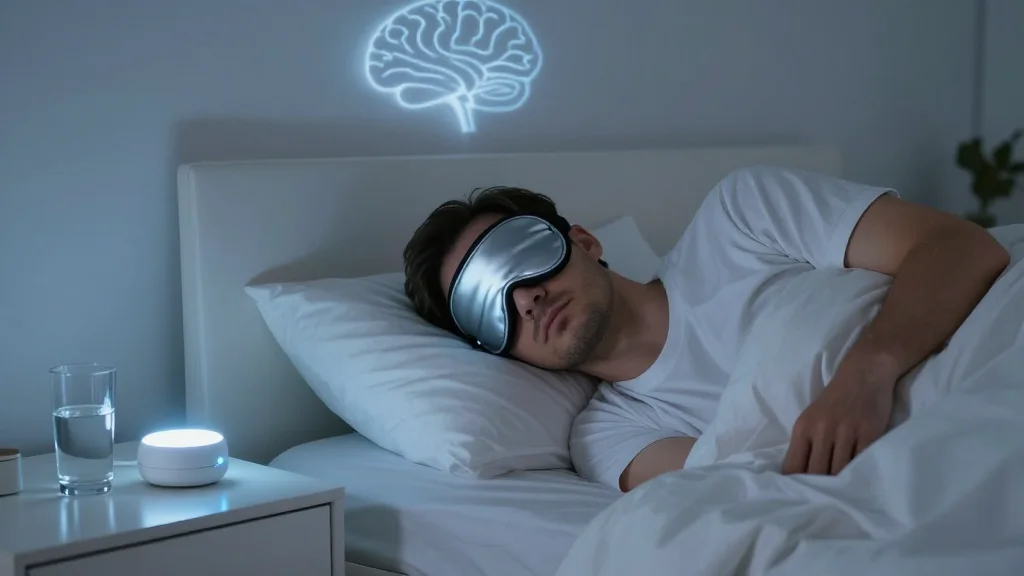
Muse Athena Unveils Sleep‑by‑Design Platform to Double Creative Problem‑Solving

Why It Matters
If Muse Athena’s Sleep‑by‑Design platform can reliably double creative problem‑solving rates, it could reshape productivity paradigms that traditionally separate work from rest. By harnessing REM‑linked memory consolidation, the technology offers a biologically grounded shortcut to insight generation, potentially accelerating innovation cycles in high‑stakes fields such as drug discovery, engineering, and the arts. Beyond performance, the platform raises ethical and health considerations. Continuous sleep monitoring and auditory cueing may affect sleep quality, circadian rhythms, or privacy. Understanding these trade‑offs will be essential as the Human Potential market expands into deeper neuro‑interventions, prompting regulators and consumers to weigh gains in creativity against possible disruptions to natural sleep processes.
Key Takeaways
- •Muse Athena launched Sleep‑by‑Design platform in winter 2026, using REM cueing technology.
- •Northwestern study showed puzzle solve rate rose from 17% to 42% when cues were delivered during REM.
- •Platform employs a headband that monitors sleep stages and plays problem‑linked soundtracks.
- •Ken Paller highlighted sleep engineering as a frontier for creativity and mental health.
- •Upcoming public beta in Q3 2026 will test real‑world efficacy and gather user data.
Pulse Analysis
Muse Athena’s entry into sleep‑engineered creativity arrives at a moment when neuro‑tech firms are racing to monetize brain‑state data. The company’s advantage lies in grounding its product in peer‑reviewed science rather than speculative hype, a factor that could win over early adopters wary of unproven claims. However, translating a controlled lab protocol—complete with polysomnography and precise REM detection—into a consumer device is a formidable engineering challenge. Accuracy of sleep stage detection will dictate cue timing, and any lag could blunt the observed performance boost.
Historically, performance‑enhancing tools have faced a credibility gap; think of early brain‑training apps that promised cognitive gains without robust evidence. Muse Athena sidesteps this by leveraging a clear, quantifiable metric (puzzle solve rate) and a reputable academic partnership. If the upcoming beta confirms the lab’s 2.5× improvement in a broader population, the platform could catalyze a new category of “sleep‑augmented productivity” tools, prompting competitors to explore similar cueing mechanisms for memory, language learning, or emotional regulation.
Nevertheless, the broader Human Potential market must grapple with privacy and health implications. Continuous EEG monitoring generates sensitive biometric data, and the prospect of commercial entities influencing subconscious processing raises ethical red flags. Regulators may soon need to define standards for sleep‑cueing devices, balancing innovation with safeguards against misuse. Muse Athena’s next steps—transparent data policies, rigorous third‑party validation, and clear user consent—will determine whether Sleep‑by‑Design becomes a mainstream enhancer or a niche curiosity.
Muse Athena Unveils Sleep‑by‑Design Platform to Double Creative Problem‑Solving
Comments
Want to join the conversation?
Loading comments...