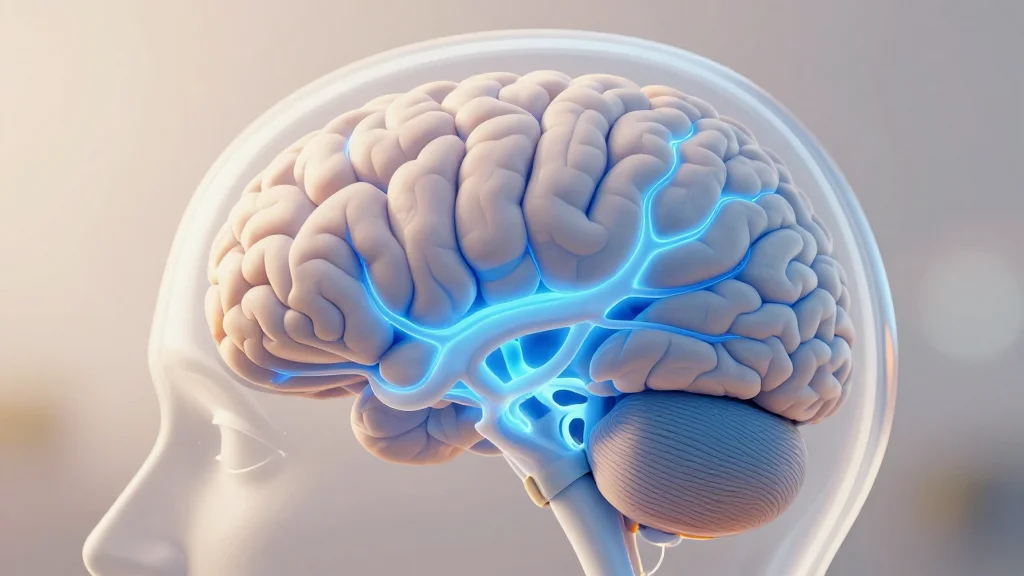
Rutgers Study Uncovers Brain Timing Systems That Boost Cognitive Flexibility

Why It Matters
Understanding intrinsic neural timescales reframes cognitive flexibility as a network‑level property rather than a vague talent. This insight equips educators, clinicians, and technologists with a targetable substrate for interventions aimed at boosting problem‑solving, creativity, and resilience. Moreover, linking timing systems to genetic and molecular markers creates a pathway for precision diagnostics in mental‑health disorders, where dysregulated information flow is a core feature. By mapping how fast and slow processing streams converge, the study also informs the design of neuro‑enhancement tools—from non‑invasive stimulation to adaptive learning platforms—that can synchronize with an individual’s natural timing rhythm, potentially unlocking higher levels of human potential.
Key Takeaways
- •Study of 960 adults links white‑matter connectivity to intrinsic neural timescales (INTs)
- •INT arrangement predicts individual differences in cognitive flexibility and intelligence
- •Mathematical modeling uses optimal‑control theory to infer regional processing speeds
- •Comparable timing patterns found in mouse brains suggest evolutionary conservation
- •Research expands to schizophrenia, bipolar disorder, and depression to explore clinical relevance
Pulse Analysis
The Rutgers discovery marks a shift from viewing cognition as a static trait to a dynamic interplay of temporal networks. Historically, neuroscience has emphasized regional activation; this work adds a temporal dimension, showing that the speed at which information propagates across white‑matter tracts can amplify or constrain mental agility. In practice, this could recalibrate how we assess talent—moving beyond IQ scores to a more nuanced profile of neural timing.
From a market perspective, the findings align with a growing ecosystem of neurotechnology firms seeking biomarkers for brain‑computer interfaces and cognitive training. Companies that can quantify an individual's INT signature may offer personalized neurofeedback or stimulation protocols, creating a new niche within the broader human‑potential market. However, translating a laboratory model into a commercial product will require robust validation across diverse populations and regulatory clearance for any therapeutic claims.
Looking ahead, the integration of genetics, imaging, and computational modeling could produce a predictive framework for both peak performance and disease onset. If timing systems prove plastic, interventions—ranging from targeted cognitive exercises to pharmacological agents that modulate myelination—might be deployed to fine‑tune the brain’s internal clock. Such capabilities would not only reshape educational strategies but also provide clinicians with early warning signs for disorders where timing breakdown is a hallmark, potentially ushering in a new era of preventative mental‑health care.
Rutgers Study Uncovers Brain Timing Systems That Boost Cognitive Flexibility
Comments
Want to join the conversation?
Loading comments...